Info
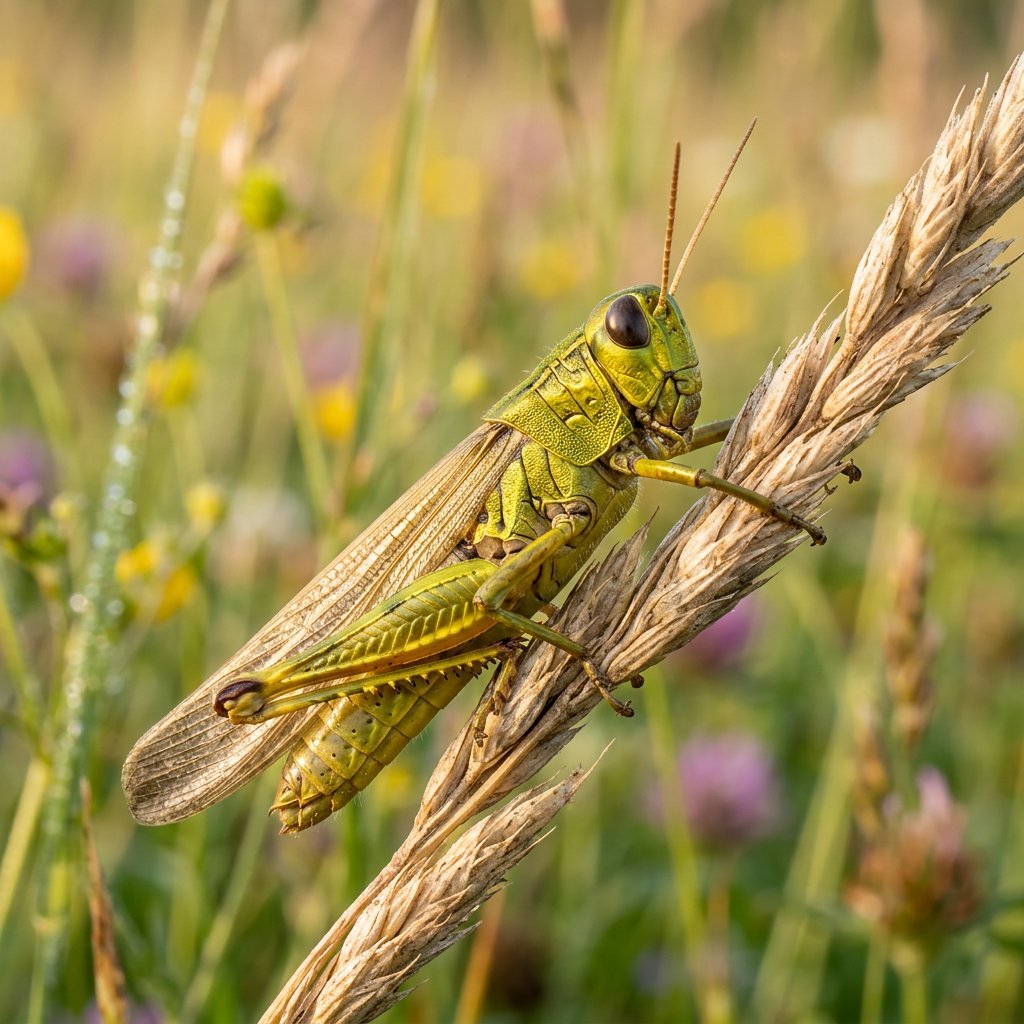
Often called the Gold Grasshopper, this little gem of the grasslands looks like a piece of living jewelry shimmering in the sun. The species name dispar is a nod to its most famous trait: the males and females look so strikingly different that you might mistake them for two entirely different insects! They are peaceful residents of damp meadows, providing the gentle "ticking" soundtrack of a late summer afternoon.
🔍 How to Identify
- 🎨 Metallic Sheen: Males are a brilliant, polished metallic green or golden-yellow. They are easy to spot when they catch the light.
- 📏 Wing Disparity: Males have wings that cover most of their abdomen, allowing for short flights. In contrast, females are almost "wingless," possessing only tiny, scale-like wing pads.
- 🦵 Chunky Build: Compared to slender meadow grasshoppers, these are relatively "stout." Females are significantly larger and usually a camouflaged brown or greyish-ochre color.
🌲 Habitat & Ecology
- 💧 Moisture Seekers: Unlike many grasshoppers that thrive in dry heat, the Gold Grasshopper is a "hydrophile." You will find them in marshes, wet meadows, bogs, and the lush, overgrown edges of woodlands.
- 🌱 Sedate Herbivores: They are not garden pests. They prefer grazing on wild grasses and sedges. Because the females cannot fly, they spend their entire lives within a very small patch of territory.
⚠️ Safety & Toxicity
- ✅ Harmless Friend: This insect is a "friend" to humans and gardeners. They do not sting, and they do not carry any toxins.
- 🛡️ Non-Aggressive: Their only defense is their powerful hind legs. If you get too close, they will simply vanish into the tall grass with a sudden, springy leap. They are perfectly safe for children or pets to observe closely.
✨ Fun Fact
✨ The Gold Grasshopper is a master of the "acoustic duet." While the male sings a rhythmic "ticking" sound to find a mate, the female (unlike many other grasshopper species) actually answers him with her own subtle vibrations to guide him through the thick grass!
More Details








