Info
Known as the Regal Moth in its adult stage and the Hickory Horned Devil as a larva, this insect is the stuff of backyard legends. It holds the title for one of the largest and most spectacular moths in North America. While its massive, "horned" caterpillar looks like a miniature dragon from a fantasy novel, it is a gentle giant of the deciduous forest.
🔍 How to Identify
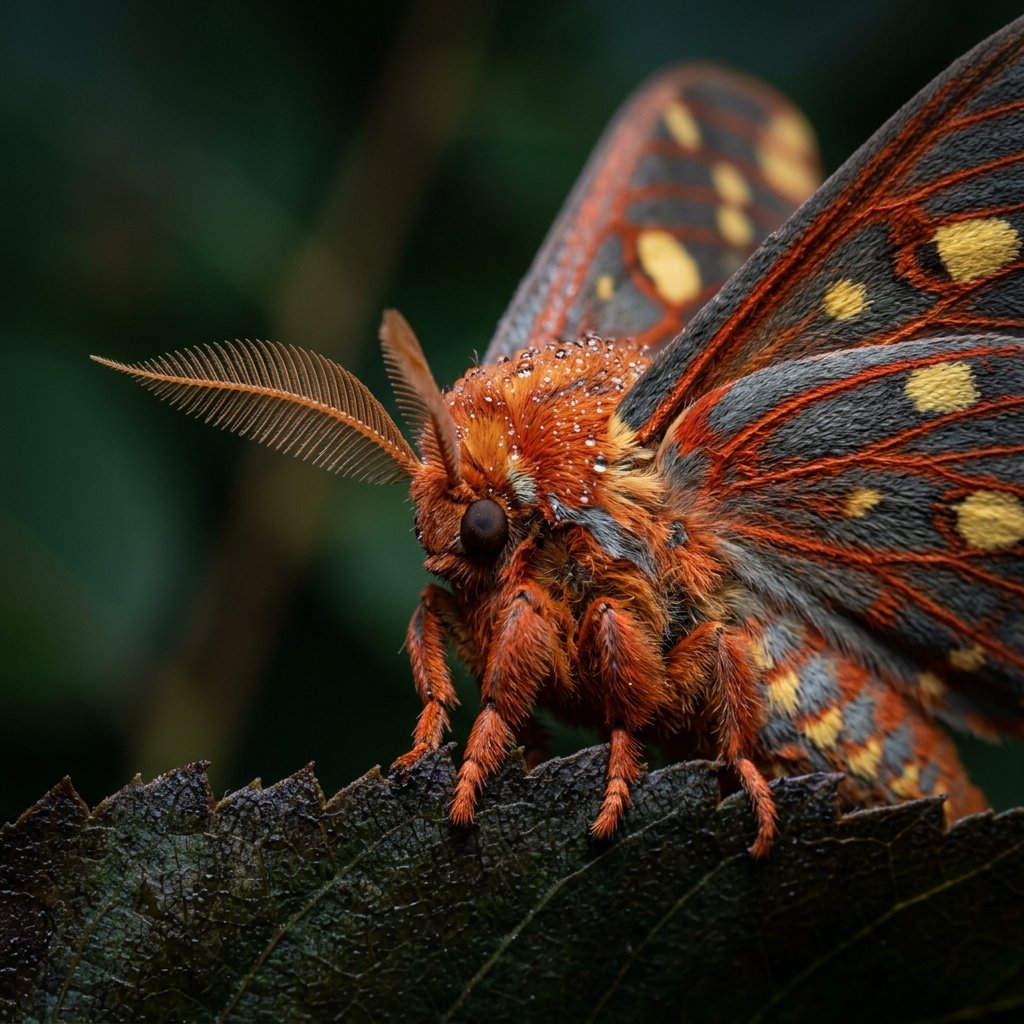
- 🦋 Regal Wings: The adult moth features beautiful gray-to-olive wings patterned with vibrant rusty-orange veins and large, creamy-yellow spots.
- 🐲 The "Devil" Larva: The caterpillar is unmistakable—reaching up to 6 inches long, it is bright teal-green with long, curved, black-tipped orange horns (scoli) near its head.
- 📏 Impressive Scale: With a wingspan that can reach 6 inches, they are often mistaken for small birds when fluttering around porch lights at night.
🌲 Habitat & Ecology
- 🌳 Gourmet Diet: The larvae are picky eaters that favor the foliage of Hickory, Walnut, Persimmon, and Sweetgum trees. They spend the summer high in the canopy before crawling to the ground to pupate.
- 🛏️ Earth Dwellers: Unlike many moths that spin silk cocoons in trees, the Regal Moth burrows several inches into the soil to create a pupal chamber where it spends the winter.
- 🌙 Night Owls: Adults are strictly nocturnal and are most active during the mid-summer months, often appearing near large wooded areas or forest edges.
⚠️ Safety & Toxicity
- 🛡️ Status: Completely harmless and non-aggressive.
- 🚫 All Bark, No Bite: Despite its fierce-looking "horns" and massive size, the Hickory Horned Devil cannot sting or bite. The horns are a "bluff" designed to scare away birds and curious predators. They do not possess any toxins or irritating hairs.
✨ Fun Fact
Adult Regal Moths do not have functional mouthparts! They live only about a week, relying entirely on the fat reserves they stored as caterpillars. Their sole mission in life is to find a mate and lay eggs before their short time runs out.
More Details








