Info
The iconic Monarch Butterfly, often called the "King of Butterflies," is perhaps the most recognized insect in North America. Known for its breathtaking orange-and-black patterns, this marathon traveler is famous for its multi-generational migration that spans thousands of miles. In folklore, many cultures view them as the returning spirits of ancestors, arriving just as the seasons begin to shift.
🔍 How to Identify
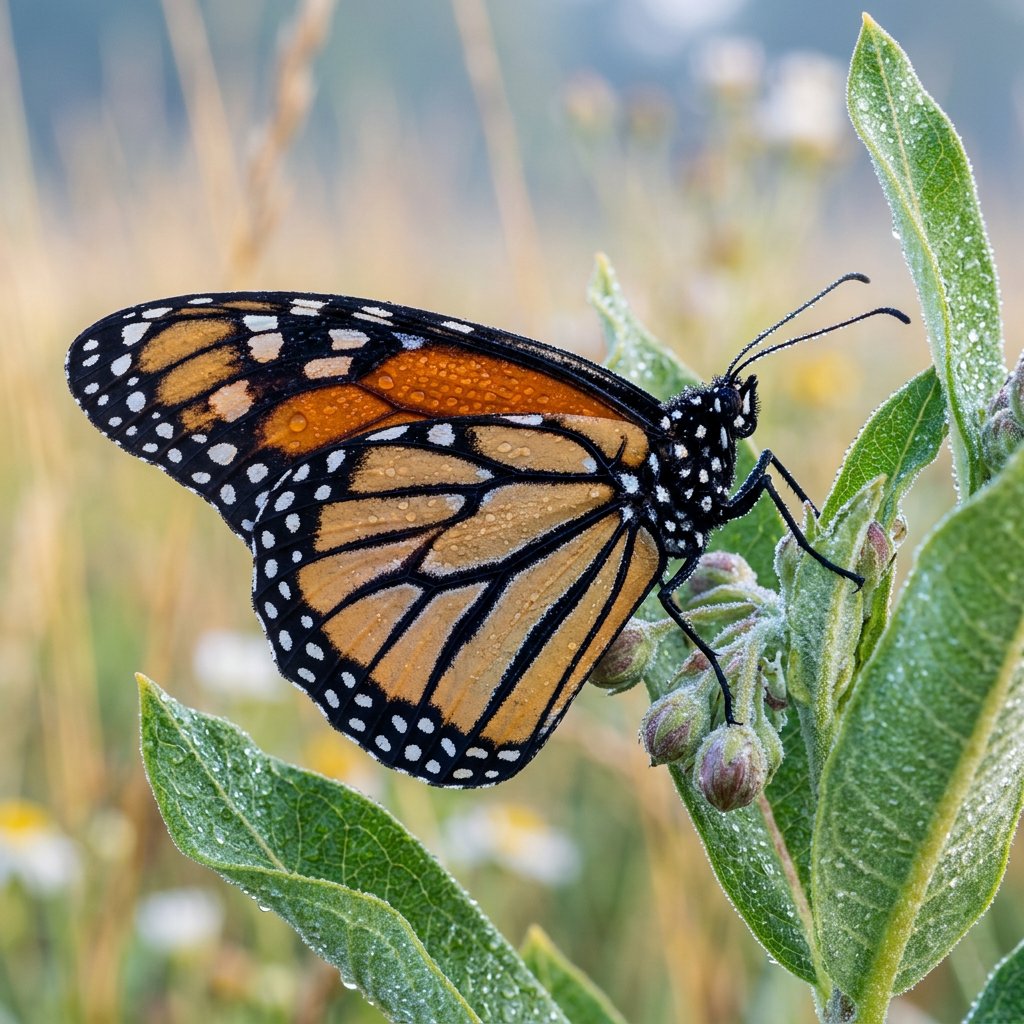
- 🦋 The Wings: Vibrant tawny-orange wings laced with heavy black veins and a thick black border adorned with white polka dots.
- ⚫ The Body: A sleek, jet-black body speckled with white dots, particularly around the head and thorax.
- 🐛 The Larva: A striking caterpillar with bold yellow, black, and white transverse stripes and two pairs of black "tentacles" or filaments.
🌲 Habitat & Ecology
- 🌼 The Pollinator: As adults, they are non-selective nectar feeders, visiting everything from Goldenrod to Zinnias, making them a welcome "friend" in any garden.
- 🌿 Milkweed Dependency: They are "obligate specialists," meaning the females will only lay their eggs on Milkweed (Asclepias). The caterpillars eat the leaves to absorb protective toxins.
- 🗺️ Navigation: Monarchs possess a sophisticated internal "sun compass" and a biological clock that allows them to navigate to the exact same forests in Mexico or California every winter.
⚠️ Safety & Toxicity
- 🟢 Status: Completely safe to observe and host in your garden; they do not bite, sting, or carry diseases.
- 🤢 Dietary Defense: Because they eat Milkweed, they are toxic to predators. If a bird or a pet (like a curious dog) eats one, the "cardiac glycosides" in their body can cause severe nausea and vomiting.
✨ Fun Fact
Monarchs are the only butterflies known to make a two-way migration similar to birds. What’s even more incredible is that the individual butterfly that returns north in the spring is often the great-great-grandchild of the one that flew south the previous fall!
More Details








