Info
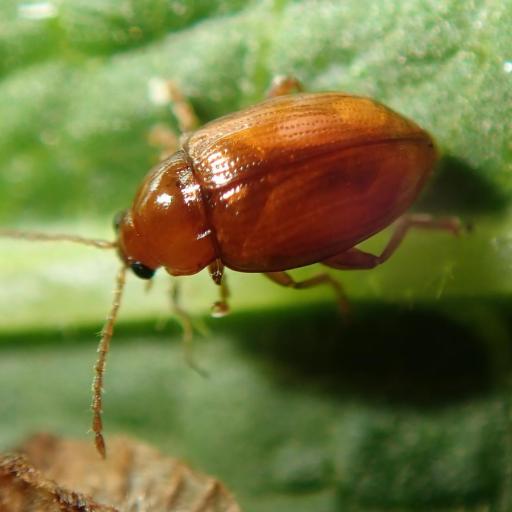
The Wheat Flea Beetle (Neocrepidodera ferruginea) is a tiny, metallic acrobat frequently found spring-boarding through meadows and cereal fields. Named for its distinct rust-colored armor, this beetle is a master of the "quick exit," using powerful hind legs to vanish the moment it senses danger. While it may look like a common flea due to its jumping habits, it is actually a dedicated herbivore with a penchant for grasses.
🔍 How to Identify
- 🎨 Rusty Finish: Its body is a striking shades of brownish-orange or deep rust, often with a polished, glossy sheen that glints in the sunlight.
- 🦵 Powerful Thighs: Like all flea beetles, it possesses significantly enlarged hind femora (thighs), which act like loaded springs for jumping.
- 📏 Diminutive Size: It is incredibly small, usually measuring only 3 to 4 millimeters in length, making it easy to miss unless it’s moving.
- 🕳️ Punctured Wings: If you look closely with a magnifying glass, you can see neat rows of tiny pits (punctures) running down its wing covers (elytra).
🌲 Habitat & Ecology
- 🌾 The Grass Specialist: This beetle is primarily found in grasslands, meadows, and agricultural fields. It has a strong preference for the Poaceae family, including wheat, barley, and various wild grasses.
- 🍽️ Feeding Habits: Adults chew small, circular holes into leaves—a pattern often called "shothole" damage. While the adults feed on the foliage, their larvae typically develop inside the stems or near the roots of the host plants.
- 🚜 Seasonal Sightings: They are most active from late spring through summer, often appearing in large numbers when the weather warms up and grass growth is lush.
⚠️ Safety & Toxicity
- ✅ Harmless: The Wheat Flea Beetle is completely harmless to humans and pets. They do not bite, sting, or carry diseases.
- 🌱 Garden Impact: While they are considered a minor agricultural pest, they rarely cause enough damage in a home garden to be a concern. They are more of a curiosity than a threat to your landscaping.
✨ Fun Fact
Despite their name, flea beetles are not related to true fleas at all! They evolved their jumping ability independently as a defense mechanism—a perfect example of "convergent evolution" where different species develop similar traits to solve the same problem: escaping a hungry predator.
More Details








