Info
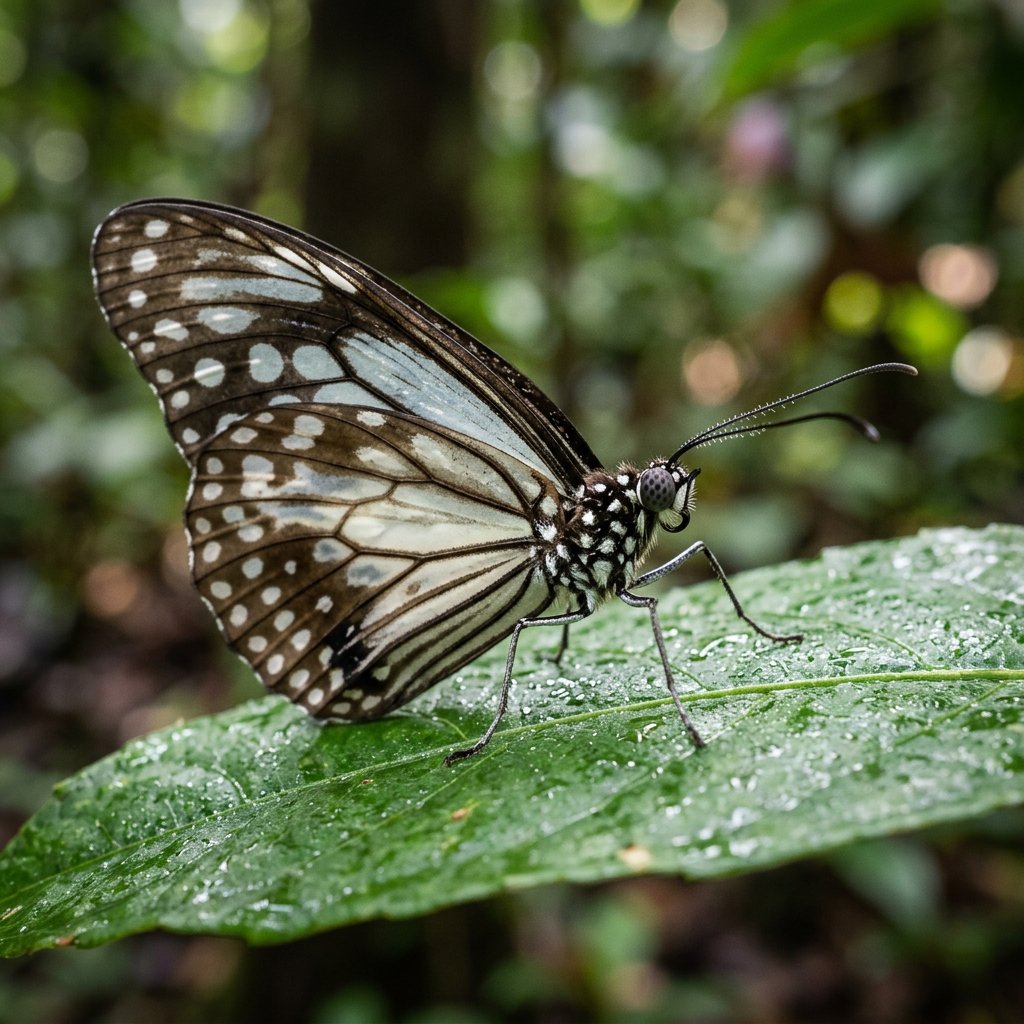
The Glassy Tiger is a delicate masterpiece of the butterfly world, often seen floating through the dappled sunlight of Asian forests. Known scientifically as Parantica aglea, its name perfectly captures its ethereal, semi-transparent wings that look like stained glass framed in black lead. These butterflies are famous for their unhurried, graceful flight, moving with a confidence that suggests they have nothing to fear from the world around them.
🔍 How to Identify
- 🦋 The Wings: The wings are grayish-white and translucent, featuring thick, dark veins and elongated black streaks that create a "tiger-stripe" pattern.
- 🖌️ Distinctive Markings: Unlike some of its relatives, the Glassy Tiger has two very clear, separate longitudinal streaks in the "cell" (the central area) of the forewing.
- 🌬️ Flight Style: It has a slow, weak, and fluttering flight pattern, often lingering near the ground or around low-flowering shrubs.
🌲 Habitat & Ecology
- 🍃 The Milkweed Connection: As a member of the Danainae subfamily, its caterpillars feed primarily on milkweeds and silk vines. This diet allows them to sequester toxins that stay with them into adulthood.
- 💧 Moisture Seekers: You will often find them in moist, deciduous forests or along riverbanks. They are particularly fond of "mud-puddling," where males congregate on damp soil to suck up essential minerals.
- 🌼 Forest Pollinators: While the larvae are picky eaters, the adults are generalist nectar feeders, playing a vital role in pollinating various forest wildflowers.
⚠️ Safety & Toxicity
- 🧪 Chemical Defense: The Glassy Tiger is chemically protected. It contains alkaloids that make it extremely bitter and toxic to birds and other predators.
- 🚫 Safe for Humans: They are completely harmless to humans. They do not bite or sting, and their "warning colors" are strictly meant for animals that might try to eat them.
- 🐾 Pet Safety: While your cat or dog is unlikely to catch one, ingesting the butterfly could cause mild stomach upset due to the defensive chemicals stored in its body.
✨ Fun Fact
The Glassy Tiger is part of a "Mimicry Ring." Because it is so toxic, other perfectly edible butterfly species have evolved to look exactly like it! Predators learn to avoid the glassy pattern, mistakenly leaving the mimics alone, thinking they are the foul-tasting Glassy Tiger.
More Details








