Info
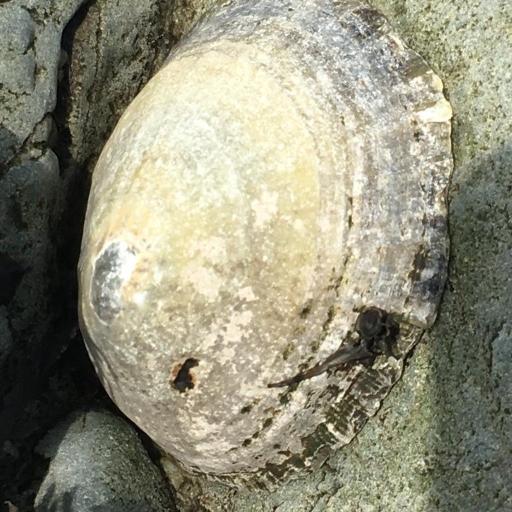
Often called the Common Limpet, Patella vulgata is frequently mistaken for a "sea bug" or insect due to its hard exterior, but it is actually a highly specialized marine snail. These "living pyramids" are the masters of the rocky shoreline, clinging to stones with a grip so strong it can withstand the full force of crashing Atlantic waves. In coastal folklore, they are the silent guardians of the tide, marking their "home" on the rocks for their entire lives.
🔍 How to Identify
- 🐚 The Shell: A rugged, cone-shaped shell that resembles a "Chinese hat" or a small mountain, featuring faint ridges radiating from the peak to the base.
- 👣 The Suction Foot: If pried (carefully!) from a rock, you will see a massive, circular muscular foot that acts like a powerful suction cup to keep the animal hydrated and anchored.
- 🎨 The Interior: The inside of the shell is smooth and pearly, often displaying a mix of translucent yellow, orange, or greyish-green hues.
🌊 Habitat & Ecology
- 🏠 The Home Scar: Limpets are famous for "homing." They wander away from their spot to graze on algae during high tide but always return to the exact same location, eventually wearing a custom-fit ring into the rock known as a "home scar."
- 🌿 Algae Lawnmowers: They play a vital role in the ecosystem as grazers. By scraping algae off the rocks with their incredibly strong teeth, they create space for other marine life, like barnacles and seaweed, to take hold.
- 🛡️ Tide Survivors: To prevent drying out when the tide goes out, they pull their shell tight against the rock, trapping a small reservoir of seawater inside to breathe.
⚠️ Safety & Toxicity
- ✅ Safe to Touch: Limpets are entirely non-toxic to humans and pets. They do not bite or sting.
- 🩹 Sharp Edges: The primary risk is physical; their shells can be quite sharp, especially if they are covered in small barnacles. Wear water shoes on rocky shores to avoid cuts.
- 🍽️ Edible but Tough: While they have been a survival food for thousands of years, they are notoriously rubbery and "chewy" unless prepared with specific culinary techniques.
✨ Fun Fact
The teeth of the Common Limpet are officially the strongest biological material on Earth. Scientific testing has shown that limpet teeth are stronger than spider silk and even comparable to high-performance man-made carbon fibers!
More Details








