Info
Often found poking out of the forest floor like a tiny, soot-covered umbrella, the Black-footed Polypore is a master of disguise. While it appears to grow directly from the dirt, it is actually a dedicated wood-decomposer clinging to "buried treasure"—rotting sticks and roots hidden just beneath the surface. Known for its elegant, funnel-like shape and its distinctive "sooty boot," this hardy fungus plays a vital role in recycling nutrients back into the woodland soil.
🔍 How to Identify
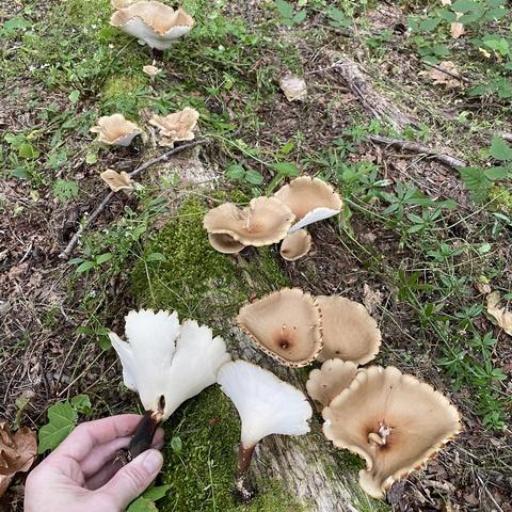
- 🍄 The Cap: Typically 2–10 cm wide, the cap is funnel-shaped or depressed in the center. It ranges in color from pale tan to a deep, smoky brown, often with a wavy or slightly lobed edge.
- 🥾 The "Black Foot": The most iconic feature is the stem. The base is covered in a fine, velvety black or dark brown fuzz that looks like the mushroom is wearing a tiny charcoal sock.
- 🧽 The Pores: Unlike common mushrooms with gills, the underside of Picipes melanopus features a layer of very tiny, white-to-cream colored pores that do not bruise easily.
- 🍂 Texture: The flesh is white and becomes quite tough, leathery, or corky as the mushroom matures, rather than staying soft and squishy.
🌲 Habitat & Ecology
- 🪵 The Hidden Host: This fungus is saprobic, meaning it feeds on dead organic matter. It specifically targets buried hardwood or coniferous debris. If you see one in a grassy patch, it’s almost certainly attached to a forgotten root or branch underground.
- 🌍 Forest Range: You are most likely to spot these in the summer and autumn months within temperate forests across North America and Europe. They prefer moist environments where wood decay is most active.
⚠️ Safety & Toxicity
- 🚫 WARNING: Not recommended for consumption. While the Black-footed Polypore is not known to be deadly, it is classified as inedible due to its tough, leathery consistency.
- 🤢 Digestive Risk: Eating mushrooms with this "corky" texture can cause significant gastrointestinal distress. It is best enjoyed as a subject for photography rather than a snack for the kitchen.
- 🐾 Pets & Kids: Because of its tough fibers, it can pose a choking hazard or cause stomach upsets in curious pets or small children.
✨ Fun Fact
The name melanopus is derived from the Greek words melas (black) and pous (foot). This "sooty boot" isn't just for show—the dark, velvety melanized tissue on the stem helps protect the mushroom from excess moisture and soil-borne bacteria while it grows upward!
More Details