Plant Overview
Known as the "Tree Acanthus," this striking shrub hails from the rugged highlands of East Africa, specifically Ethiopia and Kenya. Unlike its low-growing Mediterranean cousins often found in temperate gardens, Acanthus arboreus reaches for the sky with woody stems and dramatic, prehistoric-looking foliage. It is a bold architectural choice for gardeners looking to add a touch of "Jurassic" flair to their landscape.
🔍 How to Identify
- 🌿 Growth Habit: This species is uniquely tall for an Acanthus, developing a woody, upright structure that can reach heights of 10 to 15 feet in its native habitat.
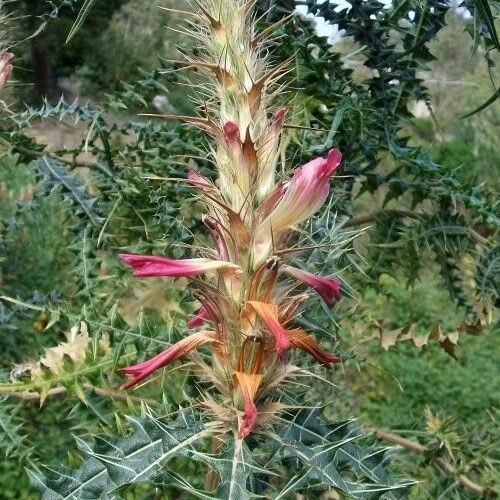
- ⚔️ Spiny Leaves: The leaves are large, deeply lobed, and dark green, featuring sharp, needle-like spines along the margins that command respect.
- 🌸 Majestic Blooms: It produces tall, stiff flower spikes (racemes) crowded with tubular, rose-pink to deep purple flowers, each emerging from a prickly bract.
🏡 In Your Garden
- 🛡️ Natural Security: Due to its height and fierce spines, this plant is frequently used as a "living fence" in East Africa to deter livestock and intruders, making it a great perimeter plant for large gardens.
- ☀️ Sun & Soil: It thrives in rocky, well-drained soil and prefers full sun; however, it appreciates a bit of afternoon shade in extremely hot, arid climates to prevent leaf scorch.
- 💧 Drought Resilience: Once its root system is established, it is incredibly hardy and can survive long periods without water, making it an excellent candidate for xeriscaping.
⚠️ Safety & Toxicity
- 🩹 Physical Hazard: While not known to be chemically toxic to humans or pets, the plant is "armed." The sharp spines on the leaf edges and flower heads can easily puncture skin or cause painful scratches.
- 🐾 Placement: It is best planted away from narrow walkways or areas where children and pets play to avoid accidental "stabbings" from the foliage.
✨ Fun Fact
🏛️ Ancient Inspiration: The Acanthus genus is one of the most famous in history; its jagged, ornate leaves provided the primary design inspiration for the "Corinthian" capitals found on the tops of Ancient Greek and Roman columns!

Detailed Care Instructions
Acanthus Arboreus, also known as the sea dock plant, can be grown successfully by following these steps:
- Choose a suitable location: Acanthus Arboreus thrives in full sun to partial shade. Select a spot in your garden that receives at least 6 hours of sunlight daily.
- Prepare the soil: Plant Acanthus Arboreus in well-draining soil that is rich in organic matter. If the soil in your garden is heavy clay, amend it with compost or peat moss to improve drainage.
- Planting: Dig a hole twice as wide and deep as the plant's root ball. Place the plant in the hole, making sure the top of the root ball is level with the soil surface. Backfill the hole with soil and pat it down gently to remove air pockets.
- Watering: Water the plant thoroughly after planting and keep the soil evenly moist but not waterlogged. During hot summer months, you may need to water the plant more frequently to prevent dehydration.
- Fertilizing: Apply a balanced, slow-release fertilizer in spring to promote growth and blooming. Follow the manufacturer's instructions for best results.
- Mulching: Mulch around the base of the plant with organic material to retain moisture, suppress weeds, and regulate soil temperature.
- Pruning: Trim dead or damaged foliage throughout the growing season to encourage new growth and maintain a neat appearance.
- Propagation: Acanthus Arboreus can be propagated by dividing established clumps in spring or fall. Simply dig up the plant, separate the root ball into smaller sections, and replant them in suitable locations.
By following these guidelines, you can successfully grow and enjoy the beautiful foliage and flowers of Acanthus Arboreus in your garden.
When watering this plant, it is important to give it enough water to penetrate the soil deeply, but not so much that it becomes waterlogged. The frequency of watering will depend on several factors, including the climate, time of year, and soil type. In general, this plant prefers well-draining soil that is kept evenly moist but not saturated. It is best to water in the morning or early evening, when the temperatures are cooler and evaporation is at its lowest. Avoid watering the foliage, as this can lead to fungal diseases. Instead, aim to water at the base of the plant, preferably with a drip irrigation system or a watering can with a long spout. During periods of drought, it may be necessary to water more frequently to keep the plant healthy. Conversely, during periods of heavy rain, it may be necessary to reduce watering to prevent root rot.
To fertilize the Acanthus Arboreus plant, it is recommended to use a balanced, slow-release fertilizer in the spring or early summer. Follow the instructions on the fertilizer package for proper dilution and application. Avoid applying too much fertilizer, as this can lead to nutrient imbalances and potentially harm the plant. Water the plant thoroughly after applying the fertilizer to help it soak into the soil and reach the plant's roots. Repeat the fertilization process once or twice a year to maintain the health and vitality of the Acanthus Arboreus plant.
A suitable soil for Acanthus Arboreus plant should be well-draining and rich in organic matter. A loamy soil with a slightly acidic to neutral pH level is ideal for this plant. It is important to ensure that the soil is not waterlogged, as this can lead to root rot. Additionally, adding a layer of mulch around the base of the plant can help retain moisture and regulate soil temperature. Overall, a fertile and well-aerated soil will support healthy growth and development of the Acanthus Arboreus plant.
Acanthus Arboreus can be propagated through division, which involves separating the plant into smaller sections and replanting them individually. To do this, carefully dig up the plant and gently tease apart the roots and rhizomes. Make sure each section has a healthy root system and some foliage attached.
Another method of propagation is through stem cuttings. Take a cutting from a healthy, established plant and remove the lower leaves. Dip the cut end in rooting hormone and plant it in a well-draining potting mix. Keep the cutting moist and in a warm, bright location until roots develop.
Acanthus Arboreus can also be propagated through seeds, although this method may take longer to produce mature plants. Collect the seeds in the fall and plant them in a seed-starting mix in a sunny location. Keep the soil consistently moist and watch for seedlings to emerge. Transplant the seedlings into individual pots once they have grown large enough to handle.








