Plant Overview
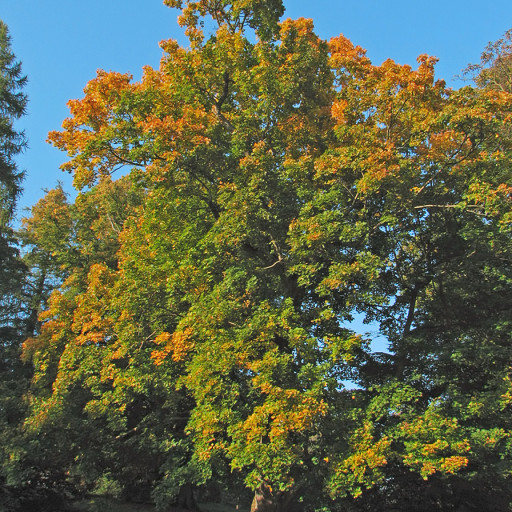
The Norway Maple is a majestic European traveler that has become one of the most common sight-seers in suburban neighborhoods across the globe. Known for its perfectly symmetrical, broad canopy, it provides deep, cool shade that can lower temperatures significantly on a hot summer day. While it was originally brought to North America in the 1700s as a hardy ornamental, it has proven to be a "Street Fighter," thriving in harsh urban conditions where more delicate trees might fail.
🔍 How to Identify
- 🍃 The Leaf Test: Look for large, hand-shaped leaves with 5 to 7 lobes and very sharp, pointed tips. They are typically wider than they are long.
- 🥛 Milky Sap: This is the ultimate "ID hack." If you pluck a leaf and squeeze the end of the stem (petiole), a drop of white, milky sap will appear—a feature that distinguishes it from almost all other maples.
- 🚁 Mustache Seeds: The winged seeds, called samaras, are set at a very wide, nearly 180-degree angle, making them look like a tiny green mustache.
- 🧥 Grooved Bark: Young trees have smooth, gray bark, but as they age, they develop a distinct pattern of tight, interlacing ridges that look like a woven texture.
🏡 In Your Garden
- 🌱 The Resource Hog: The Norway Maple is a dominant neighbor. It has a very dense, shallow root system that drinks up most of the surface moisture. This, combined with its heavy shade, makes it notoriously difficult to grow a lush lawn or delicate flowers directly beneath its branches.
- 🏗️ Urban Resilience: This tree is incredibly tough. It is highly resistant to air pollution, road salt, and compacted soil, making it an ideal choice for parkways or areas near busy streets where other trees might struggle to breathe.
- 🍂 Golden Finale: Unlike the fiery reds of the Sugar Maple, the Norway Maple typically turns a brilliant, solid yellow late in the autumn, often staying green longer than its neighbors.
⚠️ Safety & Toxicity
- 🐾 Pet Friendly: The Norway Maple is generally considered non-toxic to dogs and cats. It is a safe choice for backyards where curious pets like to play.
- 🐴 Equine Warning: While the Red Maple is the primary concern for horses, it is best practice to keep horses away from wilted maple leaves of any variety, as the wilted foliage can occasionally cause digestive issues or toxicity in large quantities.
- 🪵 Invasive Potential: In certain regions of North America, this tree is considered invasive because its "helicopter" seeds travel so far and sprout so easily that they can crowd out native forest species.
✨ Fun Fact
The Norway Maple is a master of aerodynamics! Its samaras (the "helicopters") are shaped like a single-winged blade. As they fall, they create a "leading-edge vortex" that provides extra lift, allowing the wind to carry the seeds miles away from the parent tree to start new colonies.

Detailed Care Instructions
| Humidity | Normal |
| Lighting | Part Sun |
| Difficulty | Easy |
| Hibernation | Cold Period |
| Hardiness Zones | 4 - 10 |
To grow Acer platanoides, also known as the Norway maple, follow these steps:
- Planting location: Choose a spot with well-drained soil that receives full sun to partial shade. Norway maples can tolerate a wide range of soil conditions but prefer slightly acidic to neutral pH levels.
- Prepare the soil: Loosen the soil and remove any weeds or rocks. Incorporate organic matter like compost into the soil to improve drainage and fertility.
- Planting the sapling: Dig a hole that is wide and deep enough to accommodate the roots of the sapling. Place the sapling in the hole, making sure the root ball is level with or slightly above the soil surface. Backfill the hole with soil, gently firming it down but avoiding compacting it.
- Watering: Give the newly planted sapling a thorough watering and ensure that the soil remains moist but not waterlogged. Water deeply and regularly, especially during dry spells, to help establish a healthy root system. However, avoid overwatering to prevent root rot.
- Mulching: Apply a layer of organic mulch around the base of the sapling, leaving a gap near the trunk to prevent rot. Mulch helps retain soil moisture, suppresses weeds, and regulates soil temperature.
- Pruning: Prune any broken or damaged branches and maintain a well-balanced formation of the tree by removing any competing or crossing branches. Pruning can be done during the dormant season in late winter or early spring.
- Fertilizing: While Norway maples often do not require additional fertilization, you can apply a slow-release, balanced fertilizer in early spring to promote healthy growth. Follow the package instructions for proper application rates.
- Pest and disease management: Monitor the tree for common pests like aphids, scale insects, and leafhoppers. Treat any infestations with appropriate organic or chemical insecticides as needed. Disease control includes regular inspection for leaf spot, tar spot, and anthracnose. Pruning out affected branches and maintaining overall tree vigor can help prevent or manage these diseases.
Remember, Acer platanoides is known for its vigorous growth, so it's essential to provide ample space for the tree to grow and avoid planting it too close to buildings or other structures.

Place in a window with dappled sun or a spot in the middle of a room. Or directly in a window facing west or east.

To water this plant, you should first check the moisture level of the soil by sticking your finger about an inch or two deep into the soil. If it feels dry, then it's time to water. Use a watering can or hose to gently water the area around the base of the plant, being careful not to overwater. Allow the water to fully soak into the soil before watering again. The frequency of watering will depend on multiple factors such as the temperature, humidity level, and exposure to sunlight. It's important to monitor the moisture level regularly and adjust your watering schedule accordingly.
- During early spring, apply a slow-release nitrogen fertilizer to the soil.
- Make sure to spread the fertilizer evenly around the base of the tree.
- Use a rake or gardening fork to incorporate the fertilizer into the soil.
- Water the plant immediately after fertilizing to help the nutrients penetrate deeper into the soil.
- Avoid fertilizing during the summer months, as this can encourage new growth that is susceptible to damage or disease.
- Repeat the fertilizing process annually, taking care not to over-fertilize which can cause damage to the tree.
The best type of soil to use for the Acer Platanoides plant is a mix of loamy or sandy soil with some clay content. The soil should be well-draining and have a pH level of 5.5 to 7.5. It's also important to ensure that the soil is rich in organic matter, such as compost or leaf litter, to provide the plant with nutrients and promote healthy root growth. When planting the Acer Platanoides, it's important to choose a location that receives ample sunlight, as well as one that is protected from strong winds. It's also recommended to fertilize the plant regularly, using a balanced, slow-release fertilizer. Finally, it's important to ensure that the plant is watered regularly, as it does not tolerate drought well.
To propagate this plant, collect mature seeds from the tree during fall. After collecting the seeds, soak them in water for a few hours. Once the seeds have absorbed enough water, plant them in well-drained soil in a pot or directly in the ground. Cover the seeds with a thin layer of soil and water regularly. It may take a few weeks for the seeds to germinate. Alternatively, you can propagate it through cuttings in the summer. Take softwood cuttings from the plant's tips, about four to six inches long. Remove the lower leaves and dip the cut end in rooting hormone. Plant the cutting in a pot filled with well-draining soil and keep it in a warm and humid location. Water the soil regularly, but do not overwater. The cutting should root in about a month.
Common pests of the norway maple include Spider mites, thrips, larvae. Make a habit of checking your norway maple frequently for pests so that any infestations can be caught and managed early.








