Plant Overview
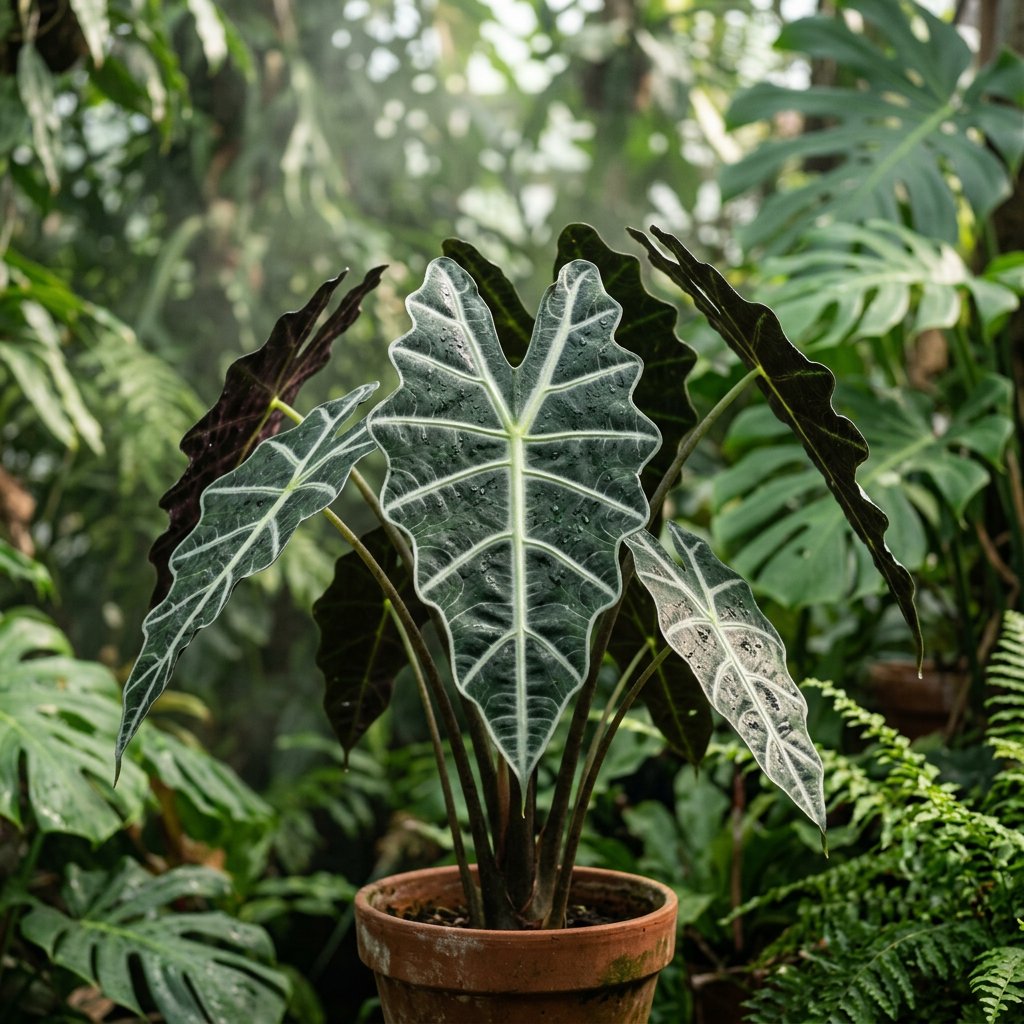
The Alocasia × amazonica, famously known as the "African Mask Plant" or "Elephant Ear," is the dark aristocrat of the houseplant world. Despite its exotic name, this plant never saw the Amazon rainforest; it is a man-made hybrid designed to look like a botanical masterpiece. With its deep, almost-black foliage and striking white skeletal veins, it brings an instant prehistoric and architectural vibe to any indoor space.
🔍 How to Identify
- 🍃 Leaf Shape: Dramatic, elongated arrowhead or "shield" shape with deeply scalloped, wavy edges.
- 🎨 Contrast: The top of the leaf is a dark, glossy forest green that appears nearly neon against the thick, raised silvery-white primary veins.
- 🟣 The Underside: If you flip the leaf over, you’ll find a gorgeous, matte burgundy or deep purple hull, a classic trait of many Alocasia species.
- 📏 Texture: The leaves have a thick, leathery, and waxy feel, held upright by long, fleshy green stems.
🏡 In Your Garden & Home
- 💧 The "Goldilocks" Humidity: This plant is a humidity snob. It thrives in "jungle-like" air (60%+ humidity). If the air is too dry, the leaf edges will quickly turn brown and crispy, so a pebble tray or humidifier is its best friend.
- 🪴 Rhizome Resilience: It grows from a thick underground rhizome. This is why it hates "wet feet"—excessive water trapped around the base can lead to rapid rot. Always ensure your pot has excellent drainage.
- 💤 The Winter Nap: Don't panic if it stops growing or loses leaves in the winter. It often enters a period of dormancy. If it "dies back" to the soil, keep the soil barely moist and wait for the warmth of spring to see new spikes emerge.
⚠️ Safety & Toxicity
- 🚫 Status: Toxic to humans and pets.
- 🐱 Pet Warning: The plant contains calcium oxalate crystals. If chewed, it causes immediate intense burning of the mouth, tongue, and throat, often leading to drooling or swelling.
- 🖐️ Skin Irritation: The sap can be an irritant to those with sensitive skin; it’s always a good idea to wash your hands after pruning.
✨ Fun Fact
The "Amazonica" name is a bit of a historical prank! It wasn't named after the river, but after the "Amazon Nursery" in Miami, Florida, where it was first bred and sold by nurseryman Salvadore Mauro in the 1950s.

Detailed Care Instructions
| Humidity | Normal |
| Lighting | Part Sun |
| Difficulty | Medium |
| Temperature | 18°C - 28°C |
| Hardiness Zones | 9 - 11 |
To grow an Alocasia X Amazonica plant, also known as Elephant Ear or African Mask, you can follow these steps:
- Lighting: Place your Alocasia plant in a location that receives bright, indirect sunlight. Avoid direct sunlight as it can scorch the leaves.
- Temperature: Keep your plant in a warm environment with temperatures ranging between 60-85°F (15-29°C). It prefers a humidity level of 60-70%.
- Soil: Choose a well-draining potting mix with good moisture retention. A mixture of peat moss, perlite, and sand is ideal.
- Potting: Plant your Alocasia in a pot with drainage holes to prevent waterlogging. Ensure that the pot is deep enough for the roots to grow and has some extra space for expansion.
- Watering: Water the plant thoroughly when the top inch (2.5 cm) of soil feels dry. Alocasias prefer evenly moist soil but can't tolerate soggy conditions. Allow the excess water to drain out completely.
- Fertilizing: Feed your Alocasia once a month during the growing season (spring and summer) using a balanced liquid fertilizer. Dilute the fertilizer to half-strength and apply it to damp soil.
- Humidity: Alocasia plants thrive in high humidity environments. You can increase humidity by misting the leaves daily, placing a tray filled with water near the plant, or using a humidifier.
- Pruning: Trim any dead or yellowing leaves to maintain the aesthetic appeal of the plant. Ensure that you use clean and sharp pruning shears.
- Repotting: Repot your Alocasia every 1-2 years into a slightly larger pot to provide room for its expanding root system. Spring is the ideal time for repotting.
- Pests and diseases: Keep an eye out for common pests like spider mites and fungus gnats. If necessary, treat infestations promptly using organic or chemical insecticides. Avoid overwatering to prevent root rot.
Remember to provide adequate care and maintain a regular watering and feeding schedule. With proper attention, your Alocasia X Amazonica plant should grow well and thrive.

Place in a window with dappled sun or a spot in the middle of a room. Or directly in a window facing west or east.

To properly water this plant, it is important to first determine its watering needs based on its environment and growth stage. Generally, it is best to allow the soil to dry out slightly before watering, as overwatering can lead to root rot and other issues. When watering, it is best to use water that is at room temperature or slightly warm, and to water deeply until the excess runs out of the drainage holes in the pot. It is important to avoid getting water on the leaves, as this can lead to fungal growth and other problems. In addition to watering, this plant may benefit from occasional misting or humidifying to mimic its natural tropical environment.
To fertilize this plant, use a balanced fertilizer with equal parts nitrogen, phosphorus, and potassium. Apply the fertilizer every two to three weeks during the growing season, which is typically spring and summer. Dilute the fertilizer according to the manufacturer's instructions and apply it to the soil around the base of the plant. Be careful not to over-fertilize, as this can damage the delicate roots. Additionally, make sure the soil is moist before fertilizing to prevent burning of the roots.
The ideal soil for the plant in question would be a well-draining, nutrient-rich mixture that is slightly acidic to neutral in pH. It should contain a mixture of organic matter such as peat moss, compost, and perlite or sand for improved drainage. Additionally, it is important to avoid using heavy soils or those that retain too much moisture, as this can lead to root rot and other issues.
To propagate this plant, you will need a healthy parent plant with at least one mature leaf. Cut off a section of the leaf that has a stem attached to it. Make sure the cut is clean and not jagged. The stem should be about 5-7 cm long.
Place the stem in a jar of water, making sure that the stem is submerged and that the leaf is above the water line. Change the water every few days to prevent bacteria growth.
After a few weeks, you should start to see roots growing from the stem. Once the roots are about 2-3 cm long, you can transplant the stem into well-draining soil. Keep the soil moist but not too wet, and place the new plant in a warm and humid location with bright, indirect light.
Over time, the new plant should start to grow new leaves. As it grows, you may need to repot it into a larger container. With proper care, your propagated plant should thrive and grow into a beautiful addition to your indoor garden.
Common pests of the alocasia x amazonica include Mealybugs, spider mites, fungus gnats, aphids, thrips. Make a habit of checking your alocasia x amazonica frequently for pests so that any infestations can be caught and managed early.







