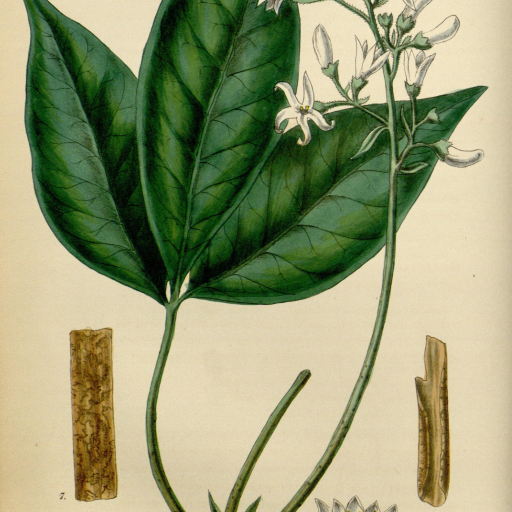
Plant Overview
Known as the botanical source of the world’s most famous medicinal "bitters," Angostura trifoliata is a small, evergreen tree native to the lush, tropical mountains of Venezuela and Colombia. While its name is synonymous with cocktail culture, this plant was originally prized by indigenous Orinoco tribes and later European doctors as a potent tonic for fevers and digestion. It is a true "forest pharmacy" plant, standing as a symbol of South American ethnobotanical history.
🔍 How to Identify
- 🍃 Trifoliate Leaves: The most distinct feature is its leaves, which grow in groups of three leaflets (hence the name trifoliata). They are bright green, pointed, and emit a faint, spicy aroma when crushed.
- 🌸 Tubular Blooms: It produces clusters of small, white, or slightly flesh-colored flowers that have a fuzzy texture and a somewhat unpleasant, heavy scent meant to attract specific pollinators.
- 🪵 Bitter Bark: The bark is relatively thin, grayish-brown, and has a smooth texture on young branches that becomes rougher with age. If tasted, the bark is intensely, almost overwhelmingly bitter.
🏡 In Your Garden
- 🌦️ Tropical Requirements: This is not a plant for cold climates. It thrives in high humidity and constant warmth. In a home or greenhouse setting, it requires a "jungle floor" environment—dappled sunlight rather than harsh, direct rays which can scorch its leaflets.
- ⛰️ Drainage is Key: In its native habitat, it grows on mountain slopes. It hates "wet feet," so use a potting mix that incorporates perlite or orchid bark to ensure water moves quickly away from the root system.
⚠️ Safety & Toxicity
- 🧪 Medicinal Assessment: While used historically in bitters and tonics, the bark contains active alkaloids like cusparine. It should never be ingested in its raw form or as a concentrated homemade extract without professional guidance.
- 🐾 Pets & Children: The intense bitterness usually acts as a natural deterrent, but ingestion can cause nausea, vomiting, or digestive upset in cats, dogs, and small children. It is best kept as an ornamental curiosity out of reach.
✨ Fun Fact
🍸 The Great Switch: Despite the name, the modern bottle of "Angostura Bitters" found in bars today does not contain any Angostura trifoliata bark! The recipe was changed long ago to use gentian root, though the brand kept the name of the Venezuelan town where the tonic was first produced.

Detailed Care Instructions








