Plant Overview
Known famously as the Wig Tree Fern, Cyathea baileyana looks like a botanical escapee from a prehistoric jungle. Native to the misty, high-altitude rainforests of Queensland, Australia, this fern is named for the peculiar "wig" of tiny, curly fronds that sprout at the base of its main leaves. It is a slow-growing masterpiece that adds an air of ancient mystery to any humid garden or conservatory.
🔍 How to Identify
- 🌿 The "Wig": The most distinct feature is a cluster of dark, lace-like sterile fronds (aphlebiae) at the base of each leaf stalk, resembling a Victorian-era powdered wig.
- 🎋 Slender Trunk: It possesses a dark, fibrous trunk that remains relatively slim compared to other tree ferns, reaching heights of up to 5 meters in the wild.
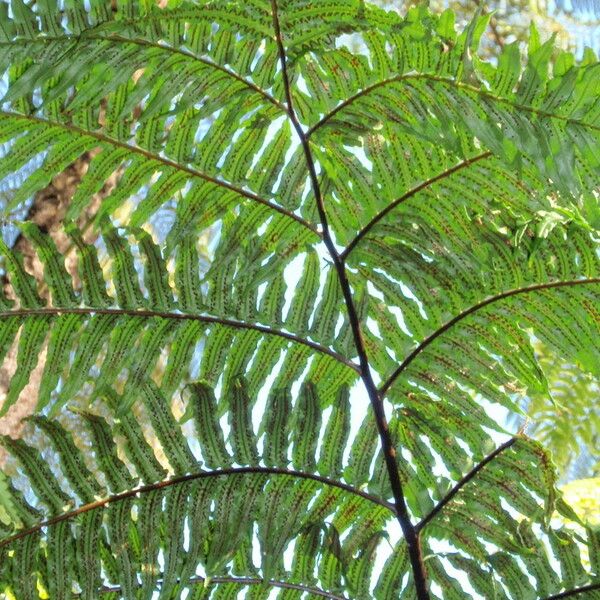
- 🍃 Feathered Fronds: The main green leaves are bipinnate (twice-divided), arching gracefully to create a soft, umbrella-like canopy.
🏡 In Your Garden
- 💧 Moisture Mimicry: Because it originates from "cloud forests," this fern requires high humidity and consistent moisture. It does not tolerate "wet feet" (soggy soil) but will wilt quickly if the trunk or crown dries out.
- 🌑 The Understory Specialist: This species is highly sensitive to light. It thrives in deep to partial shade, as direct afternoon sun will quickly scorch its delicate, lacy foliage.
- 🥣 Self-Feeding Mechanism: In its natural habitat, the dense "wig" helps catch falling leaf litter from the trees above. This debris decomposes over time, providing the fern with a slow-release natural fertilizer.
⚠️ Safety & Toxicity
- 🟢 Safe Status: Cyathea baileyana is considered non-toxic to humans, cats, and dogs.
- 🌬️ Spore Sensitivity: While the plant isn't poisonous, the fine dust-like spores produced on the underside of mature fronds can occasionally irritate the respiratory systems of very sensitive individuals if handled in enclosed spaces.
✨ Fun Fact
Cyathea baileyana is a true living fossil. Its lineage survived the breakup of the supercontinent Gondwana, and the peculiar "wig" it grows is an evolutionary trait rarely seen in other fern families, making it a botanical celebrity among collectors.

Detailed Care Instructions








