Plant Overview
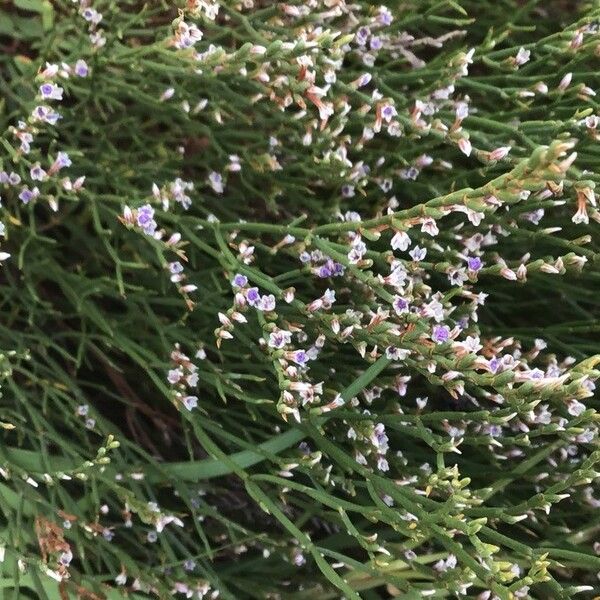
Often called the Dwarf Sea Lavender, this resilient Mediterranean native is a master of coastal survival. Hailing from the rugged, volcanic shores of Pantelleria, it has earned a reputation as a "tough-as-nails" perennial that brings a misty, lavender-colored cloud to rocky landscapes. Because its delicate blooms retain their vibrant hue long after they’ve dried, it is a timeless favorite for "everlasting" floral arrangements and bohemian-style bouquets.
🔍 How to Identify
- 🌸 Everlasting Blooms: Tiny, funnel-shaped flowers in shades of violet-blue or soft lavender, appearing in airy, branched clusters that resemble a light mist from a distance.
- 🍃 Basal Rosettes: Small, leathery, spoon-shaped leaves that form a tight, ground-hugging cushion to protect the plant from harsh winds.
- Branching Wiry Stems: The flower stalks are remarkably stiff and wiry, allowing the plant to dance in the wind without snapping or drooping.
🏡 In Your Garden
- 🧂 Salt Specialist: As a "halophyte," this plant is uniquely adapted to thrive in salty air and poor soils. It is the perfect choice for coastal gardens or rockeries where other more delicate flowers might struggle.
- 🏜️ Drainage is Key: To keep this island native happy, you must provide gravelly or sandy soil. It hates "wet feet" and will quickly rot if left in heavy, water-logged clay.
- ⚓ The Taproot Rule: Like many drought-tolerant plants, it grows a long, sturdy taproot to find deep water. Because of this, it resents being moved; once you plant it, it’s best to let it stay put for life.
⚠️ Safety & Toxicity
- ✅ Safe for All: Limonium cosyrense is generally considered non-toxic to humans, cats, and dogs.
- 🌾 Texture Warning: While safe to touch and grow, the dried, papery texture of the flowers can be a minor choking hazard for curious pets if chewed in large quantities.
✨ Fun Fact
The species name cosyrense is a historical tribute; it refers to Cosyra, the ancient Roman name for the island of Pantelleria, where this plant was first discovered clinging to volcanic cliffs overlooking the Mediterranean Sea.

Detailed Care Instructions








