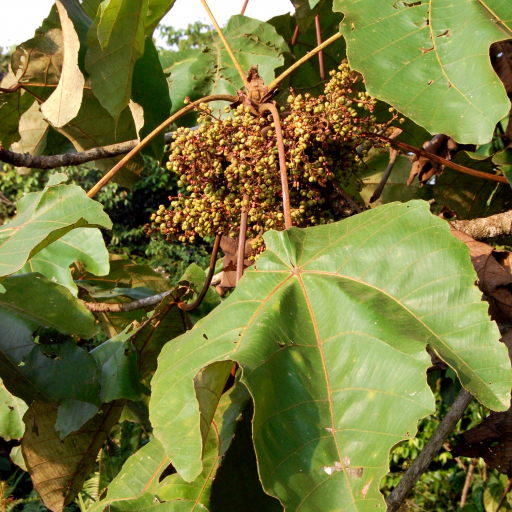
Plant Overview
Imagine walking through a Southeast Asian rainforest and seeing a leaf large enough to act as a natural umbrella. That is the Macaranga gigantea, famously known as the "Elephant’s Ear Macaranga" or "Giant Mahang." This fast-growing giant acts as a "green bandage" for the Earth, being one of the first species to colonize and heal sun-scorched clearings after forest fires or logging.
🔍 How to Identify
- 🍃 Enormous Leaves: The most striking feature is the size; individual leaves can reach over 60–100 cm in diameter, often featuring three shallow, pointed lobes.
- ☂️ Umbrella Attachment: The leaf stalk (petiole) attaches to the underside of the leaf rather than the edge—a botanical structure known as "peltate," resembling a green parasol.
- 🍂 Prominent Stipules: At the base of the leaf stalks, you will find large, persistent leaf-like structures (stipules) that protect the growing tips of the branches.
🏡 In Your Garden
- 🚀 The Pioneer Pace: This plant is a "pioneer," meaning it is biologically programmed to grow at breakneck speeds. It requires significant space and is best suited for large estates or ecological restoration projects rather than small containers.
- ☀️ Light & Humidity: It craves high humidity and intense, direct sunlight. Because it has a relatively short lifespan compared to hardwoods, it focuses all its energy on rapid vertical growth to dominate the canopy.
⚠️ Safety & Toxicity
- ✅ Generally Safe: Macaranga gigantea is not considered toxic to humans or common household pets.
- 💧 Sticky Sap: While not poisonous, the plant produces a resinous, sticky sap that can be difficult to wash off the skin and may cause very mild irritation for those with extreme sensitivities.
✨ Fun Fact
Many species in the Macaranga genus are "myrmecophytes," meaning they have a symbiotic relationship with ants. The plant provides hollow stems for the ants to live in, and in return, the ants act as a tiny private security force, attacking any caterpillars or insects that try to eat the giant leaves!

Detailed Care Instructions
To grow Macaranga Gigantea plants, you can follow these steps:
- Climate and Location: Macaranga Gigantea plants require a warm and humid climate. They thrive in tropical or subtropical regions. Choose a location that receives partial shade or filtered sunlight.
- Soil: These plants prefer well-draining soil with organic matter. A mix of garden soil, compost, and sand can be used. Make sure the soil pH is slightly acidic to neutral (6.0-7.0).
- Planting: Dig a hole in the prepared soil that is slightly larger than the root ball of the plant. Place the plant in the hole, backfill with soil, and gently firm it around the base of the plant.
- Watering: Keep the soil evenly moist but not waterlogged. Water the plant regularly, especially during dry periods. Allow the topsoil to dry slightly before watering again. Avoid overwatering as it can cause root rot.
- Fertilization: Use a balanced slow-release fertilizer during the growing season (spring through fall) to provide essential nutrients. Follow the package instructions for dosage. Avoid overfertilization, as it can harm the plant.
- Pruning: Macaranga Gigantea plants can grow quite large, so pruning may be required to maintain shape and size. Prune any dead or damaged branches and shape the plant as desired. Pruning is best done during the early spring.
- Support: Consider providing support like stakes or trellis to help the plant grow upright and prevent it from falling over due to its height.
- Mulching: Apply a layer of organic mulch around the base of the plant to help retain soil moisture, suppress weeds, and regulate soil temperature.
- Pests and Diseases: Monitor the plant regularly for common pests like aphids, scale insects, and mites. In case of infestation, treat the plant with appropriate organic or chemical pest control methods. Keep an eye out for any signs of diseases like leaf spot or root rot and take necessary measures to address them.
- Propagation: Macaranga Gigantea plants can be propagated through stem cuttings or seeds. Take a 6-8 inch stem cutting from a healthy plant and place it in a pot with a well-draining soil mix. Keep the soil moist and provide indirect sunlight until roots develop. Alternatively, collect the seeds from mature fruit pods and sow them in a seed-starting tray or pots. Keep the soil moist until germination.
Remember, Macaranga Gigantea plants can grow quite large, so ensure you have enough space for them to grow and thrive.

Place in a bright room that is sun drenched almost all day. Or directly in a south-facing window.

To water Macaranga Gigantea plant, ensure to follow these guidelines:
1. Observe the soil: Check the moisture level by inserting your finger into the soil up to about an inch. If it feels dry, it is an indication that the plant requires watering.
2. Choose the right watering method: Macaranga Gigantea plants prefer moderate watering rather than excessive or very frequent watering. Avoid overwatering as it can lead to root rot or other water-related issues.
3. Water thoroughly: When watering, aim to thoroughly wet the soil to ensure proper hydration of the plant's root system. Allow the water to penetrate through the entire pot or container and ensure proper drainage. This will help prevent waterlogging and subsequent damage to the plant.
4. Consider the environment: Factors such as temperature and humidity can impact the water requirements of Macaranga Gigantea. If the climate is hot and dry, the plant may require more frequent watering. In contrast, cooler and more humid conditions may necessitate watering less frequently.
5. Time of day: It is generally recommended to water Macaranga Gigantea plant during the morning or early evening. Avoid watering during the hottest part of the day to prevent the water evaporating too quickly or damaging the foliage due to sun exposure.
6. Adjust watering frequency: Regularly monitor the plant's overall health and growth to determine the appropriate watering frequency. If the leaves appear droopy or the soil is consistently dry, increase the frequency of watering. Conversely, if the leaves appear yellow or the soil is consistently wet, reduce watering frequency to avoid overhydration.
7. Consider using filtered water: Macaranga Gigantea plants are generally tolerant of tap water; however, if your water source is particularly hard or contains chemicals such as chlorine, it may be beneficial to use filtered water. This can help prevent potential damage to the plant's sensitive root system.
Remember, each plant's watering needs may vary based on its individual environment and condition. Therefore, it is essential to closely observe and understand the specific requirements of your Macaranga Gigantea plant to ensure optimal growth and overall well-being.
- Choose a balanced fertilizer: Select a fertilizer with an equal ratio of nitrogen (N), phosphorus (P), and potassium (K). A general-purpose 10-10-10 or 20-20-20 fertilizer may work well.
- Dilute the fertilizer: Follow the package instructions to dilute the fertilizer in water. For example, if the instructions suggest using 1 tablespoon of fertilizer per gallon of water, mix accordingly.
- Apply during the growing season: Fertilize the Macaranga Gigantea plant during its active growing period, which is generally spring and summer. Avoid fertilizing during winter or dormant periods.
- Water the plant: Before applying the fertilizer, make sure the soil is moist. If the soil is dry, water the plant thoroughly to ensure proper absorption of the fertilizer.
- Apply the fertilizer: Pour the diluted fertilizer solution around the base of the plant, avoiding direct contact with the leaves. Apply enough to moisten the soil, but do not over-fertilize as it may damage the plant.
- Repeat as needed: Depending on the specific fertilizer and the plant's needs, repeat the fertilization process every 4-8 weeks during the growing season. However, always follow the instructions provided with the specific fertilizer brand for proper frequency.
- Monitor the plant's response: Keep an eye on the Macaranga Gigantea plant's growth and health after fertilization. If the plant shows signs of stress or fertilizer burn (e.g., wilted leaves, browning), discontinue fertilizing and adjust the frequency or concentration as needed.
Remember, it's essential to research and understand the specific needs of your Macaranga Gigantea plant to ensure proper fertilization.
The ideal soil for Macaranga Gigantea plant is a well-draining and fertile soil mixture. It should have a slightly acidic to neutral pH level, ideally ranging from 6.0 to 7.0. The soil should be rich in organic matter and have good moisture retention capacity without becoming waterlogged. The plant prefers a loamy soil texture, comprising a balanced combination of sand, silt, and clay.
To enhance the soil's fertility, you can incorporate organic materials such as compost or well-rotted manure. These additions will improve overall soil structure, water-holding capacity, and nutrient content. It is advisable to avoid heavy clay soils, as they tend to retain excess water and hinder root development.
Additionally, maintaining good drainage is crucial for the success of Macaranga Gigantea. Therefore, it is recommended to add perlite or coarse sand to the soil mixture to ensure adequate drainage. This will prevent waterlogging and minimize the risk of root rot.
Regularly monitoring soil moisture levels and allowing the soil to partially dry out between watering will help maintain optimal conditions for Macaranga Gigantea plant growth. Regular fertilization with a balanced, slow-release fertilizer specifically formulated for houseplants can also promote healthy foliage and robust growth.
Remember that Macaranga Gigantea is sensitive to environmental fluctuations, so it is crucial to provide consistent conditions, including suitable soil, to ensure its well-being.
Propagation of Macaranga gigantea can be achieved through several methods. Here are some detailed guidelines for propagating this particular plant:
- Propagation by Seeds:
- Collect ripe seeds from the parent plant. These seeds are usually contained in small capsules.
- Remove the seeds from the capsule and wash them to remove any residual pulp.
- Soak the seeds in water for about 24 hours to soften the outer seed coat.
- Prepare a seedling tray filled with a well-draining potting mix.
- Sow the seeds on the surface of the soil, lightly pressing them into the mix, but ensuring they are not buried too deep.
- Mist the soil surface to provide moisture and cover the tray with plastic to create a greenhouse-like environment.
- Place the tray in a warm, well-lit area, away from direct sunlight.
- Ensure the soil remains consistently moist during the germination period, which can take a few weeks.
- Once seedlings have established and developed several true leaves, they can be individually potted into larger containers before eventually being transplanted outdoors.
- Collect ripe seeds from the parent plant. These seeds are usually contained in small capsules.
- Propagation by Stem Cuttings:
- Select a healthy stem from the parent plant that is around 4-6 inches long.
- Using a clean, sharp knife or pruners, make a clean cut just below a node, which is a point where the leaf attaches to the stem.
- Remove any lower leaves, leaving only 2-3 leaves at the top.
- Fill a small pot or container with a well-draining potting mix.
- Dip the cut end of the stem in a rooting hormone powder or gel to encourage root development (optional, but can enhance success rates).
- Make a hole in the potting mix and insert the cutting, ensuring it stays upright and the bottom node is in contact with the soil.
- Gently firm the soil around the cutting to hold it in place.
- Mist the cutting and cover the pot with a plastic bag or create a mini greenhouse using a clear plastic dome.
- Place the container in an area with bright, indirect light and maintain a warm, humid environment.
- Monitor the cutting regularly to ensure the soil doesn't dry out, and mist if necessary.
- After a few weeks to a couple of months, check for new root growth by gently tugging on the cutting. If it resists, it indicates successful rooting.
- Once rooted, gradually acclimatize the plant to outdoor conditions before transplanting to its permanent location.
Note: Macaranga gigantea can also propagate through other methods such as layering and division, but these methods are less commonly used compared to seed sowing and stem cuttings.
- Select a healthy stem from the parent plant that is around 4-6 inches long.








