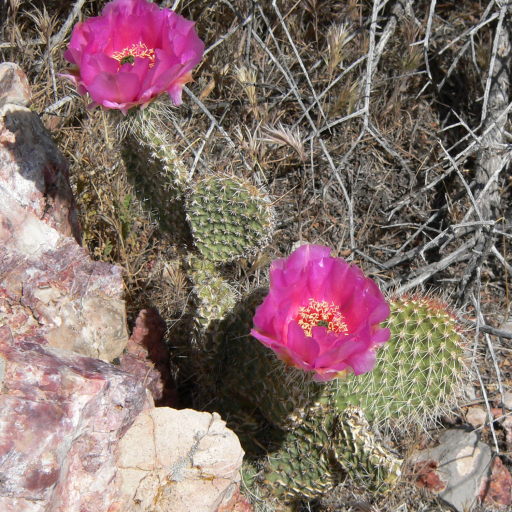
Plant Overview
The Plains Prickly Pear is a rugged survivor of the American West, often nicknamed the "Starvation Cactus" because it remains green and resilient when all other forage has withered. Known for its stunning, tissue-paper-like blooms and sprawling growth habit, this cactus is a favorite for high-altitude rock gardens and xeriscaping. Despite its prickly exterior, it has deep roots in indigenous medicine and folklore as a symbol of endurance.
🔍 How to Identify
- 🌵 The Pads: Features flat, succulent, oval-to-circular segments (cladodes) that grow in low-spreading mats, rarely rising more than a foot off the ground.
- 🪡 The Spines: Characterized by "polyacantha" (meaning many spines); the pads are densely covered in long, needle-like white or reddish spines that can give the plant a shaggy appearance.
- 🌸 The Flowers: Large, waxy, cup-shaped flowers that bloom in late spring, appearing in brilliant shades of lemon yellow, magenta, or even copper-orange.
- 🍐 The Fruit: Unlike the juicy red fruit of other prickly pears, these fruits are typically dry, tan, and covered in small spines when they reach maturity.
🏡 In Your Garden
- ❄️ Cold Hardiness: This is a "snow-cactus." It is remarkably cold-tolerant, capable of surviving sub-zero temperatures that would turn most other desert cacti into mush.
- Drainage is Life:** While it is nearly impossible to kill via underwatering, it will rot quickly in heavy clay or standing water. It prefers "lean" soil with plenty of sand, grit, or pea gravel.
- 🏜️ Shrinkage Strategy: Don't panic if the plant looks shriveled and "deflated" in the winter; it intentionally pushes water out of its cells to prevent them from freezing and bursting during the cold months.
⚠️ Safety & Toxicity
- 🌵 Mechanical Hazard: The large spines are obvious, but the real danger lies in the glochids—tiny, microscopic barbed bristles found at the base of the spines. These can lodge in skin, eyes, or throats and are notoriously difficult to remove.
- 🐾 Pets & Kids: It is non-toxic if accidentally nibbled, but the physical injury to paws or hands can be severe. Plant it in low-traffic areas or behind a decorative "boundary" of stones.
✨ Fun Fact
Native Americans traditionally used the inner mucilage (the "goo") of the pads as a natural glue or to fix colors in hides and pottery. It was also sliced open and used as a cooling "living bandage" for burns and wounds.

Detailed Care Instructions
To grow Opuntia Polyacantha, also known as plains pricklypear or Colorado pricklypear, you can follow these steps:
- Select a suitable location: Opuntia Polyacantha is a cold-hardy plant that thrives in full sun, so choose a spot that receives at least six hours of direct sunlight each day. It can tolerate various soil types but prefers well-draining soil.
- Propagation: Opuntia Polyacantha can be propagated from either seeds or pads. If propagating from seeds, sow them in a well-draining soil mix in late winter or early spring. Keep the soil moist but not waterlogged until the seeds germinate. Pad propagation involves cutting a healthy pad from an established plant and letting it dry for a few days before planting it directly into the soil.
- Planting: Whether starting from seeds or pads, dig a hole about twice the width of the root system or pad. Place the plant into the hole and backfill with soil, gently firming it around the roots. Make sure the plant is planted at the same depth it was previously growing.
- Watering: Initially, water your Opuntia Polyacantha regularly to help establish the plant. Once established, the plant is extremely drought-tolerant and requires little watering. Water only when the soil is completely dry, and avoid overwatering as it may cause root rot.
- Pruning: Opuntia Polyacantha generally does not require pruning, but if you wish to shape or control its growth, you can use clean, sharp pruning shears to remove unwanted pads or reduce the size of the plant. Wear gloves and be cautious of the prickly spines when pruning.
- Protection: Opuntia Polyacantha is naturally resistant to many pests and diseases. However, you may need to protect young plants from rabbits, deer, or other animals that could damage them. Install a fence or use a physical barrier until the plants grow larger and can defend themselves.
- Winter care: Opuntia Polyacantha is cold-hardy and can survive in temperatures as low as -30°F (-34°C). In colder regions, it may benefit from a layer of mulch around the base of the plant to provide some insulation during harsh winter conditions.
Remember to research specific care requirements for your specific growing zone and adjust your approach accordingly.

Place in a bright room that is sun drenched almost all day. Or directly in a south-facing window.

Firstly, ensure that the plant is potted in well-draining soil that allows excess water to flow out easily.
Water the plant deeply and thoroughly, saturating the soil completely until the water drips out from the drainage holes. Allow the soil to dry out slightly between watering sessions, as overwatering may often harm the plant.
In hotter months, increase the frequency of watering. In winter, reduce the frequency of watering and withhold it entirely if the soil feels moist.
Also, bear in mind that this plant is drought-tolerant and can withstand long periods without water. However, it's advisable to prevent the soil from drying up completely.
To fertilize this plant, you should use a balanced fertilizer with equal parts nitrogen, phosphorus, and potassium. Apply the fertilizer in the spring and summer months, when the plant is actively growing. Follow the instructions on the fertilizer package for the proper dosage and application method. Avoid over-fertilization, as this can cause the plant to grow too quickly and become weak. Water the plant thoroughly after fertilizing to help incorporate the nutrients into the soil.
The optimal type of soil for the Opuntia Polyacantha plant is a well-draining soil mix with a sandy texture, as it prefers a soil that does not retain excess moisture. It also requires a soil that is slightly acidic to neutral in pH (around 6.0 to 7.0). The soil should contain a mixture of organic matter such as compost or peat moss to promote healthy growth and root development. Additionally, adding sand and perlite to the soil mix will ensure proper drainage as they improve the soil's structure. Finally, since it's a desert-loving plant, it prefers soil that is low in nutrients. Therefore, it's essential to avoid using a high-nitrogen fertilizer. Instead, using a slow-release, balanced fertilizer every six months can provide enough nutrients for the plant to thrive.
Opuntia Polyacantha is a succulent plant that is commonly propagated by taking stem cuttings. To propagate this plant, begin by preparing a pot of well-draining soil. Prepare the stem by cutting a section of about 4-6 inches in length and allowing the cut end to dry for a few days until it has calloused over.
Once the end has dried, place the stem in the prepared soil, making sure that the cut end is buried about an inch deep. Water the soil regularly, but only enough to keep it moist and not soggy. It is important not to overwater as this can cause the stem to rot.
After about two to three weeks, the stem will begin to form new roots. Once roots have formed, the new plant can be transplanted into its permanent pot or location outside.
It is important to note that Opuntia Polyacantha can propagate quite easily and can even root if left on the ground, so it is important to remove any fallen plant material from the area around the base of the plant.








