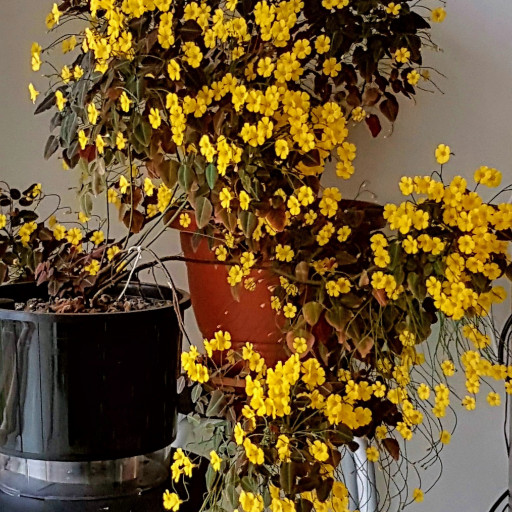
Plant Overview
Despite its "Fire Fern" nickname, this glowing beauty is actually a tropical wood sorrel rather than a true fern. Its shimmering, burgundy-red foliage resembles a tiny, fiery shrub, making it a dramatic centerpiece for indoor plant collections across the globe. Native to the tropical regions of Central and South America, it is most famous for its "sensitivity," reacting to light and touch with movement that feels almost animal-like.
🔍 How to Identify
- 🍂 Foliage Color: The leaves are a deep, rich maroon or plum-purple, often appearing translucent and "glowing" when sunlight passes through them.
- 🌼 Contrast Blooms: It produces small, five-petaled bright yellow flowers that provide a startling and beautiful contrast against the dark leaves.
- 🪴 Growth Habit: Unlike common clover-like Oxalis that stays low to the ground, this species grows on thin, wiry, upright stems that give it a miniature tree-like structure.
🏡 In Your Garden
- ☀️ The Light Secret: The "Fire" in its name comes from the sun; it requires very bright indirect light to maintain its intense red pigment. In darker corners, the plant will fade to a muddy green.
- 💧 Humidity & Stability: It is more finicky than common garden Oxalis. It dislikes "wet feet" but will dramatically drop its leaves if the soil dries out completely, as it lacks the large bulbs that help other varieties survive droughts.
⚠️ Safety & Toxicity
- 🐾 Toxic to Pets: Like all members of the Oxalis genus, it contains oxalic acid. It is toxic to cats, dogs, and horses if ingested in significant quantities.
- 👅 Bitter Defense: The leaves have a very sharp, sour taste. While this often prevents pets or children from eating much of it, it can cause mouth irritation and stomach upset if swallowed.
✨ Fun Fact
The Fire Fern is "seismonastic," which is a fancy way of saying it is sensitive to touch. If you tap the leaves or shake the stem, the leaflets will rapidly fold downward and "faint" to protect themselves from perceived predators—a trait it shares with the famous Mimosa pudica (Sensitive Plant).

Detailed Care Instructions
| Humidity | Dry |
| Toxicity | Poisonous |
| Difficulty | Easy |
| Hibernation | Cold Period |
| Temperature | 5°C - 15°C |
| Hardiness Zones | 9 - 11 |
To grow Oxalis hedysaroides, also known as pink wood sorrel, follow these steps:
- Choose a suitable location: Oxalis hedysaroides prefers partial shade to full shade, making it a great choice for growing indoors or in shaded areas of your garden.
- Prepare the soil: The plant thrives in well-draining soil. Incorporate some organic matter, such as compost, to improve soil fertility and drainage.
- Planting: Plant the Oxalis hedysaroides bulbs or tubers in the prepared soil. The bulbs should be planted about 1 inch deep and spaced 6-8 inches apart. Make sure to water the soil after planting.
- Watering: Keep the soil lightly moist during the growing season, avoiding overwatering. Water the plant when the top inch of soil feels dry. Allow the soil to slightly dry out between waterings.
- Fertilizing: Use a balanced, water-soluble fertilizer once a month during the growing season. Follow the instructions on the fertilizer packaging for application rates.
- Mulching: Apply a layer of organic mulch around the plants to help retain moisture and suppress weed growth. Avoid piling mulch against the stems of the plant.
- Pruning: Trim back any dead or dying foliage to maintain a neat appearance and encourage new growth.
- Pests and diseases: Oxalis hedysaroides is relatively resistant to most pests and diseases. However, keep an eye out for snails or slugs and take appropriate measures if they become a problem.
- Winter care: In colder climates, where frost is expected, consider growing Oxalis hedysaroides in containers that can be brought indoors during winter. If grown in the ground, protect the bulbs by applying a layer of mulch over them before the first frost.
With proper care and suitable growing conditions, your Oxalis hedysaroides plant should thrive, producing its charming pink flowers and attractive foliage.

Place in a bright room that is sun drenched almost all day. Or directly in a south-facing window.

Oxalis Hedysaroides plants prefer to be watered well, but only when the top layer of soil has become dry to the touch. When watering, it is important to ensure that the water can drain freely from the pot or tray, as these plants do not do well in waterlogged environments. It is also important to use room temperature or tepid water when watering, as cold water can shock the roots and cause damage to the plant. Some gardeners prefer to water from below, by placing the pot in a tray of water and allowing the water to be drawn up into the soil. This can help to avoid oversaturation and ensure that the roots receive adequate moisture. Overall, Oxalis Hedysaroides plants are not particularly fussy about their watering schedule, but it is important to take care not to overwater or underwater them.
- Choose a well-draining, nutrient-rich soil for your plant.
- Mix in a slow-release fertilizer following the package instructions.
- Water your plant before fertilizing to ensure the soil is moist.
- Apply the fertilizer around the base of the plant, being careful not to get any on the leaves.
- Gently work the fertilizer into the soil.
- Water your plant thoroughly after fertilizing to help the nutrients reach the roots.
- Repeat fertilization once every 2-3 months during the growing season.
The best soil for the plant is a well-draining soil mixture with a pH level of around 5.5 to 6.5. It is recommended to use a mixture of peat moss, perlite or vermiculite, and sand to provide adequate drainage and aeration for the roots. It is also important to ensure that the soil is moist but not waterlogged. The plant prefers slightly moist soil but does not tolerate standing water. Additionally, adding organic matter to the soil can help improve its fertility and ability to retain moisture.
To propagate this plant, you will need to locate a mature plant with healthy leaves and stems. Using a sharp, clean knife or scissors, carefully cut off a stem with at least three healthy leaves. Make the cut just below a node, where a leaf meets the stem.
Prepare a small container with moist soil mix or well-draining potting soil. Dip the cut end of the stem into rooting hormone powder, tapping off any excess, and then gently plant the stem into the soil. Cover the container with a plastic bag or dome to retain moisture and humidity.
Place the container in a warm, brightly lit area, but avoid direct sunlight. Keep the soil moist but not too wet, and mist the cutting and surrounding area regularly. After a few weeks, check for root growth by gently pulling on the stem. If there is resistance, roots have developed and the cutting should be transplanted into a larger container.
Continue to care for the new plant as you would a mature Oxalis Hedysaroides plant, providing well-draining soil, bright but indirect light, and regular watering. With proper care, your propagated plant will grow and thrive just like its parent plant.
Common pests of the fire fern include Spider mites, fungus gnats, aphids, thrips. Make a habit of checking your fire fern frequently for pests so that any infestations can be caught and managed early.








