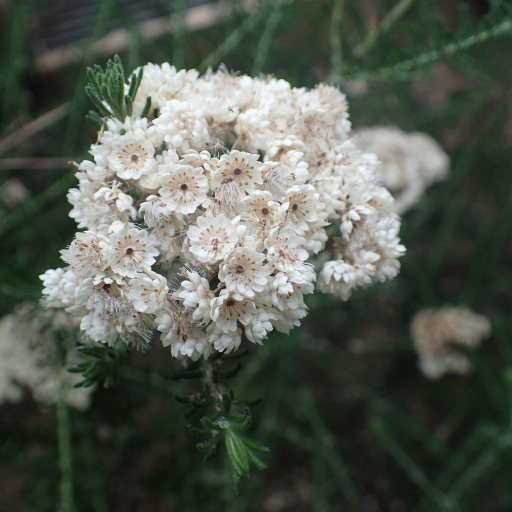
Plant Overview
Often referred to as the Rice Flower or Sago Bush, Ozothamnus diosmifolius is a quintessential Australian beauty that has captured the hearts of florists worldwide. Known for its incredible longevity in bouquets, this hardy shrub looks like it has been dusted with tiny grains of white rice just before it bursts into a cloud of bloom. In the wild, it acts as a pioneer species, quickly reclaiming land after a fire with its resilient, woody nature.
🔍 How to Identify
- 🌾 The "Rice" Buds: The most striking feature is the dense, flat-topped clusters of tiny, un-opened flower buds that look exactly like small grains of rice.
- 🌿 Narrow Foliage: The leaves are small, dark green, and needle-like, closely resembling the foliage of Rosemary or Diosma (hence the species name diosmifolius).
- 🪵 Erect Habit: It grows as a woody, upright shrub that can reach up to 2–3 meters tall, often developing a slightly "wild" or leggy appearance if left unpruned.
🏡 In Your Garden
- ✂️ The Pruning Secret: To keep this plant looking its best, you must be bold with the shears. Pruning back by about one-third after the flowering season prevents it from becoming "top-heavy" and encourages a flush of fresh, dense growth.
- ☀️ Sun & Drainage: This plant is a sun-worshipper and is highly sensitive to "wet feet." It thrives in sandy or rocky soils where water moves quickly; in heavy clay, its roots may struggle to breathe.
- 🦋 Wildlife Magnet: While it’s a staple for cut-flower enthusiasts, it is also a powerhouse for biodiversity, attracting a wide array of butterflies and small beneficial insects to its nectar-rich blossoms.
⚠️ Safety & Toxicity
- 🟢 Non-Toxic Status: Ozothamnus diosmifolius is generally considered non-toxic to humans and common household pets like cats and dogs.
- 🤧 Allergy Note: Because it produces a large volume of tiny flowers, individuals who are highly sensitive to pollen or suffer from hay fever might experience mild irritation if the plant is kept indoors in large quantities.
✨ Fun Fact
The Rice Flower is a "star" of the dried flower world. Unlike many plants that wilt and lose their color, Ozothamnus retains its shape and bright white or pink hue for months—or even years—after being cut, making it a favorite for everlasting floral crowns and wedding decor.

Detailed Care Instructions
To grow an Ozothamnus Diosmifolius plant, also known as rice everlasting or fragrant everlasting, you can follow these steps:
- Climate and location: Determine if your climate and location are suitable for growing Ozothamnus Diosmifolius. It is native to Australia and prefers a Mediterranean climate with mild winters and warm summers. It requires full sun exposure.
- Soil preparation: Prepare well-draining soil for the plant. Ozothamnus Diosmifolius prefers sandy or loamy soil with a slightly acidic to neutral pH level. Add organic matter like compost to improve soil fertility and drainage if needed.
- Planting: You can either start with seeds or purchase young plants from a nursery. If using seeds, sow them in pots or seed trays filled with a well-draining potting mix. Keep the soil moist until the seeds germinate. Transplant the seedlings to their final location once they have a few sets of true leaves. If using young plants, dig a hole slightly larger than the root ball, place the plant in the hole, backfill with soil, and gently firm it around the roots.
- Watering: Water Ozothamnus Diosmifolius regularly, especially during the establishment phase. Once established, it is drought-tolerant and can endure dry periods. However, it is best to provide some supplemental watering during extremely dry spells or heatwaves.
- Pruning: To maintain a compact and bushy shape, prune your Ozothamnus Diosmifolius plant after flowering or in early spring. This will encourage new growth and promote better flowering the following year.
- Fertilizing: You may choose to fertilize the plant once or twice a year with a low-phosphorus, slow-release fertilizer to support healthy growth. Follow the manufacturer's instructions for application rates.
- Pests and diseases: Ozothamnus Diosmifolius is generally pest and disease-resistant. However, keep an eye out for common garden pests like aphids or scale insects and treat them with appropriate organic insecticides if necessary.
- Mulching: Apply a layer of organic mulch around the base of the plant to conserve moisture, suppress weeds, and improve the overall health of the plant.
- Propagation: You can propagate Ozothamnus Diosmifolius through softwood cuttings in late spring or early summer. Take 4-6 inch cuttings from new growth, remove the lower leaves, dip the cut end in rooting hormone, and place them in a pot or seed tray filled with a well-draining potting mix. Keep the cuttings moist and in a warm, bright location until they develop roots.
By following these guidelines, you can successfully grow Ozothamnus Diosmifolius in your garden or container, providing you with its beautiful flowers and fragrance.

Place in a bright room that is sun drenched almost all day. Or directly in a south-facing window.

To water this plant, you should first ensure that the soil is dry to the touch before giving it water. When you do water it, make sure to thoroughly soak the entire root ball, but then allow the excess water to drain away. It is important to avoid overwatering, as this can lead to root rot. In hotter or drier conditions, you may need to water this plant more frequently, while in cooler or more humid conditions, you can water it less often. Always monitor the soil moisture level carefully and adjust your watering routine accordingly.
To fertilize this plant, apply a slow-release fertilizer during the growing season. Follow the instructions on the fertilizer package for the appropriate amount to use. Alternatively, you can use a liquid fertilizer every two weeks. Make sure to dilute the fertilizer according to the package instructions and apply it to the soil around the plant, avoiding contact with the leaves. Water the plant before and after fertilization to help the nutrients penetrate the soil. Be careful not to over-fertilize as this can damage the plant.
The best soil to use for the aforementioned plant is one that is well-draining and has a slightly acidic to neutral pH level. The soil should contain a mix of organic matter, such as compost or peat moss, and coarse sand or perlite to improve drainage and provide optimal air circulation around the roots. It is also helpful to ensure that the soil is loose and friable, which allows for good water retention and promotes healthy root growth. Finally, regular fertilization with a balanced, slow-release fertilizer can help to optimize soil fertility and ensure robust growth of this plant.
To propagate this plant, take stem cuttings with a sharp, clean pair of scissors or pruning shears. Choose healthy, young stems with no flowers or buds. Cut the stem at an angle, just below a leaf node.
Remove the lower leaves from the stem, leaving only a few leaves at the top. Dip the cut end of the stem in rooting hormone powder or gel, then plant it in a small pot filled with well-draining soil.
Water the cutting lightly, then cover it with a plastic bag or dome to create a humid environment. Place the pot in a bright but shaded location, and keep the soil consistently moist.
After a few weeks, the cutting should begin to develop roots and new growth. Once the plant has established itself, it can be transplanted to a larger pot or directly into the garden.
Common pests of the white dogwood include Scale insect, mealybugs, spider mites, aphids. Make a habit of checking your white dogwood frequently for pests so that any infestations can be caught and managed early.








