Plant Overview
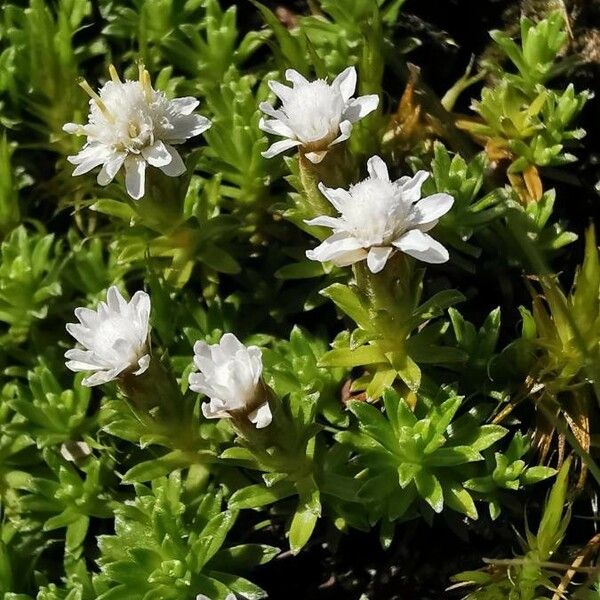
Often called the Green Vegetable Sheep, Raoulia glabra is a charming New Zealand native that creates a living, emerald-green carpet over rocky terrain. Unlike its fuzzier, "woollier" cousins, this variety is smooth and bright, looking more like a dense patch of moss than a member of the daisy family. In the wild, it acts as a pioneer species, slowly reclaiming gravelly riverbeds and alpine slopes with its resilient, creeping habit.
🔍 How to Identify
- 🌿 Growth Habit: It forms an incredibly low, tight mat that hugs the ground, rarely rising more than an inch or two high but spreading wide over time.
- 🍃 The Foliage: The tiny, scale-like leaves are smooth (the name glabra means "hairless") and packed so tightly together that they create a protective shield for the delicate stems beneath.
- 🌼 The Flowers: During the summer, it produces minuscule, creamy-white flower heads that look like tiny buttons scattered across a green rug.
🏡 In Your Garden
- 🪨 The Alpine Aesthetic: This plant is a rock garden superstar. It thrives in "scree" conditions—areas with lots of gravel, grit, and very little heavy organic matter.
- 💧 The "Wet Feet" Rule: Its biggest enemy is stagnant water. It has evolved to live in windy, well-drained mountain air, so it requires sharp drainage to prevent the dense mat from rotting during rainy seasons.
- ⛰️ Slow and Steady: Because it grows slowly and keeps a low profile, it is perfect for filling gaps between paving stones or cascading over the edge of a trough, where it won't overwhelm its neighbors.
⚠️ Safety & Toxicity
- ✅ Safe Status: Raoulia glabra is generally considered non-toxic to humans and common household pets.
- 🧤 Gentle Texture: Unlike some alpine plants that have prickly spines or irritating hairs, this mat is soft to the touch. However, it is physically delicate; frequent foot traffic will crush the tiny stems and leave brown patches.
✨ Fun Fact
🐑 The Sheep Impersonator: The genus Raoulia earned the nickname "Vegetable Sheep" because, from a distance, the large, humped mounds of the silver-gray species look exactly like sheep grazing on the misty New Zealand hillsides! While R. glabra stays flatter, it still carries the family name.

Detailed Care Instructions
To grow Raoulia glabra (also known as New Zealand edelweiss plant), follow these steps:
- Climate and Location: Ensure you live in a region with cool summers and mild winters, as Raoulia glabra thrives in alpine or subalpine climates. It prefers full sun exposure. If your climate is not suitable, consider growing it in a greenhouse or as a potted plant indoors.
- Soil: The plant prefers well-draining soil that is slightly acidic. Use a mix of sandy or loamy soil with some organic matter, such as compost or peat moss, to enhance drainage and fertility.
- Propagation: Raoulia glabra can be propagated from seeds or by dividing mature plants. If starting from seeds, sow them in the early spring in a seed tray or small pots. Cover the seeds lightly with soil and keep them moist. Germination may take 2-3 weeks.
- Transplantation: Once the seedlings have grown a few inches tall and have several leaves, transplant them into individual pots or directly into the garden. Ensure the spacing between plants is about 6-8 inches.
- Watering: Raoulia glabra prefers moist but not waterlogged soil. Water the plant regularly during the growing season, making sure the soil is evenly moist. Reduce watering in winter, but do not let the soil dry out completely.
- Fertilization: Apply a balanced, slow-release fertilizer in the early spring to provide nutrients for the growing season. Follow the package instructions for proper dosage.
- Pruning: Lightly trim the plant after flowering to remove any spent blooms or leggy growth. This will help maintain a compact shape.
- Winter Care: Raoulia glabra is fairly frost tolerant but may require protection in colder regions. Use a layer of mulch or a frost cloth to protect the plant during harsh winters.
- Pest and Disease Control: Raoulia glabra is generally pest and disease resistant. However, keep an eye out for common garden pests like aphids or fungal diseases. If needed, use suitable organic pest control methods or consult a local garden center for advice.
Remember, patience is key while growing Raoulia glabra, as this plant is slow-growing. With proper care, you can enjoy its beautiful silvery foliage and tiny yellow flowers.

Place in a bright room that is sun drenched almost all day. Or directly in a south-facing window.

Raoulia Glabra is a plant that requires moderate watering. It is important to avoid overwatering the plant, as it can lead to root rot. The best way to water Raoulia Glabra plant is to wait until the soil has dried out slightly before watering it again. The soil should never be allowed to completely dry out.
When watering Raoulia Glabra, it is important to avoid getting water on the foliage. Watering the foliage can lead to fungal diseases and damage to the plant. Instead, water the soil directly at the base of the plant. Use a watering can or a hose with a gentle spray attachment to water the plant.
During the summer months, when Raoulia Glabra is in its growing season, it may require more frequent watering. However, be careful not to overwater the plant. In the winter, when the plant is dormant, it will require less frequent watering.
It is also important to ensure that Raoulia Glabra is planted in well-draining soil. Soils that are too heavy or compact can lead to waterlogging and root rot. Finally, avoid allowing the plant to sit in water for prolonged periods of time, as this can also lead to root rot.
To fertilize the plant, use a balanced fertilizer that contains equal parts nitrogen, phosphorus, and potassium. Apply the fertilizer during the plant's growing season, which is typically in the spring and summer. Be sure to follow the manufacturer's instructions for application, as over-fertilization can harm the plant. Consider using an organic fertilizer, such as compost or fish emulsion, to avoid chemical build-up in the soil. Always water the plant deeply before and after fertilizing to prevent root burn.
Raoulia Glabra is a small, mat-forming plant that requires well-drained soil. The recommended soil type for this plant is a mixture of sand, loam, and gravel to create a porous soil that allows for better air circulation and moisture retention. It is important to avoid using heavy clay soil as it can become waterlogged and cause root rot. Additionally, adding organic matter such as compost or peat moss can improve soil quality and help maintain moisture levels. It is crucial to avoid using any fertilizers or chemical substances as Raoulia Glabra is sensitive to such compounds. The plant is also adapted to grow in acidic soil, so the pH range should be around 5.5-6.5. Finally, ensuring adequate drainage is vital to the health of Raoulia Glabra, so make sure the pot or container has drainage holes.
Raoulia Glabra is a plant that can be propagated through various methods, such as division, cutting, or seed propagation.
The first method, division, involves separating the plant into smaller sections and planting these sections in separate pots. This method requires careful handling of the plant to avoid damaging the roots.
The second method, cutting, involves taking a stem cutting from the parent plant and rooting it in a potting mix. Cuttings should be taken from healthy, disease-free plants and should be placed in a warm, humid environment until they have developed roots.
The third method, seed propagation, involves collecting seeds from the parent plant and sowing them in a suitable potting mix. The seeds should be sown in a well-draining soil mix and kept moist until they germinate.
Regardless of the method chosen, it is important to ensure that the new plants are kept in a warm, humid environment until they have established themselves. This will provide them with the best chance of growing into healthy, mature plants.








