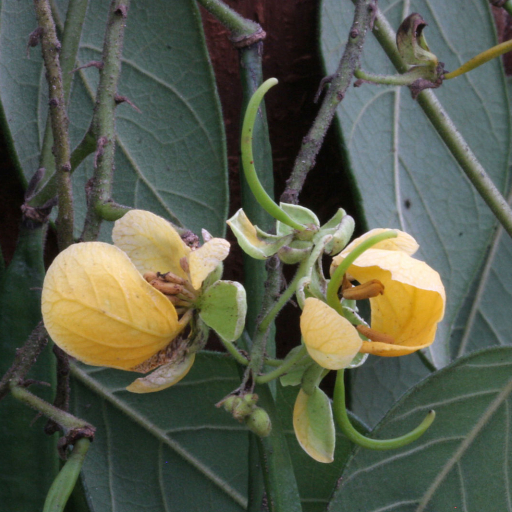
Plant Overview
Known affectionately in many regions as the Palo de Burro or Yellow Cassia, Senna atomaria is a resilient, sun-loving tree native to the dry forests of Mexico, Central America, and the Caribbean. It is a seasonal showstopper, often shedding its leaves only to replace them with an explosion of brilliant, buttery-yellow blossoms. In its native habitat, it stands as a golden beacon against the dusty landscapes of the dry season, providing vital nectar when other plants have gone dormant.
🔍 How to Identify
- 🌼 Golden Clusters: The flowers are the primary giveaway; they are bright yellow, five-petaled, and grow in dense, showy clusters that can almost hide the branches.
- 🍃 Pinnate Leaves: The foliage is "paripinnate," meaning the leaves look like delicate feathers with pairs of small, oval leaflets arranged opposite each other.
- 🥖 Long Seed Pods: Following the bloom, the tree produces long, slender, flattened pods that turn from green to a dark, woody brown as they mature.
- Bark Texture:** The bark is generally smooth and grayish, though it can become slightly fissured as the tree reaches its full height of 10 to 30 feet.
🏡 In Your Garden
- ☀️ Drought Specialist: This is a "plant it and forget it" species for warm climates. It has evolved to survive long periods without rain, making it an ideal candidate for xeriscaping or low-maintenance tropical gardens.
- 🦋 The Butterfly Effect: It is a major host plant for various sulfur butterflies. If you plant a Senna atomaria, expect to see clouds of yellow and white butterflies visiting your yard to lay eggs and drink nectar.
- 🌱 Root Awareness: While it is sturdy, it prefers well-draining, even rocky soil. It dislikes "wet feet," so avoid planting it in low-lying areas of the garden where water tends to pool after a storm.
⚠️ Safety & Toxicity
- 🚫 Laxative Properties: Like many species in the Senna genus, the leaves and seeds contain anthraquinones. While used in traditional medicine, they can cause severe stomach cramps and diarrhea if eaten.
- 🐾 Pet & Child Safety: The dangling seed pods can look like "beans" to children or curious pets. Ingestion can lead to significant gastrointestinal distress, so it is best planted in areas where it can be admired from a distance.
✨ Fun Fact
The common name "Palo de Burro" (Donkey Stick) comes from the historical use of its straight, sturdy branches as goads or walking sticks for travelers and their pack animals throughout rural Latin America!

Detailed Care Instructions
To grow Senna atomaria plant, also known as the climbing senna or creeping senna, you can follow these steps:
- Obtain seeds or young plants: You can buy Senna atomaria seeds online or at a local nursery. Alternatively, you can also propagate new plants from existing ones by collecting seeds from mature pods or taking softwood cuttings.
- Choose a suitable location: The climbing senna prefers full sun but can tolerate some shade. Ensure that the soil is well-draining and fertile.
- Prepare the soil: Remove any weeds or debris from the planting area. Loosen the soil and amend it with organic matter, such as compost or aged manure, to improve drainage and nutrient content.
- Plant the seeds or young plants: If using seeds, soak them in warm water overnight before planting. Sow the seeds in the prepared soil, gently pressing them into the ground and covering them with a thin layer of soil. If using young plants, dig a hole that is slightly larger than the root ball and place the plant in it, backfilling with soil and firming it gently.
- Water regularly: Keep the soil consistently moist but not waterlogged during the initial growth period. Once established, the climbing senna is somewhat drought-tolerant but still benefits from regular watering.
- Provide support: As the name suggests, Senna atomaria is a climbing plant. Install a trellis, fence, or other support structure near the plant to provide it with something to climb on.
- Fertilize occasionally: Apply a balanced, slow-release fertilizer according to the package instructions during the growing season to promote healthy growth. Avoid over-fertilizing, as this can cause excessive vegetative growth at the expense of flowering.
- Prune as needed: If the plant becomes unruly or overgrown, you can prune it back in early spring or after flowering. This will help maintain a more compact shape and promote fuller growth.
- Monitor for pests and diseases: Although Senna atomaria is generally disease and pest-resistant, keep an eye out for any signs of trouble, such as yellowing leaves, wilting, or insect infestations. If necessary, treat with appropriate organic or chemical controls.
Remember that Senna atomaria can be invasive in some regions. Before planting, check with your local authorities or gardening experts to ensure it is not considered a problem plant in your area.

Place in a bright room that is sun drenched almost all day. Or directly in a south-facing window.

To properly water the Senna Atomaria plant, you should first assess the soil moisture by inserting your finger about one inch deep into the soil. If it feels dry, it is time to water the plant. Use a watering can or a hose to water the soil directly around the plant's base until the soil is moist, but not waterlogged. Avoid getting water on the plant's leaves as this can cause damage. During the plant's growing season, you should water it once a week or more frequently if the weather is hot and dry. In the winter, reduce watering to once every two weeks. Remember to adjust your watering schedule based on the plant's individual needs and environmental factors.
To fertilize Senna Atomaria, start by selecting a balanced fertilizer with equal amounts of nitrogen, phosphorus, and potassium. Begin by mixing the fertilizer with water, following package instructions for proper dilution. Water the plant deeply and wait until the top inch of soil is dry before applying the fertilizer. Apply the fertilizer evenly around the base of the plant and avoid getting it on the leaves or stems. Repeat the fertilization process every four to six weeks during the growing season, but reduce the frequency during the dormant months.
Senna atomaria prefers well-draining soil that is slightly acidic to neutral. The ideal soil would be a mix of sandy loam and clay, with added organic matter to enhance fertility. It is important that the soil is not too compacted, as the plant's roots need room to grow and spread out. Additionally, the soil should retain moisture without becoming waterlogged, as Senna atomaria is sensitive to both drought and over-watering. Adding perlite or sand to the soil can help improve drainage. The plant also prefers full sunlight and a warm, humid environment.
To propagate this plant, take cuttings from healthy stems that are at least six inches in length. Remove the leaves from the bottom half of the stem and dip the cut end in rooting hormone powder. Plant the cutting in a container with well-draining soil and keep it in a warm, humid location. Water the cutting enough to keep the soil moist, but not completely soaked. After a few weeks, roots should begin to form and the plant can be transplanted to a larger container or directly into the garden.








