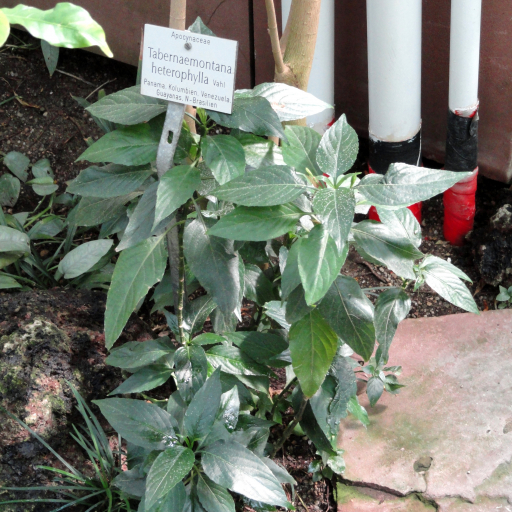
Plant Overview
Known for its delicate, star-like blooms and lush evergreen foliage, Tabernaemontana heterophylla is a tropical treasure often related to the more common "Pinwheel Jasmine." Native to the humid forests of Central and South America, this shrub adds an air of elegance and a subtle, sweet fragrance to any garden space. Its botanical name, "heterophylla," hints at its unique secret: the ability to produce leaves of varying shapes and sizes on the very same branch.
🔍 How to Identify
- 🌸 Propeller Blooms: The flowers are pure white with five waxy petals that swirl slightly at the center, resembling a tiny, elegant propeller or pinwheel.
- 🍃 Glossy Foliage: The leaves are a deep, lustrous green with prominent veins; you will often find pairs where one leaf is noticeably larger or a different shape than its neighbor.
- 💧 Milky Latex: If a leaf is torn or a stem is snapped, the plant immediately exudes a thick, white milky sap, a characteristic trait of the Dogbane family.
🏡 In Your Garden
- 🌡️ Tropical Cravings: This plant thrives on "jungle logic"—it loves high humidity and consistent warmth. It is particularly sensitive to frost and will drop its leaves if the temperature dips too low or the air becomes too dry.
- 🪵 Drainage is Key: While it enjoys staying hydrated, it hates "wet feet." It performs best in slightly acidic, loamy soil that allows water to pass through quickly, preventing the delicate root system from suffocating.
⚠️ Safety & Toxicity
- 🚫 Toxic if Ingested: Every part of the plant contains alkaloids that are harmful if swallowed. Keep this beauty out of reach of curious nibblers.
- 🧤 Sap Warning: The white milky sap can cause skin irritation or rashes (contact dermatitis). It is highly recommended to wear gloves when pruning or taking cuttings to avoid getting the "milk" on your skin or in your eyes.
✨ Fun Fact
In the wild, Tabernaemontana heterophylla plays a high-stakes game of survival; its toxic sap is a chemical defense system, yet it is a primary host plant for the larvae of several Hawk Moth species that have evolved to eat the leaves without being harmed!

Detailed Care Instructions








