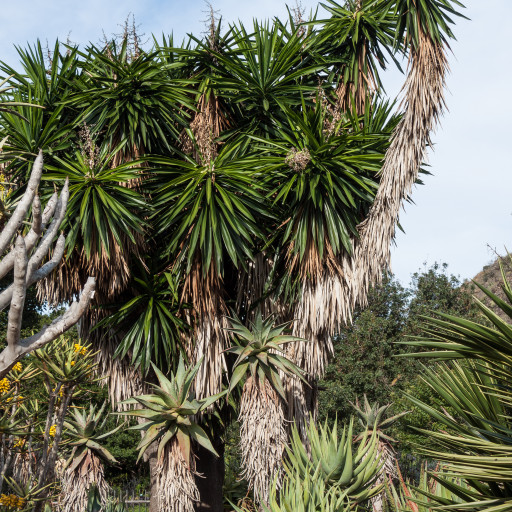
Plant Overview
Known as the "Spineless Yucca" or "Elephant’s Foot," the Yucca gigantea is the friendly giant of the succulent world. Native to the rugged landscapes of Central America and Mexico, this plant is a favorite for those who want a bold, architectural statement without the "stinging" personality of its spiky relatives. It is a true survivor, evolving to withstand long droughts while looking effortlessly chic in a living room corner.
🔍 How to Identify
- 🐘 The Trunk: As it matures, the base of the stem thickens significantly, resembling the wrinkled, sturdy foot of an elephant.
- ⚔️ The Foliage: Long, sword-shaped leaves sprout in rosettes. Unlike many other Yucca species, these leaves lack the sharp, needle-like terminal spines, making them much safer for high-traffic areas.
- 🔔 The Blooms: In its natural habitat or in very sunny outdoor gardens, it produces impressive stalks of creamy, white, bell-shaped flowers that hang in dense clusters.
🏡 In Your Garden
- ☀️ Light & Resilience: This plant is a sun-worshipper. While it can tolerate lower light indoors, it will "stretch" and lose its compact look. It thrives best when placed near a bright, south-facing window.
- 💧 The "Less is More" Rule: The Yucca gigantea stores water in its thick trunk. The most common mistake is overwatering, which leads to root rot. Think of it more like a cactus—let the soil dry out almost completely before giving it a drink.
- 🪴 Longevity: It is a slow grower but an incredibly long-lived companion. Because it hates having its roots disturbed, avoid frequent repotting; it actually prefers being slightly "pot-bound."
⚠️ Safety & Toxicity
- 🐾 Pet Safety: While the leaves aren't sharp, they contain saponins. If ingested by cats or dogs, it can cause drooling, vomiting, or lethargy. Keep it out of reach of curious chewers.
- 👶 Child Safety: It is generally safe for children since it lacks the piercing thorns of other Yuccas, but the leaf edges can still be somewhat leathery and tough, potentially causing minor paper-cut-like scratches if handled roughly.
✨ Fun Fact
In El Salvador, the Yucca gigantea is the national flower (known locally as the Izote). Beyond its beauty, the wax-like white flowers are actually edible and are often cooked with eggs or used in traditional stews!

Detailed Care Instructions
| Humidity | Normal |
| Lighting | Full Sun |
| Difficulty | Medium |
| Hibernation | Cold Period |
| Temperature | 18°C - 23°C |
| Hardiness Zones | 5 - 11 |
To grow a Yucca Gigantea plant, also known as a Giant Yucca or Yucca Elephantipes, you can follow these steps:
- Choose a suitable location: Yucca Gigantea prefers bright, indirect sunlight. Select a spot indoors or outdoors that receives partial to full sun.
- Prepare the soil: Ensure the soil is well-draining and sandy. Yucca plants are tolerant of various soil types, but they thrive in sandy soil. If your soil is heavy or clay-like, consider adding sand or perlite to improve drainage.
- Planting the Yucca: Dig a hole in the prepared soil that is slightly larger than the root ball of the Yucca Gigantea. Gently place the plant in the hole so that the top of the root ball is level with the soil surface. Backfill the hole with soil, firm it gently, and water the plant thoroughly.
- Watering: Yucca Gigantea is a drought-tolerant plant that prefers to be kept on the drier side. Water the plant deeply but infrequently, allowing the soil to dry out between waterings. Overwatering can lead to root rot.
- Fertilizing: Apply a balanced, water-soluble fertilizer once a month during the growing season (spring and summer) to encourage healthy growth. Follow the package instructions for proper dosage.
- Pruning: As the Yucca Gigantea grows, remove any yellow or dead leaves at the base of the plant. You can also trim any tall or unruly stems to maintain the desired shape. Use clean pruning shears and make clean cuts.
- Propagation: Yucca Gigantea can be propagated by taking stem cuttings. Allow the cut ends to dry for a few days before planting them in a well-draining soil mix. Keep the soil slightly moist during the rooting process.
- Winter care: If you live in a region with cold winters, protect your Yucca Gigantea from frost or freezing temperatures. Move potted plants indoors or cover outdoor plants with a frost cloth or burlap.
By following these steps and providing proper care, your Yucca Gigantea should thrive and grow into a beautiful plant.

Place in a bright room that is sun drenched almost all day. Or directly in a south-facing window.

To properly water this plant, it is important to consider the type of soil it is planted in. It should be planted in well-draining soil that does not retain moisture for long periods of time. The plant should be watered deeply, allowing the water to seep into the soil and reach the roots. However, it is important to not over-water the plant, as it can lead to root rot and other issues. The plant should be allowed to dry out slightly between watering, and should not be watered if the soil feels moist to the touch. It is also important to avoid getting water on the leaves, as this can lead to fungal growth and other problems. During the winter months, the plant can be watered less frequently as it goes into a period of dormancy.
To fertilize this plant, use a balanced fertilizer with equal amounts of nitrogen, phosphorus, and potassium. Apply the fertilizer during the growing season, which is typically in the spring and summer months. Mix the fertilizer into the soil around the plant according to the package instructions. Do not over-fertilize, as this can damage the plant. Always water the plant thoroughly after fertilizing to help distribute the nutrients evenly.
The ideal soil to use for the plant in question should be well-draining, in order to prevent waterlogging and root rot. It should also contain a mix of organic matter and other soil components such as sand or perlite, which will help promote healthy root growth and allow for adequate aeration. Additionally, the pH of the soil should be slightly acidic to neutral, ideally ranging from 6.0 to 7.5, in order to ensure proper nutrient uptake by the plant.
Yucca Gigantea can be propagated through both seed and vegetative methods. To propagate through seed, allow the plant to produce seed pods and harvest the seeds once they turn brown. Sow the seeds in a well-draining soil mix and keep the soil moist until the seedlings emerge.
Propagation through vegetative methods can be done by removing the stem or offshoot from the parent plant. Allow the cuttings to dry for a few days and then plant them in well-draining soil. Keep the soil moist until the roots establish and the plant begins to grow.
It is also possible to propagate Yucca Gigantea through leaf cuttings. Cut the leaf in half lengthwise and remove the flesh from the cut end. Plant the leaf in a well-draining soil mix and keep the soil moist until roots establish and a new plant emerges.
Propagation of Yucca Gigantea can be done in either spring or fall. It is best to use mature and healthy plants for propagation as they will produce the healthiest offspring.
Common pests of the bluestem yucca include Scale insect, mealybugs. Make a habit of checking your bluestem yucca frequently for pests so that any infestations can be caught and managed early.








