Info
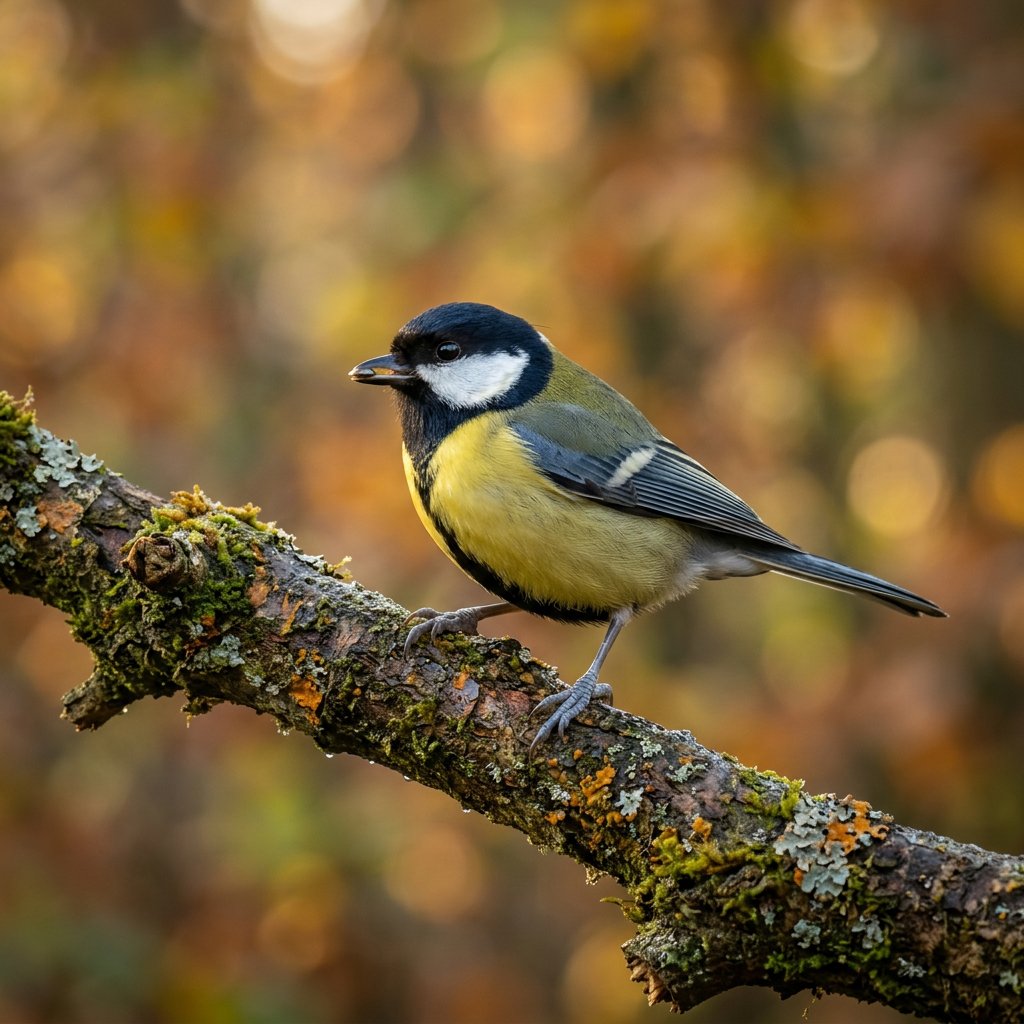
Meet the "Big Boss" of the bird feeder! The Great Tit (Parus major) is one of the most intelligent and charismatic songbirds across Europe and Asia. Known for its persistent, see-sawing "teacher-teacher" call, this bird is a garden favorite that brings a splash of yellow and a ton of personality to any backyard.
🔍 How to Identify
- 🎓 The Black Hood: It sports a striking glossy black head and throat that perfectly frames bright white cheek patches.
- 👔 The "Zipper" Stripe: A distinctive black vertical band runs down its bright yellow breast. In males, this "tie" is usually wider and bolder than in females.
- 🧥 Colorful Wings: It has olive-green upperparts with blue-grey wings and tail feathers, often showing a thin white wing bar when perched.
🪶 Behavior & Diet
- 🐛 The Pest Controller: These birds are a gardener's best friend. They consume massive amounts of caterpillars and spiders, especially when they have hungry chicks to feed in the spring.
- 🥜 Feeder Acrobatics: Highly adaptable and bold, they are masters of hanging feeders. They love sunflower seeds and suet, often using their strong feet to hold a seed against a branch while hammering it open with their beak.
- 🏠 Nesting Habits: As cavity nesters, they are the primary residents of backyard birdhouses. They are incredibly vocal and will use a wide variety of songs to defend their territory.
🤝 Interaction & Safety
- 🛡️ Feisty Defenders: While completely harmless to humans, Great Tits are surprisingly "tough." They will loudly scold cats or even humans who get too close to their nest, making a harsh, raspy alarm call.
- 🐱 Pet Dynamics: To keep these feathered friends safe, it is best to keep domestic cats indoors during the early summer when "fledglings" (baby birds) are learning to fly and are stuck on the ground.
- 🧼 Feeder Hygiene: If you feed them, ensure you clean your bird feeders regularly to prevent the spread of avian diseases, which can hit Tit populations hard.
✨ Fun Fact
🌟 The width of the black "zipper" on a male's chest is actually a social status symbol. Research shows that birds with wider stripes are more dominant in the flock and are perceived as more attractive by potential mates!
More Details



