Info
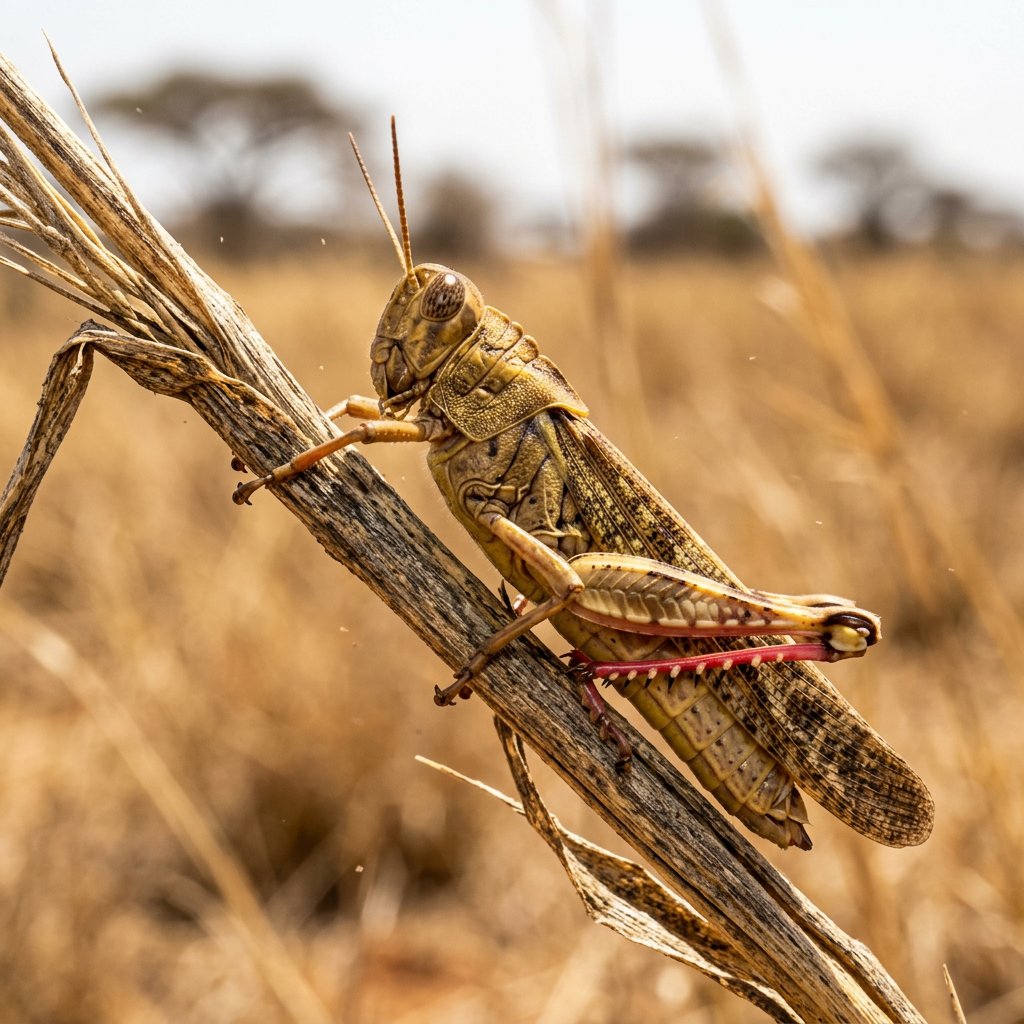
Known as the Garden Locust or Red-horned Grasshopper, Acanthacris ruficornis is one of the most striking insects you’ll encounter among your shrubs. While the word "locust" might spark fear of biblical plagues, this species is more of a solitary wanderer than a swarm-former. It is a true giant of the grasshopper world, often seen sunning itself on garden walls or blending perfectly into leafy branches.
🔍 How to Identify
- 🦗 The "Red Horns": Its most defining feature is its antennae, which are a distinct, vibrant reddish-orange or deep pink color.
- 📏 Impressive Size: This is a heavy-bodied insect, with females reaching up to 8 centimeters (3 inches) in length, making it one of the largest grasshoppers in its range.
- 🦵 Spiny Hind Legs: The powerful back legs are lined with prominent, white-tipped spines used for gripping vegetation and self-defense.
- 🎨 Cryptic Coloring: Its body is usually a mix of earthy browns, greys, and olive greens, designed to look like a dry leaf or a piece of bark.
🌲 Habitat & Ecology
- 🍽️ The Generalist Eater: These insects are not picky eaters. They consume a wide variety of vegetation, from ornamental garden plants to citrus trees and wild shrubs.
- ☀️ Sun Seekers: They are most active during the day, frequently found in warm, sunny gardens, orchards, and open woodlands across Africa and parts of Southern Europe.
- 🕊️ The Solitary Habit: Unlike the infamous migratory locusts, this species does not transition into a "gregarious" phase. They prefer to live alone and rarely cause the large-scale crop destruction associated with their swarming cousins.
⚠️ Safety & Toxicity
- ✅ Harmless Status: The Garden Locust is entirely non-toxic and possesses no sting or venom. They are "gentle giants" of the backyard.
- 🩹 Spiky Defense: While they won't bite, their powerful hind legs are very prickly. If handled roughly, those spines can deliver a sharp "kick" that might scratch sensitive skin or startle a curious pet.
- 🌿 Plant Health: While safe for humans, they can be a minor nuisance for gardeners. If you have a particularly small sapling, a single hungry Garden Locust can eat a surprising amount of foliage in one sitting!
✨ Fun Fact
Despite their bulky appearance, they are incredibly strong fliers. When disturbed, they take to the air with a loud, clattering sound, revealing large, smoky-colored wings that can carry them quite a distance to safety.
More Details








