Info
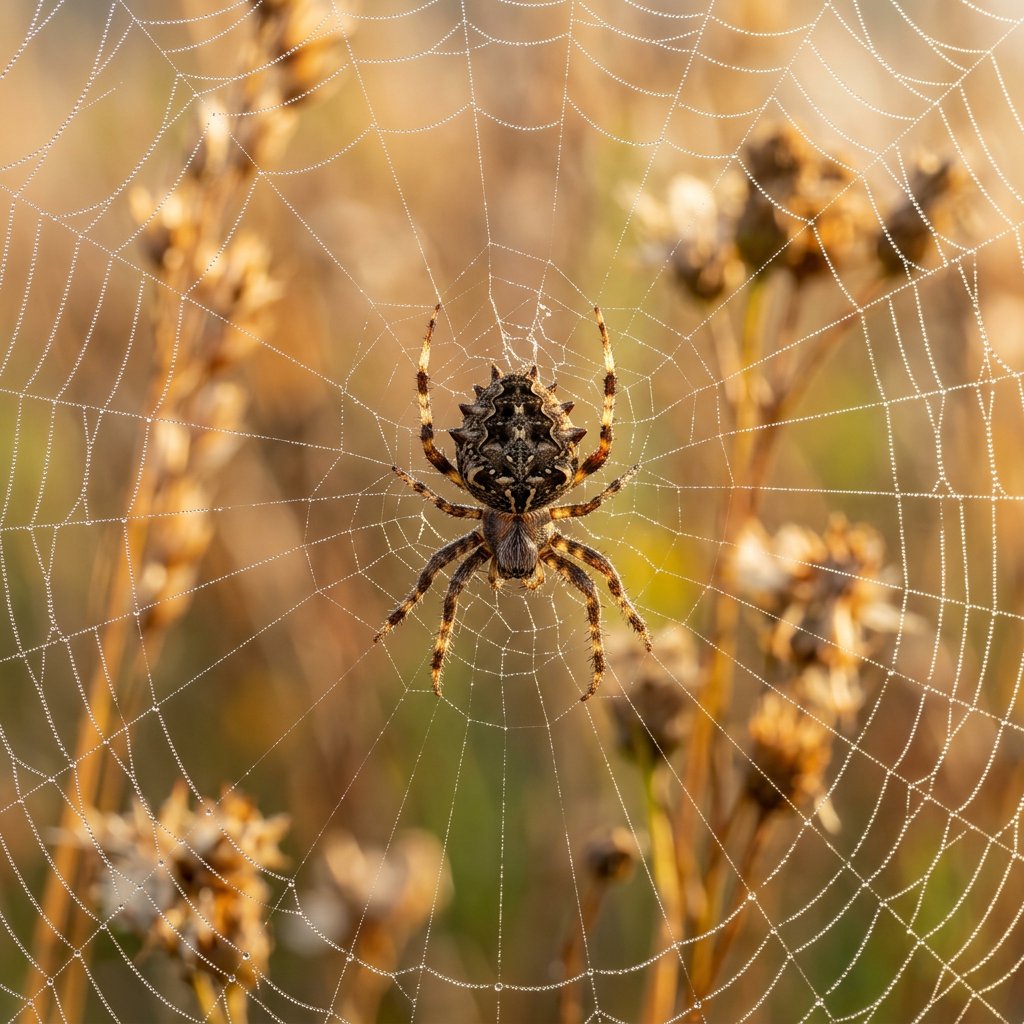
Meet the Star-bellied Orb Weaver, the "Spiky Popcorn" of the arachnid world. Known for its bizarre, armor-like spikes, this spider looks more like a medieval weapon or a dried seed pod than a living creature. It is a master of camouflage that prefers the quiet life of meadows and fields over coming into your home.
🔍 How to Identify
- ⭐ Star-Shaped Abdomen: The most striking feature is its large, flattened abdomen ringed with 10 to 12 distinct points or cones, giving it a jagged, star-like silhouette.
- 🎨 Earthy Camouflage: They are typically colored in shades of brown, tan, and gray, which allows them to blend perfectly with dead leaves and dried vegetation.
- 🦵 Banded Legs: Their legs often feature subtle dark bands, which help break up their outline when they remain motionless in the center of their web.
🌲 Habitat & Ecology
- 🕸️ Orb Web Architects: They build classic, circular "orb" webs, usually positioned low to the ground in tall grasses, weeds, or along the edges of woodlands.
- 🦗 Pest Control: As sit-and-wait predators, they are highly beneficial to gardens, catching a variety of flying insects including moths, flies, and mosquitoes.
- 🍂 Seasonal Sightings: You are most likely to spot them in late summer and autumn when the females reach their full, "star-bellied" size.
⚠️ Safety & Toxicity
- 🛡️ Non-Aggressive: Despite their intimidating "spiky" appearance, these spiders are incredibly shy. If disturbed, they usually drop from their web and play dead rather than attack.
- 🩹 Low Risk: They are not dangerous to humans or pets. While they do possess venom to subdue prey, a bite is extremely rare and typically results in nothing more than minor, localized redness similar to a mild bee sting.
✨ Fun Fact
When threatened, the Star-bellied Orb Weaver will tuck its legs tightly against its body. In this pose, its spiky abdomen makes it look exactly like a prickly dried burr or a piece of bird dropping, a clever trick that keeps hungry birds from taking a bite!
More Details








