Info
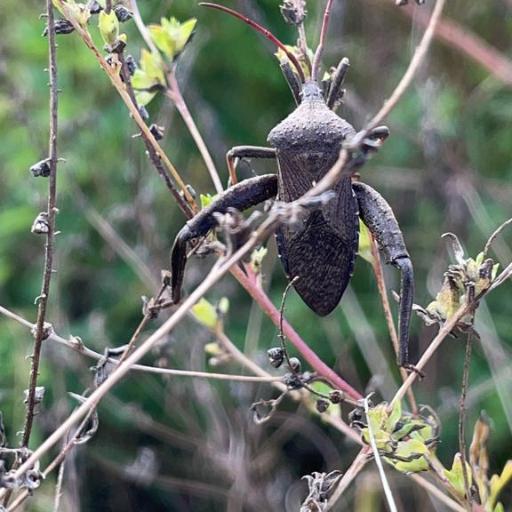
Known as the Great Leaf-footed Bug, this impressive insect looks like a tiny, six-legged gladiator wearing heavy plate armor. While its massive, flared hind legs and dark, robust body might seem intimidating—as if it’s ready for a fight—it is actually a slow-moving sap-sipper that spends its days lounging on sunflowers and citrus trees. In the Southern United States, it is a common sight in late summer, often mistaken for a giant "stink bug" due to its similar shape and defensive scent.
🔍 How to Identify
- 🦵 The "Leaf" Legs: Its most striking feature is the wide, flattened expansion on the hind legs (the tibiae), which look like small, jagged leaves or shields.
- 📡 Bright Tips: Look closely at the antennae; they are long and dark, but the very last segment is usually a distinct, contrasting orange or yellowish color.
- 🛡️ Heavy Build: It has a thick, dark brown to blackish body with a textured, "bumpy" surface that resembles weathered wood or bark.
🌲 Habitat & Ecology
- 😋 A Liquid Diet: This insect is a specialist herbivore. It uses a long, needle-like proboscis to pierce the stems and fruits of plants like thistles, roses, and citrus to drink the nutrient-rich juices inside.
- 🤼 Leg Wrestling: The oversized, thorny hind legs of the males aren't just for show. They use them like wrestling arms to squeeze and flip rival males when competing for the best feeding spots or the attention of a female.
⚠️ Safety & Toxicity
- 🛡️ Harmless Giant: Despite its "scary" look and thorns, the Great Leaf-footed Bug is not aggressive. It does not have a stinger and will not bite humans unless handled extremely roughly.
- 🦨 The Stink Defense: Like its cousins, it can release a pungent, chemical-smelling fluid from its sides if it feels threatened. This smell is hard to wash off, so it’s best to observe them without touching!
- 🌿 Garden Impact: While they can cause some spotting on fruit or drooping in soft stems, they are rarely numerous enough to be considered a major garden pest.
✨ Fun Fact
The specific name femorata refers to the male's incredibly thick "femurs" (thighs). These bugs are the heavyweights of the insect world—males with the largest "leafy" legs are almost always the ones that win the territory and the mate!
More Details








