Info
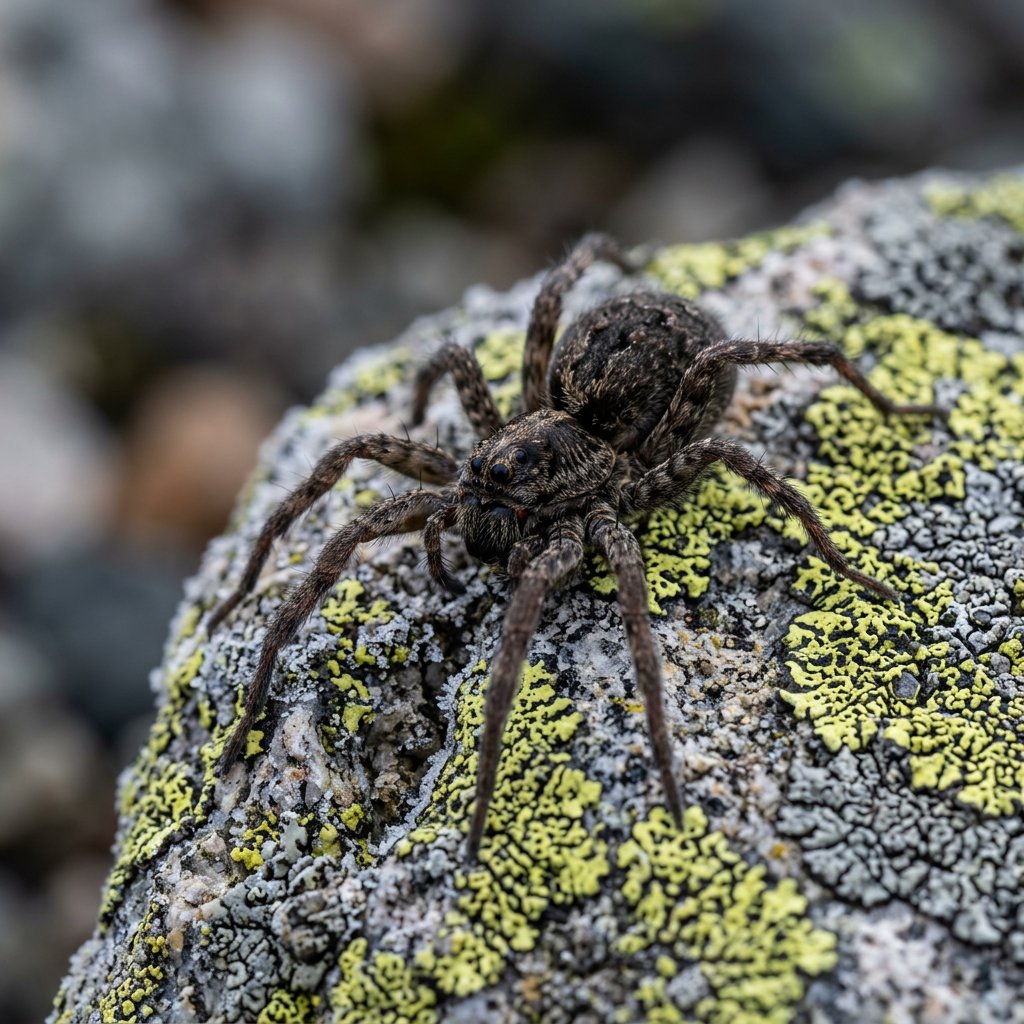
Often called the Log Wolf Spider, Acantholycosa lignaria is a master of camouflage and a high-speed sprinter of the forest floor. Unlike many of its cousins who hide in the dirt, this spider is a dedicated "sun-worshipper," frequently seen darting across fallen timber in coniferous forests. Its name, derived from Greek, literally translates to "Thorny Wolf," referring to the impressive array of spines on its long, athletic legs.
🔍 How to Identify
- 🕷️ Spiny Legs: Its most striking feature is its exceptionally long, dark legs covered in prominent, stiff spines that help it grip bark while running at high speeds.
- 🌑 Mottled Camouflage: The body is primarily black or dark grey with intricate silver-grey patterns that mimic the texture of weathered wood and lichen.
- 👀 Wolf Eyes: Like all wolf spiders, it has a distinct eye arrangement—four small eyes on the bottom, two large "searching" eyes in the middle, and two medium eyes on top.
🌲 Habitat & Ecology
- 🪵 Deadwood Specialist: You will almost exclusively find this spider on sun-exposed fallen logs or tree stumps. It uses the heat from the wood to fuel its high-speed hunting style.
- 🏹 Active Hunter: Instead of spinning a web to catch prey, it relies on its incredible eyesight and explosive speed to ambush small insects, springtails, and other tiny invertebrates.
- 🛡️ Forest Protector: As a specialized predator, it plays a vital role in the ecosystem by keeping populations of wood-boring insects and forest floor pests in check.
⚠️ Safety & Toxicity
- ✅ Harmless to Humans: While they possess venom to subdue their prey, Acantholycosa lignaria is not considered medically significant. They are extremely shy and will almost always choose to sprint away rather than bite.
- 🐾 Pet & Child Safety: Their bite is comparable to a mild bee sting and is not dangerous to pets or children. However, their speed can be startling, so it is best to observe them from a distance without trying to handle them.
✨ Fun Fact
Female Log Wolf Spiders are devoted mothers; after laying their eggs, they carry the silken egg sac attached to their spinnerets. Once the spiderlings hatch, they climb onto their mother’s back and ride along with her for several days until they are ready to hunt on their own!
More Details








