Info
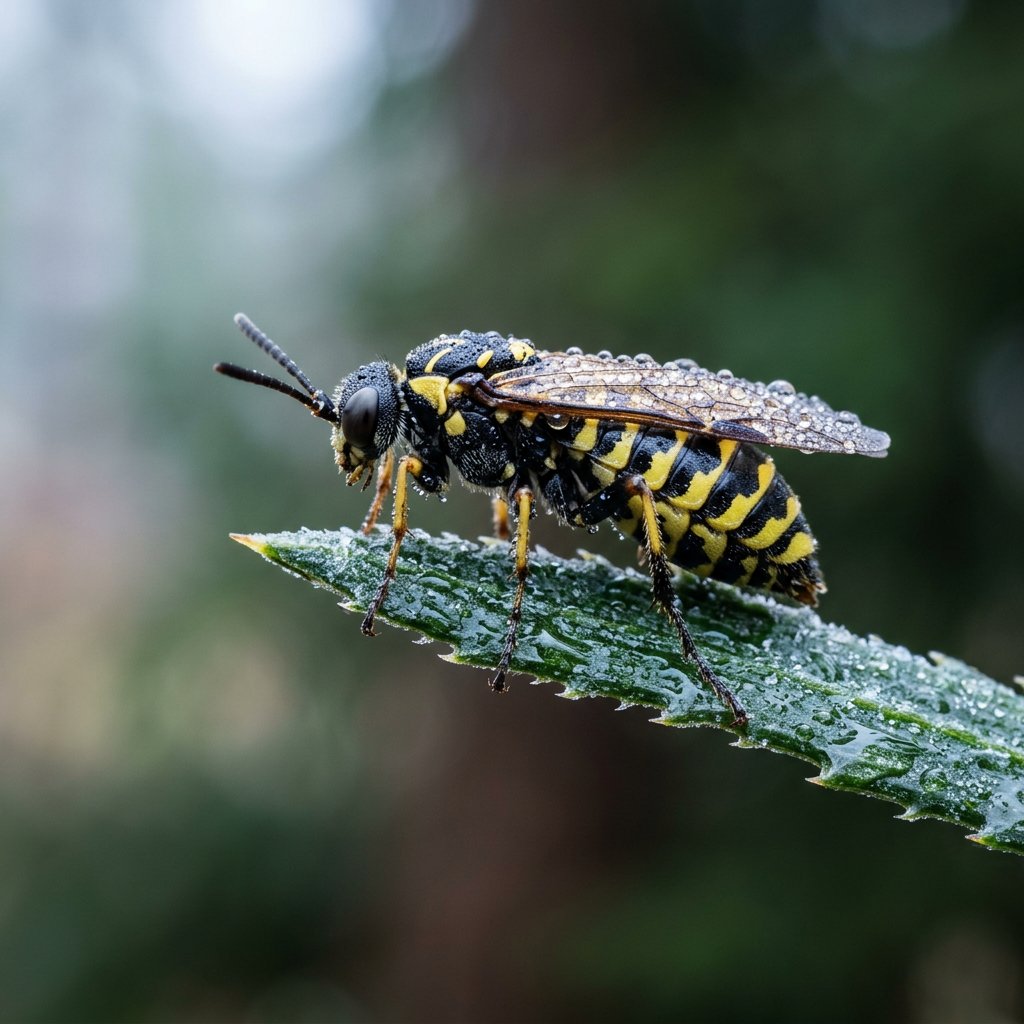
Often called the Web-spinning Pine Sawfly, these insects are the master architects of the evergreen world. While they might look like specialized wasps at first glance, they are actually primitive cousins of bees and ants. They are most famous for the silky, messy "apartments" their larvae construct among pine needles, which can make a tree look like it is being decorated for a very tiny, sticky festival.
🔍 How to Identify
- 🪽 The Adult Silhouette: Unlike typical wasps, they lack a narrow "wasp waist." Their bodies are broad and flat, often appearing dark with metallic, orange, or yellow highlights.
- 🧶 The Silk Tubes: The easiest way to spot their presence is by the larvae's work—messy webs or silken tubes wrapped around coniferous needles, often filled with brown bits of debris (frass).
- 🐛 The Larval "Tails": The larvae look like caterpillars but have a pair of tiny, pointed appendages at the very end of their abdomen called "anal cerci," which act like sensory "feelers."
🌲 Habitat & Ecology
- 🏘️ The Pine Specialists: You will almost exclusively find them in coniferous forests or on ornamental garden pines and spruces. They are picky eaters, with different species favoring specific types of evergreen hosts.
- 🏗️ Solitary Builders: Unlike some communal web-worms that live in massive groups, many Acantholyda species are solitary. A single larva usually builds its own private silken retreat, pulling needles together to create a safe tunnel where it can munch in peace.
⚠️ Safety & Toxicity
- 🛡️ Completely Harmless: Despite their somewhat "wasp-like" appearance, Acantholyda species cannot sting or bite humans or pets. They lack a stinger entirely; the tool at the end of the female's body is used strictly for laying eggs.
- 🌲 Tree Health: While they won't hurt you, a large population can cause "defoliation" (loss of needles). This is usually just a cosmetic issue for large trees, but it can stress out young saplings in your garden.
✨ Fun Fact
The name "Sawfly" comes from the female's egg-laying organ, which is shaped like a tiny, serrated saw. She uses it to literally "saw" a slit into a pine needle to tuck her eggs safely inside, protecting them from the wind and predators!
More Details








