Info
The Unarmed Stick Insect is nature’s ultimate master of disguise, often looking more like a wayward twig than a living creature. Originally hailing from the lush forests of New Zealand, these "gentle giants" have become famous worldwide for their ability to hide in plain sight. If you spot one in your garden, consider yourself lucky—you’ve found a peaceful, leafy ghost that prefers a quiet life among the foliage.
🔍 How to Identify
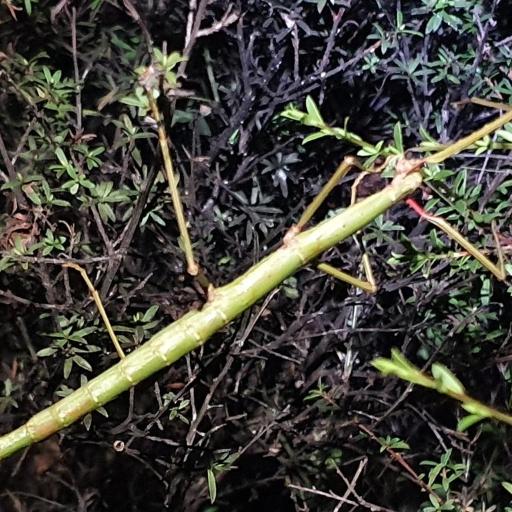
- 📏 Smooth Silhouette: True to its name (inermis means unarmed), this species lacks the sharp spines or prickles found on its close relatives, giving it a sleek, smooth body.
- 🍃 Color Camouflage: They are typically a vivid leaf-green or a woody, mottled brown. Their color is often determined by the environment they grew up in.
- 🦯 The Stance: When resting, they stretch their front legs out straight in front of their heads to create a single, unbroken line, perfectly mimicking a branch.
🌲 Habitat & Ecology
- 🍽️ Dietary Habits: They are strictly herbivorous, with a particular fondness for Bramble, Rose, Eucalyptus, and various evergreen garden shrubs. They are slow eaters and rarely cause significant damage to plants.
- 🌙 Night Moves: These insects are nocturnal. During the day, they utilize "catalepsy"—a state of frozen stillness—to avoid being seen by birds. They only begin their slow, swaying walk to find food once the sun goes down.
- 🌍 Global Traveler: While native to New Zealand, they have successfully colonized gardens in milder climates like the UK and Ireland, often hitching a ride on imported plants.
⚠️ Safety & Toxicity
- ✅ Completely Harmless: The Unarmed Stick Insect is a "friend" in every sense. They do not bite, they have no sting, and they do not carry any toxins.
- 🩹 Fragile Frames: While they aren't dangerous to you, you can be dangerous to them. Their limbs are very delicate; if handled roughly, they may "shed" a leg as a defense mechanism (autotomy).
✨ Fun Fact
This species is a "Girl Power" icon of the insect world! They are entirely parthenogenetic, meaning the population is made up almost exclusively of females who produce exact clones of themselves. In many parts of the world where they’ve been introduced, a male has never even been recorded.
More Details








