Info
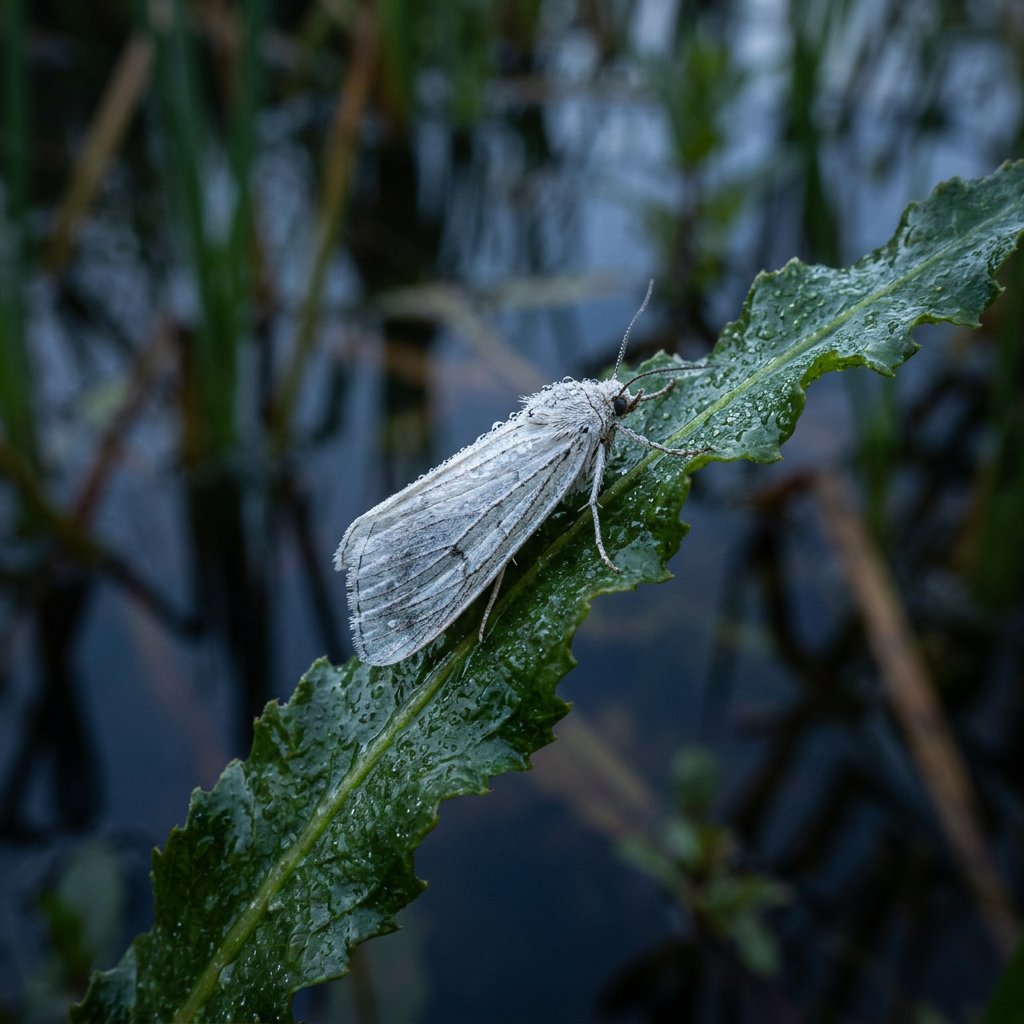
Known as the Water Veneer, this tiny moth is one of nature’s greatest rebels. While almost all of the 160,000+ species of moths and butterflies are terrestrial, the Water Veneer has evolved to live a "scuba-diving" lifestyle, spending its youth and even some of its adulthood entirely underwater.
🔍 How to Identify
- 🪶 Wings (Males): The males have delicate, translucent wings of a pale brownish-white color. They are small, with a wingspan of only about 12mm, and are often seen fluttering just inches above the water's surface.
- 🫧 The "Submarine" Female: Most females of this species are flightless and possess only tiny, vestigial wing-stubs. They spend their entire lives submerged, waiting for males to find them at the surface.
- 🐛 Aquatic Larvae: The caterpillars are pale green and live inside protective cases made from fragments of aquatic leaves, similar to the "houses" built by caddisflies.
🌲 Habitat & Ecology
- 💧 Freshwater Dwellers: You will find these moths near the edges of ponds, lakes, and slow-moving canals. They are most active at night, especially during the warm summer months of June through August.
- 🌿 Plant Partners: They rely heavily on oxygenating pond plants like Pondweed (Potamogeton) and Elodea. Because they eat invasive waterweeds, they are sometimes considered beneficial "gardeners" that help keep pond growth in check.
⚠️ Safety & Toxicity
- 🛡️ Safe & Gentle: The Water Veneer is completely harmless to humans. They do not bite, sting, or possess any chemical irritants that could harm your skin.
- 🐾 Pet Friendly: These insects are a natural part of the aquatic food chain. If a curious dog or cat happens to snap one up by the pond, there is no risk of toxicity.
✨ Fun Fact
The flightless female Water Veneer never has to come up for air! She breathes by trapping a thin, silvery film of oxygen against her body using specialized hairs, acting as a permanent "scuba tank" while she clings to submerged plants.
More Details








