Info
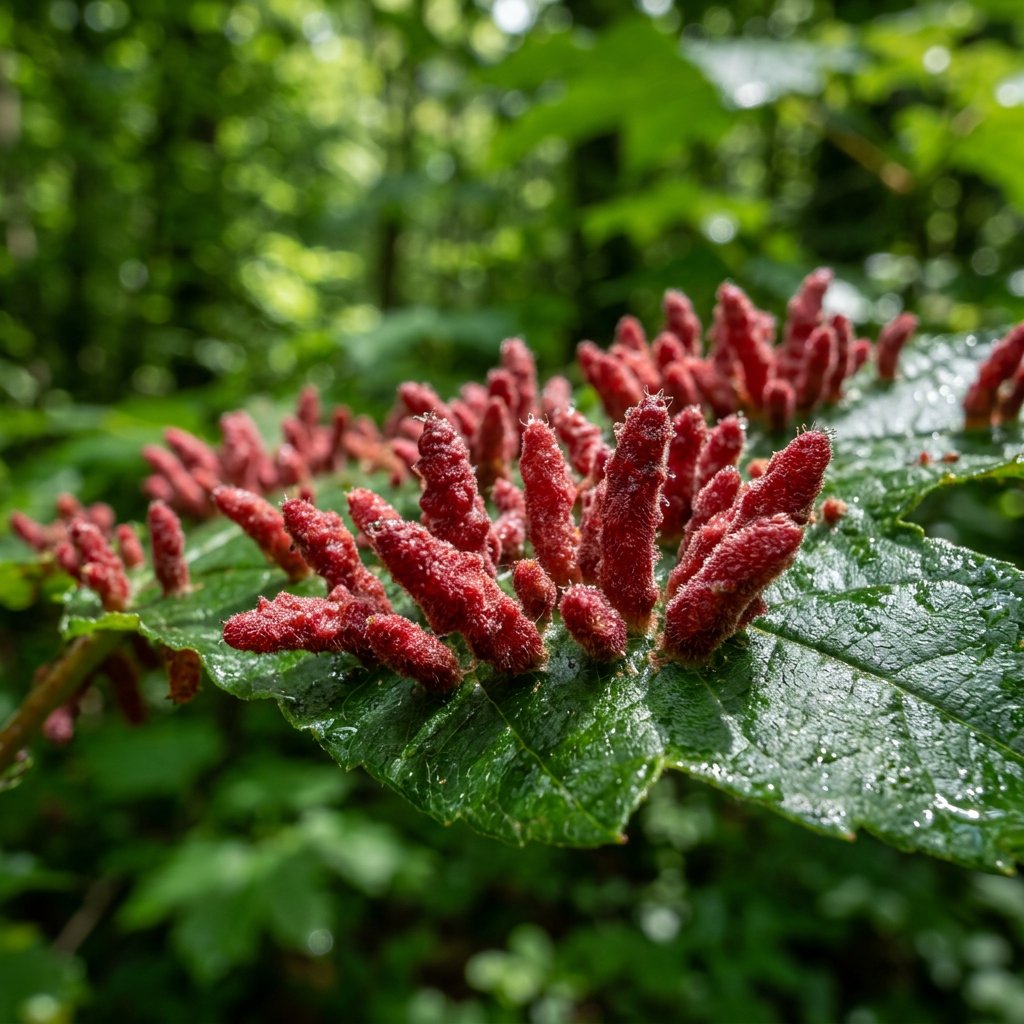
Known as the Sycamore Felt Gall Mite, this tiny architect is more famous for its "interior design" than its own appearance. If you’ve ever noticed a Sycamore tree looking like it has broken out in a bright red rash or a series of tiny "pimples," you’ve found the work of Aceria cephaloneus. These microscopic creatures spend their entire lives tucked away inside the very bumps they trick the tree into growing.
🔍 How to Identify
- 🔴 Pimple Galls: Look for small, 2–3mm raised "pouches" or warts scattered across the upper surface of the leaf.
- 🎨 Vibrant Colors: These galls usually start as a pale green or yellowish-pink but quickly turn a striking, fiery crimson red as they mature in the summer.
- 🏘️ The Underside: If you flip the leaf over, you’ll see the opening to the "room" beneath the bump, often lined with tiny white hairs where the mites enter and exit.
🌲 Habitat & Ecology
- 🌳 The Sycamore Specialist: These mites are incredibly picky eaters. They are almost exclusively found on the Sycamore tree (Acer pseudoplatanus), rarely bothering other species of maple or deciduous trees.
- 🏗️ Chemical Engineering: The mite doesn't just eat the leaf; it injects specialized chemicals into the plant tissue. This triggers the tree to grow an abnormal structure (the gall) that provides the mite with a climate-controlled home and a constant food source.
⚠️ Safety & Toxicity
- 🛡️ Status: Completely harmless to humans, pets, and even the health of the tree.
- 🍃 Cosmetic Concerns: While a heavily infested tree might look "sick" or alarming to a gardener, the damage is purely aesthetic. The tree’s ability to photosynthesize isn't significantly hindered, and there is no need for chemical pesticides to "save" the tree.
✨ Fun Fact
Because these mites are too small to fly and too tiny to walk long distances, they use a method called "phoresy"—essentially hitchhiking on the legs of larger insects or the feathers of birds to reach new trees!
More Details








