Info
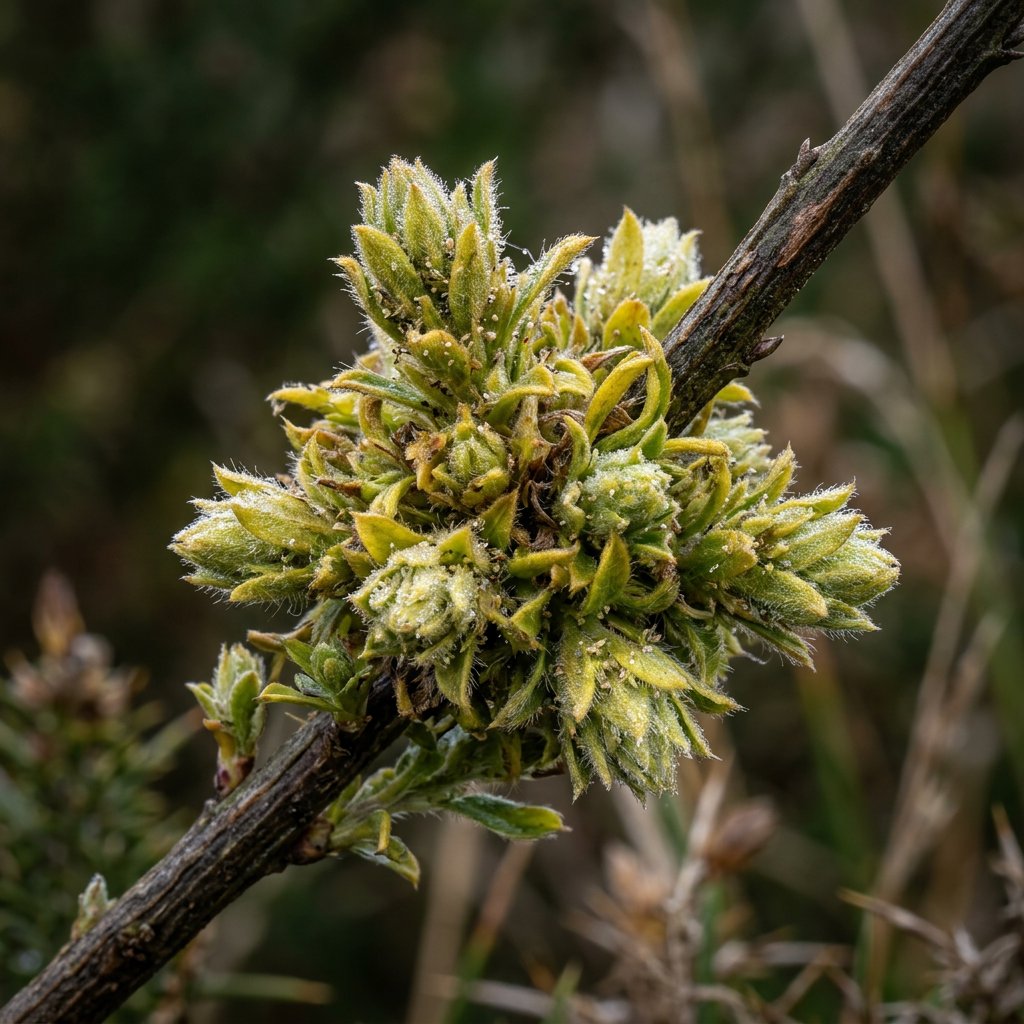
Known as the Broom Gall Mite, these microscopic architects are the secret force behind the strange, fuzzy "witches' brooms" often seen on broom plants. While you will likely never see the mite itself, you cannot miss its handiwork. In many parts of the world, this tiny creature is considered a hero because it helps naturally control the spread of invasive broom species that would otherwise take over local landscapes.
🔍 How to Identify
- 🧶 Fuzzy Galls: Look for dense, hairy, or velvety clusters of distorted buds that look like miniature pom-poms or tiny heads of cauliflower.
- 🌿 Stunted Growth: Affected stems stop growing straight and instead produce a tangled "nest" of short, twiggy branches.
- 🔎 Microscopic Residents: The mites themselves are invisible to the naked eye; if you see the "pom-pom" structures on a Broom plant (Genista or Cytisus), you’ve found their home.
🌲 Habitat & Ecology
- 🍽️ Host Specificity: These mites are extremely picky eaters. They generally only live on plants in the Genista and Cytisus (Broom) families, meaning your roses and vegetables are perfectly safe.
- 🛡️ Biological Control: Because they stunt the growth and seeding of Scotch Broom, they are intentionally used by ecologists as a "biocontrol" tool to stop invasive weeds from choking out native wildflowers.
- 🏠 Year-Round Shelter: The mites spend their entire lives inside the galls they create, which protect them from predators and harsh weather like a tiny, organic fortress.
⚠️ Safety & Toxicity
- ✅ Harmless to Humans: These mites are not parasites of humans or pets. They do not bite, sting, or carry diseases that affect mammals.
- 🌱 Garden Impact: While they may make a decorative garden shrub look "messy" or distorted, they rarely kill the plant. If you dislike the look, simply pruning the galls off is usually enough to manage them.
✨ Fun Fact
The Broom Gall Mite is a master of "biological hijacking." By injecting special chemicals into the plant, it tricks the plant into using its own energy to build the gall—essentially forcing the plant to grow a custom-made apartment complex for the mites to live in!
More Details








