Info
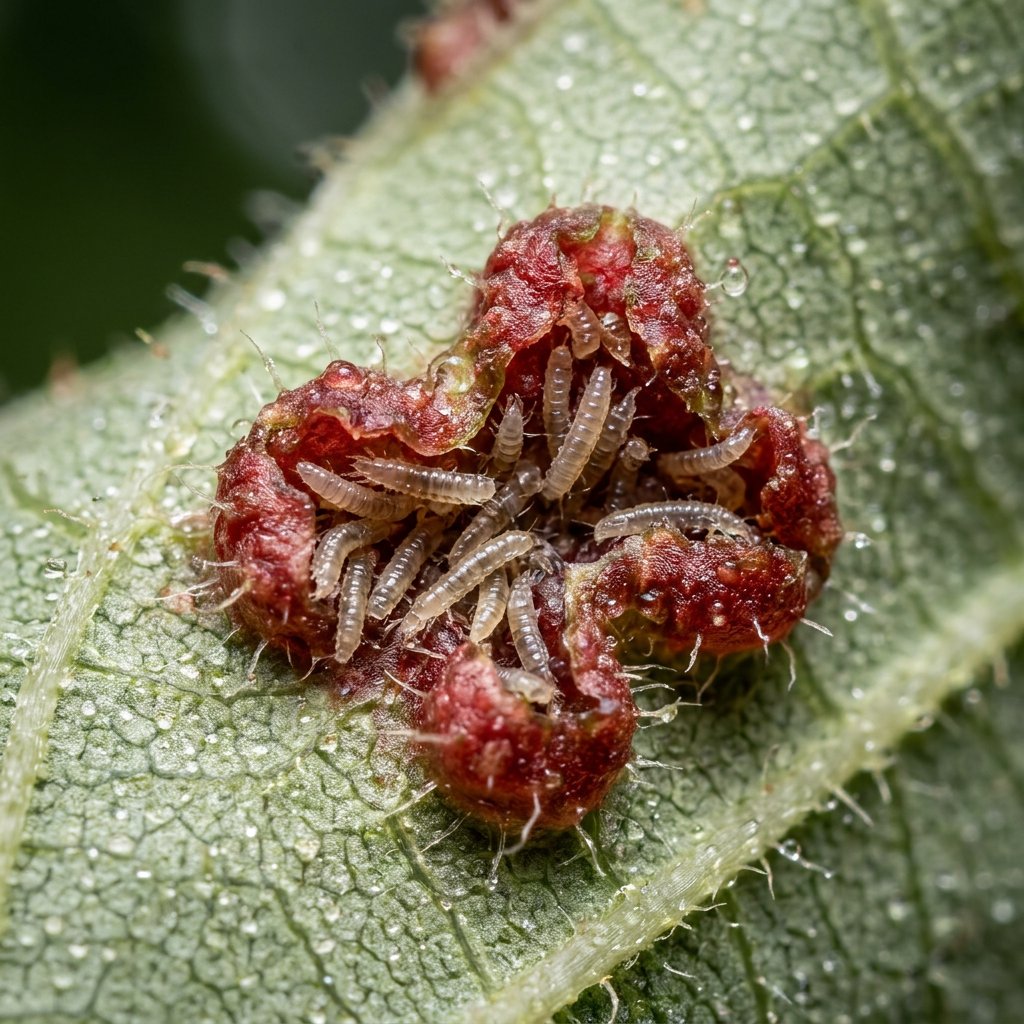
Often mistaken for a bizarre fungal infection or a colorful plant disease, Aceria refers to a genus of microscopic mites known as Eriophyid mites. These tiny "architects" hijack a plant's biology to create alien-looking structures called galls. Whether they look like tiny red horns, fuzzy felt patches, or neon beads, these growths are actually custom-made nurseries the mites use for protection and food.
🔍 How to Identify
- 🎨 The Galls: Look for abnormal growths on leaves or stems. These can appear as "spindle galls" (slender, upright horns), "bead galls" (small rounded bumps), or "erinea" (velvety, felt-like patches).
- 🌈 Striking Colors: While they start green, these growths often turn a brilliant crimson red, bright yellow, or deep purple, making them stand out vividly against the green foliage.
- 🔬 The Hidden Mites: You won't see the culprits with the naked eye! Aceria mites are microscopic, cigar-shaped organisms that live deep inside the hollows of the galls they trigger the plant to grow.
🌲 Habitat & Ecology
- 🌳 Host Specialists: Most Aceria species are extremely picky. For example, the Aceria aceris mite focuses almost exclusively on Maple trees, while others might only be found on Willows, Alders, or even specific wildflowers.
- 🏠 A Living Shield: By injecting special chemicals into the plant's tissue, the mite forces the leaf to grow a protective home around it. This shelter protects the mites from harsh weather and predators while they feast on the plant's nutrient-rich juices.
⚠️ Safety & Toxicity
- ✅ Harmless to Humans: Aceria mites are strictly plant-dwellers. They do not bite humans or pets, and they cannot live outside of their specific host plant environment.
- 🌿 Plant Health: While a heavy infestation can look "scary" or unsightly, it is almost always purely cosmetic. Mature trees and shrubs rarely suffer any long-term health issues from these tiny hitchhikers.
✨ Fun Fact
Unlike almost all other arachnids (spiders, scorpions, and most mites) which have eight legs, Aceria mites have evolved to be so specialized for life inside tight plant crevices that they only have four legs located at the very front of their bodies!
More Details








