Info
Known affectionately as the Yellow-horned Moth, this species is a stoic herald of early spring. While most insects are still tucked away in deep hibernation, Achlya flavicornis emerges while the air is still crisp, often appearing before the first leaves have even unfurled. It is a master of camouflage, designed by nature to disappear against the silvery, lichen-covered bark of its favorite trees.
🔍 How to Identify
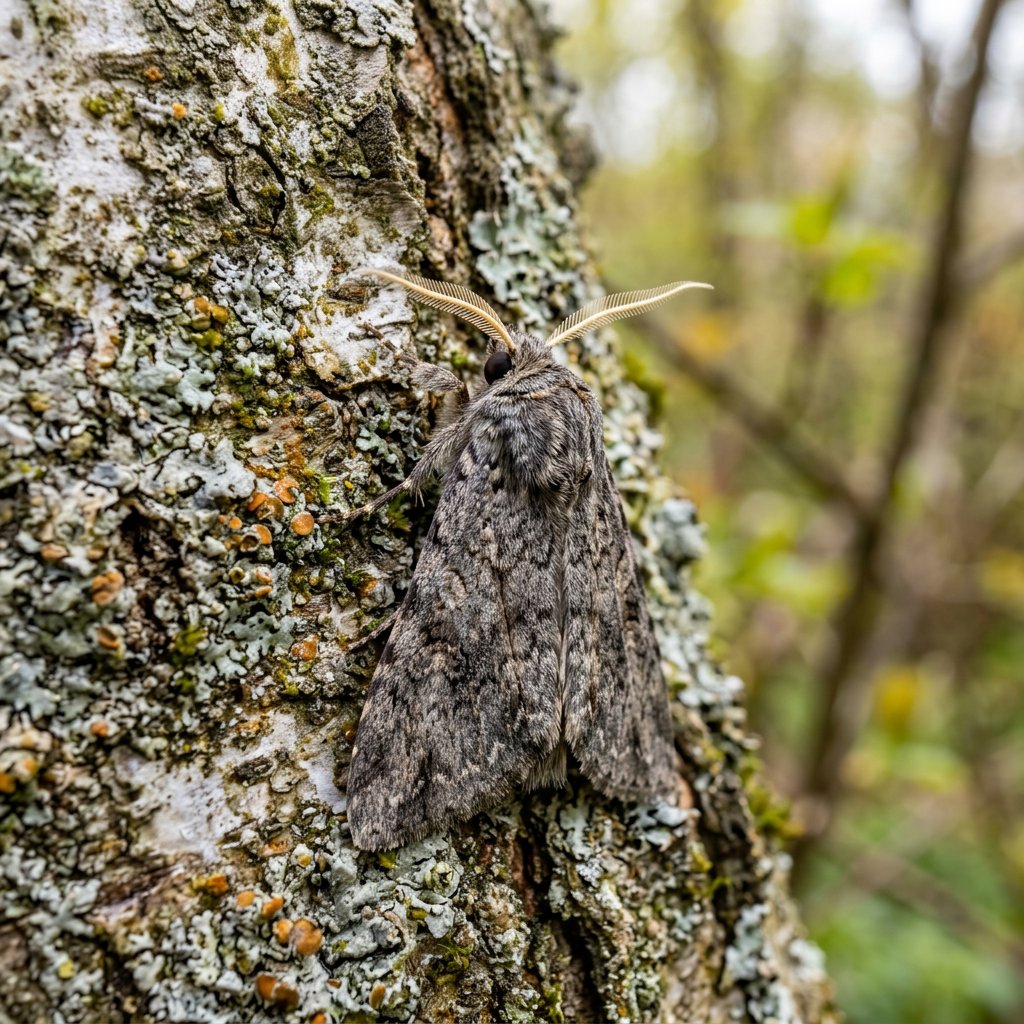
- 🎨 Vibrant Antennae: Its most defining feature is the pair of thick, strikingly orange or yellowish antennae that provide a sharp contrast to its otherwise muted colors.
- 🌫️ Frosted Wings: The forewings are a sophisticated blend of mouse-grey and olive-green, often looking as though they have been lightly dusted with frost or flour.
- 🌀 Intricate Markings: Look for two or three dark, wavy cross-lines and a pale, circular "orbicular" spot near the center of the wing, which helps break up its silhouette against tree bark.
🌲 Habitat & Ecology
- 🌳 The Birch Specialist: This moth is deeply tied to birch trees. Its larvae are "leaf-rollers," spending their summer days hidden inside a folded birch leaf held together by silk, emerging only at night to feed on the foliage.
- 🌙 Early Bird (of the Night): Unlike many moths that wait for the heat of midsummer, this species flies in March and April. You’ll rarely see them during the day unless you spot one resting perfectly still on a twig, mimicking a broken branch or a bit of lichen.
⚠️ Safety & Toxicity
- ✅ Harmless Neighbor: The Yellow-horned Moth is a "friend" to the garden and the forest. It does not bite, sting, or carry any known toxins.
- 🐾 Pet & Human Safe: It is completely safe to handle gently. It poses no threat to curious cats or dogs, though its erratic fluttering might trigger a harmless backyard chase.
✨ Fun Fact
The Yellow-horned Moth is a true "winter warrior." It has been known to emerge and fly on evenings when the temperature is near freezing and there is still snow on the ground, making it one of the toughest and earliest flyers in the insect world!
More Details








