Info
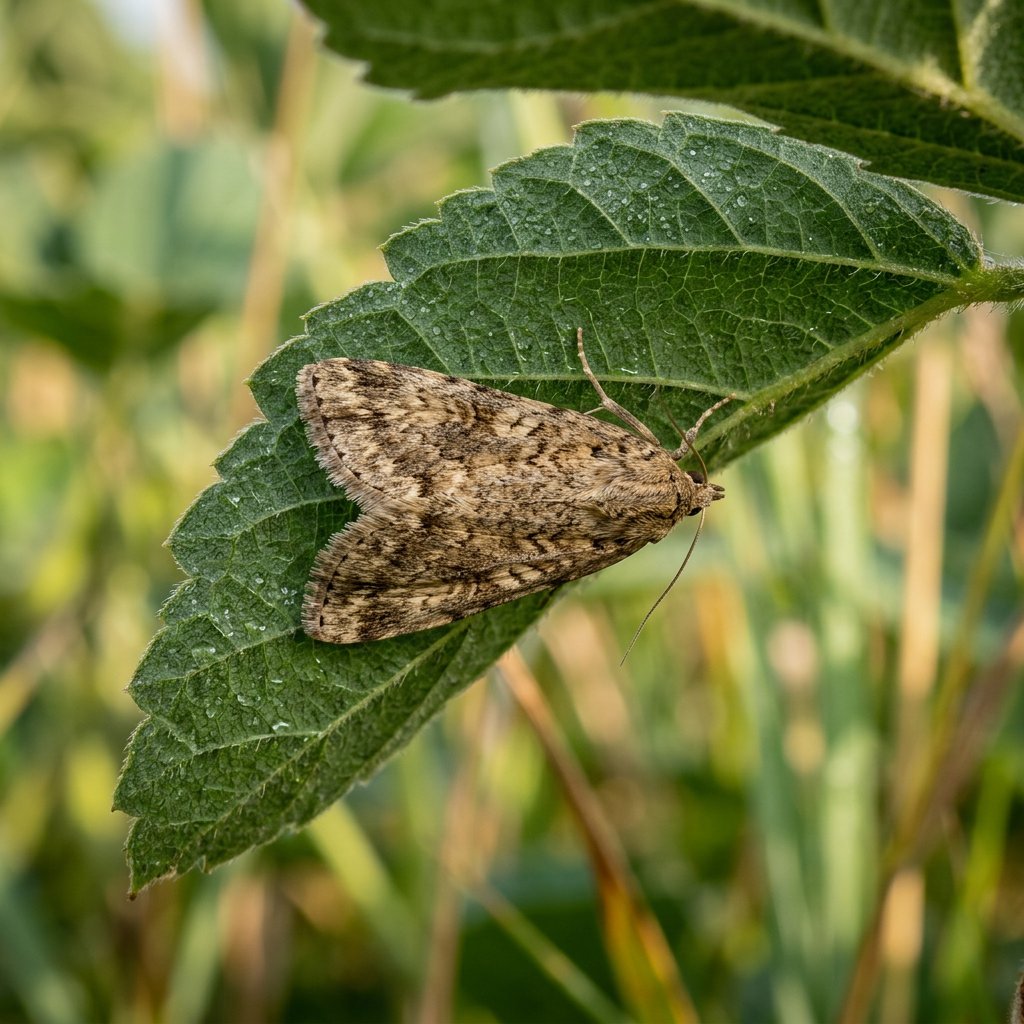
Often called the Garden Webworm, Achyra rantalis is a master of concealment and a common visitor to North American vegetable patches. While the adult moth is a modest, tan-colored flyer, its larval stage is famous for building miniature "silk cities" among your crops, weaving leaves together to create a private dining hall.
🔍 How to Identify
- 🦋 The Adult Wings: The moth is small and triangular, featuring buff-brown or tan wings with subtle, darker wavy lines that help it vanish against dried leaves or soil.
- 🐛 The Spotted Larva: The caterpillars are slender and yellowish-green, marked by a distinct row of three small black spots on the side of each body segment.
- 🕸️ The Webbing: Unlike spiders, these insects spin messy, protective silk webs that pull several leaves together, typically near the tips of the plant’s branches.
🏡 Habitat & Ecology
- 🍽️ A Generalist Appetite: These insects aren't picky eaters; they enjoy everything from alfalfa and corn to garden favorites like beans, peas, and strawberries. They are particularly fond of "Pigweed," which often acts as their primary nursery.
- 🏗️ Skeletonizing Behavior: The larvae feed from the safety of their silk tents, eating the soft tissue of the leaf while leaving the veins intact. This creates a "see-through" or skeletonized appearance on the foliage.
⚠️ Safety & Toxicity
- ✅ Harmless to Humans: The Garden Webworm does not bite, sting, or possess any venom. They are completely safe to handle, though they are quite squirmy!
- 🌱 Threat to Plants: While they aren't dangerous to you or your pets, a large population can quickly defoliate young seedlings. They are considered a minor-to-moderate garden pest rather than a medical concern.
✨ Fun Fact
When a Garden Webworm caterpillar feels threatened, it doesn't just crawl away—it performs a high-speed "bungee jump." It will drop off the leaf on a thin strand of silk, dangling mid-air until the danger passes, before climbing back up its own rope!
More Details








