Info
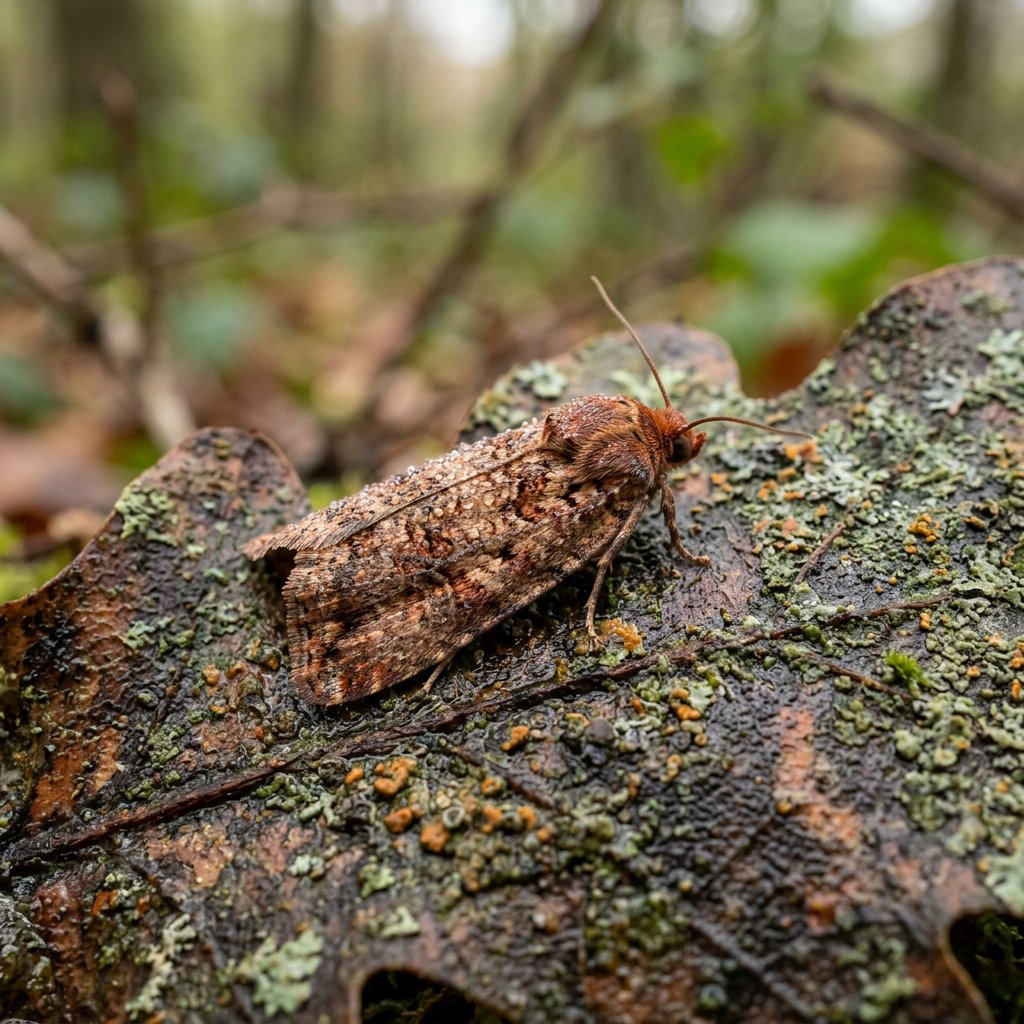
The Rusty-button Tortrix (Acleris notana) is a tiny master of camouflage that blends seamlessly into the bark and lichen of northern forests. Often mistaken for a withered scrap of leaf or a bit of debris, this subtle moth spends its days hiding in plain sight among birch and oak trees. While it lacks the flashy colors of a butterfly, its intricate, "sculpted" wing texture makes it a fascinating find for sharp-eyed nature observers.
🔍 How to Identify
- 🦋 Wing Shape: When at rest, the wings overlap to form a "bell" or tent-like profile, which is a classic silhouette of the Tortrix moth family.
- 🔘 Raised Tufts: The most distinctive feature is the presence of small, raised tufts of scales on the forewings—the "buttons" that give the moth its common name.
- 🎨 Variable Patterns: Their color is highly variable, ranging from pale silvery-gray to a rich, rusty brown, often marked with dark, jagged lines that mimic the texture of tree bark.
🌲 Habitat & Ecology
- 🌳 Woodland Architect: This moth is a specialist of deciduous forests, particularly those rich in Birch and Oak. It plays a quiet role in the ecosystem as a primary consumer of forest foliage.
- 🍃 Leaf-Rolling Larvae: In its caterpillar stage, it is a "leaf-roller." It uses silk to fold or roll the edges of a leaf into a protective tube, creating a private "bungalow" where it can feed safely away from the eyes of predatory birds.
⚠️ Safety & Toxicity
- ✅ Status: Entirely harmless to humans and pets.
- 👐 Details: The Rusty-button Tortrix does not bite, sting, or possess any irritant hairs. While it feeds on trees, it rarely appears in high enough numbers to cause significant damage to healthy forest canopies or garden ornamentals.
✨ Fun Fact
The scientific family name "Tortricidae" comes from the Latin word torquere, which means "to twist"—a direct tribute to the clever way the caterpillars twist and bend leaves to build their silk-lined homes!
More Details








