Info
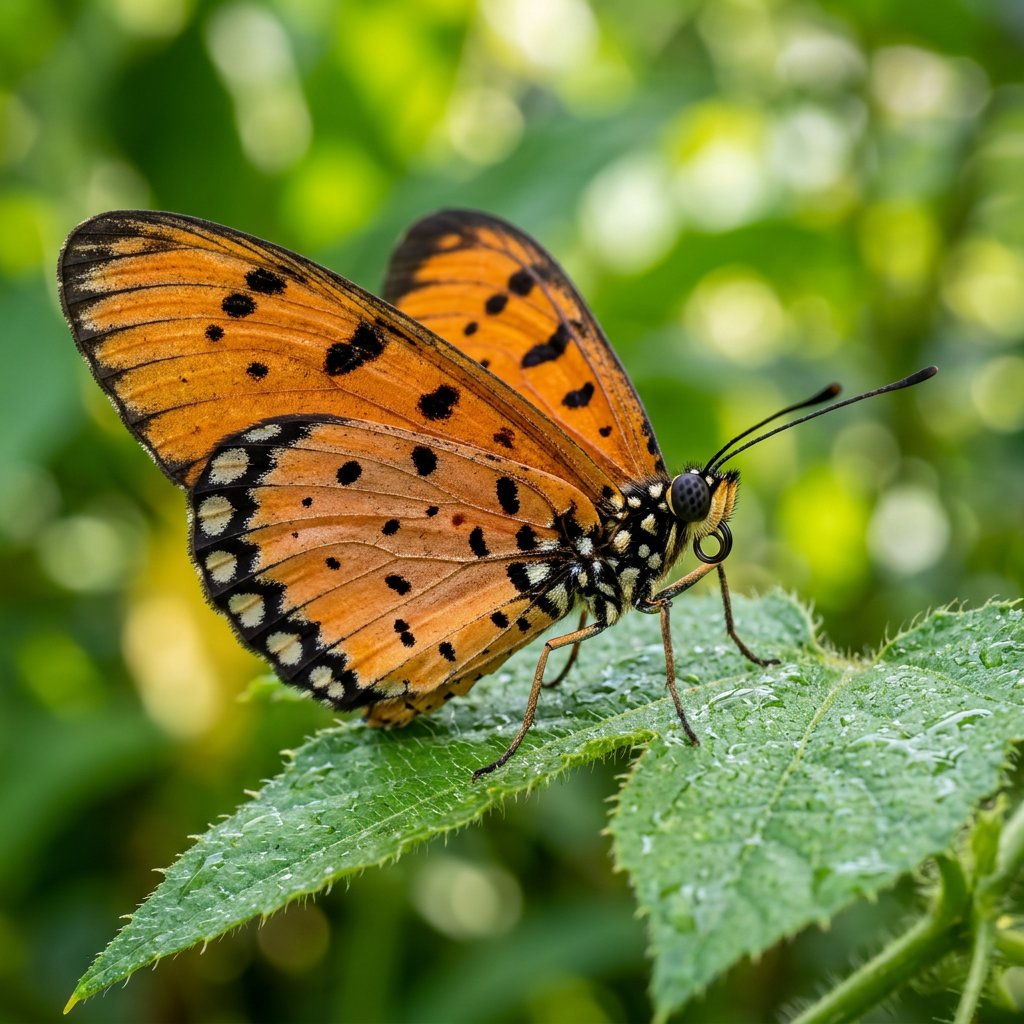
The Tawny Coster (Acraea terpsicore) is a small, vibrant masterpiece often seen lazily drifting through sunny gardens and open fields across South and Southeast Asia. Known for its distinct brick-red wings and "polka-dot" body, this butterfly is a bold survivor. It doesn't bother with the frantic, zig-zag flight of other butterflies because it has a secret chemical defense that makes it virtually untouchable to predators.
🔍 How to Identify
- 🦋 Wing Patterns: The upper wings are a rich tawny or orange-red, featuring several distinct black spots. The hindwings are edged with a thick black border that contains a row of delicate white spots.
- ⚫ The Body: Unlike many butterflies with plain torsos, the Tawny Coster has a striking black body speckled with bright white dots, almost resembling a miniature ladybug pattern.
- 🌬️ Leisurely Flight: They are easily identified by their movement. Because they are toxic to birds, they fly slowly and low to the ground, showing off their colors as a warning rather than trying to hide.
🌲 Habitat & Ecology
- 🌺 The Passion Connection: This butterfly is a "friend" to the garden but a "foe" to passion flower vines (Passiflora). Their spiky, reddish-brown caterpillars feed almost exclusively on these vines, which provide the toxins the butterfly needs for protection.
- ☀️ Sunny Disposition: You will rarely find them in deep, dark forests. They prefer the edges of woods, abandoned lots, and flower-filled backyards where they can soak up the sun and find nectar-rich blossoms.
⚠️ Safety & Toxicity
- 🛡️ Status: Harmless to touch, but chemically "armed" against being eaten.
- 🐕 Details: The Tawny Coster does not bite or sting. However, when threatened, it can exude a yellow, oily liquid that smells unpleasant and contains traces of cyanide. It is toxic if swallowed, so keep curious pets or toddlers from trying to "taste" this colorful insect.
✨ Fun Fact
The Tawny Coster is a master of "Aposematism"—the scientific term for using bright colors to advertise toxicity. They are so confident in their chemical armor that they have been known to continue mating or feeding even when a predator is nearby, knowing that one bite would be a bitter, regrettable mistake for the attacker!
More Details








