Info
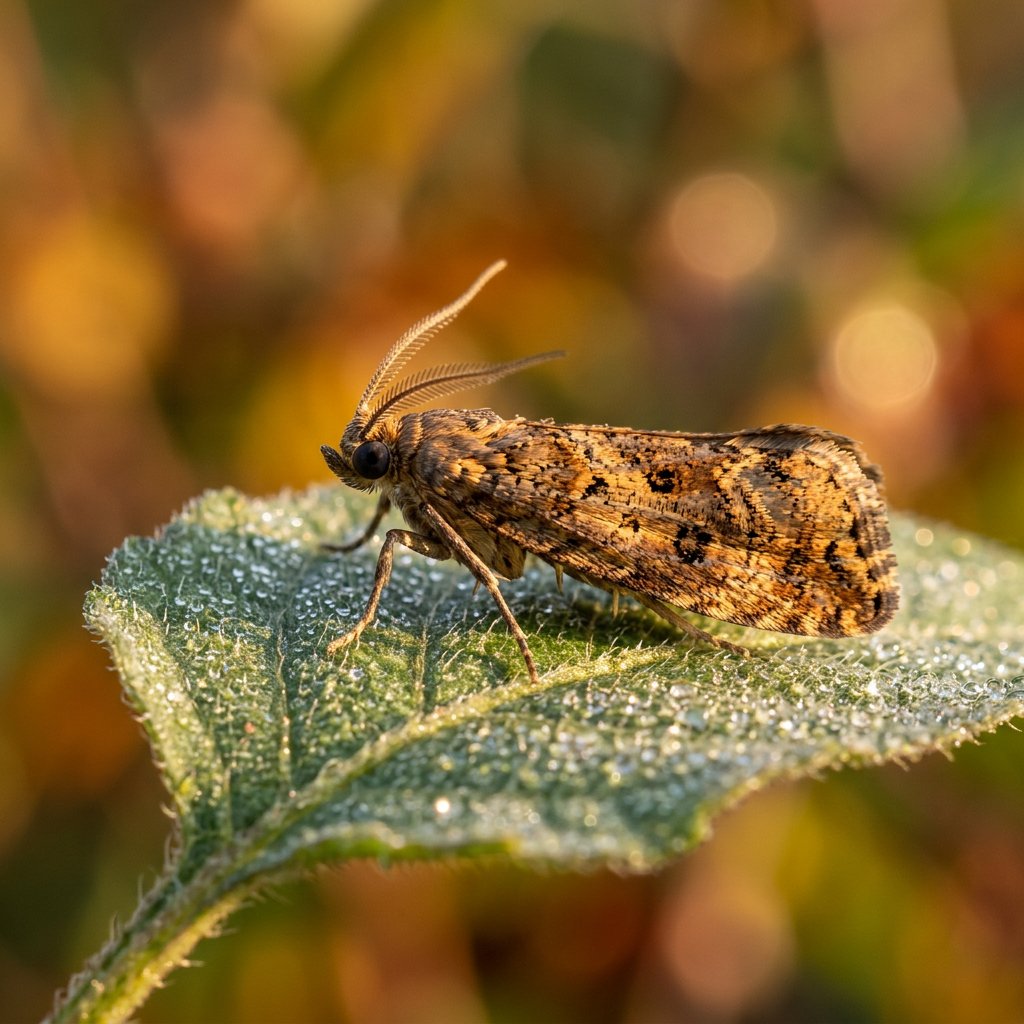
Often called the Leek Moth, members of the Acrolepia genus are tiny, unassuming travelers with a specific appetite for your kitchen garden. While the adult moths are masters of disguise, blending into dried leaves and bark, their offspring are notorious "architects of destruction" for onions and garlic. Originally from Europe, they have spread across the globe, becoming a major talking point for frustrated vegetable gardeners.
🔍 How to Identify
- 🦋 The "White Triangle": When the moth rests, its mottled brown wings form a tent shape. Look for a distinctive white, triangular spot located halfway down the back where the wings meet.
- 📏 Miniature Size: These insects are incredibly small, usually only 6–8mm long. They are easily mistaken for a tiny sliver of wood or a piece of debris.
- 🐛 The "Windowpane" Larvae: The larvae are creamy-yellow or light green. You’ll rarely see them directly, as they feed inside the leaves, leaving behind clear, parchment-like "windows" in the greenery.
🌲 Habitat & Behavior
- 🍽️ Allium Specialists: You will almost exclusively find these insects near leeks, onions, garlic, chives, and shallots. They are highly specialized and rarely bother your ornamental flowers or fruit trees.
- 🕸️ Lace Cocoons: One of the most unique signs of their presence is their pupa. They spin a beautiful, open-mesh cocoon that looks like a delicate lace net attached to the surface of a leaf.
- 🌙 Night Owls: Adult moths are nocturnal. If you see small, jittery brown moths fluttering around your vegetable patch at dusk, they are likely searching for a place to deposit their eggs.
⚠️ Safety & Toxicity
- 🛡️ Non-Threatening: The Leek Moth is completely harmless to humans and pets. They do not bite, sting, or carry diseases.
- 🌱 Garden Impact: While they aren't dangerous to you, they are a "foe" to your harvest. They don't just eat leaves; they can tunnel into the bulb of an onion or garlic, which introduces bacteria and causes the entire plant to rot before it can be picked.
✨ Fun Fact
Despite being a pest, the Leek Moth is an engineering marvel; the "netted" structure of its cocoon is designed to allow maximum airflow for the developing moth while still providing a structural skeleton that protects it from being crushed by growing plant tissue!
More Details








