Info
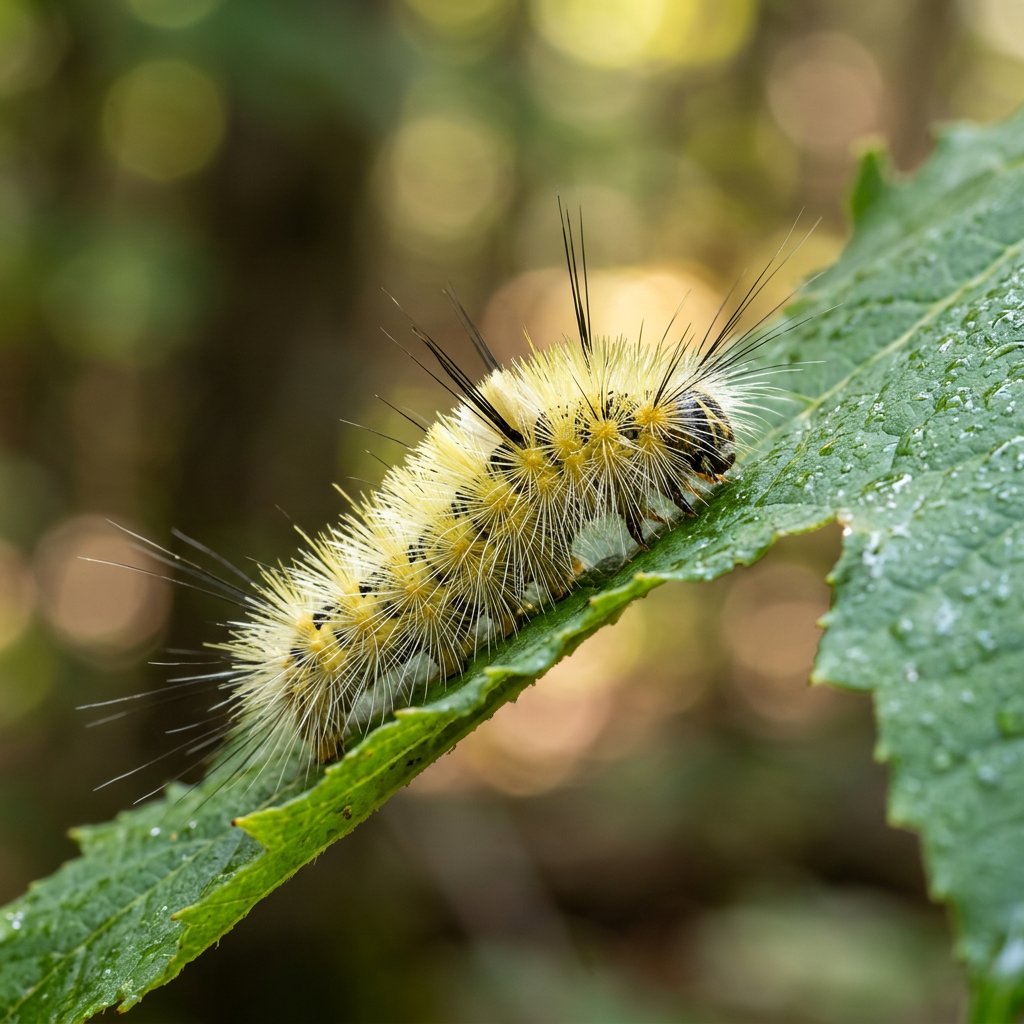
Often called the "Fuzzy Yellow Caterpillar," the American Dagger Moth is a master of two lives. As a larva, it’s a brilliant, fuzzy showstopper crawling through backyard trees, but as an adult, it transforms into a subtle, gray phantom of the night. Despite its soft, "cuddle-ready" appearance, this is a "look but don't touch" neighbor often found in North American deciduous forests.
🔍 How to Identify
- 🐛 The "Mohawk" Look: The caterpillar is covered in dense, bright yellow or pale white bristles with five distinct long black hair bundles (pencils) sticking out like antennae near the head and tail.
- 🗡️ Dagger Markings: The adult moth is a dusty, mottled gray with fine black markings on the forewings that look like small daggers or the Greek letter "psi."
- 📏 Substantial Size: Mature caterpillars can reach about 2 inches (5cm) in length, making them very easy to spot against green leaves in late summer and autumn.
🌲 Habitat & Ecology
- 🌳 Leafy Buffets: These insects are common in suburban backyards and woodlands, favoring the leaves of Maple, Oak, Birch, Elm, and Willow trees.
- 🌙 Camouflage Experts: While the caterpillars are bold and visible, the adult moths are strictly nocturnal and spend their days resting on tree bark, where their gray patterns make them nearly invisible to predators.
⚠️ Safety & Toxicity
- 🚫 Warning - No Petting: While they look like tiny stuffed animals, the caterpillar's hairs (setae) are hollow and can break off in the skin, releasing a stinging toxin.
- 🖐️ Skin Irritation: Contact can cause a painful, itchy red rash or "hives" in humans. Always supervise children and curious pets around these fuzzy crawlers to avoid a nasty skin reaction.
✨ Fun Fact
The "Dagger" in its name doesn't come from the caterpillar's stinging hairs, but rather from the small black marks on the adult moth's wings, which look exactly like a tiny stiletto or dagger pointed toward the wing tip!
More Details








