Info
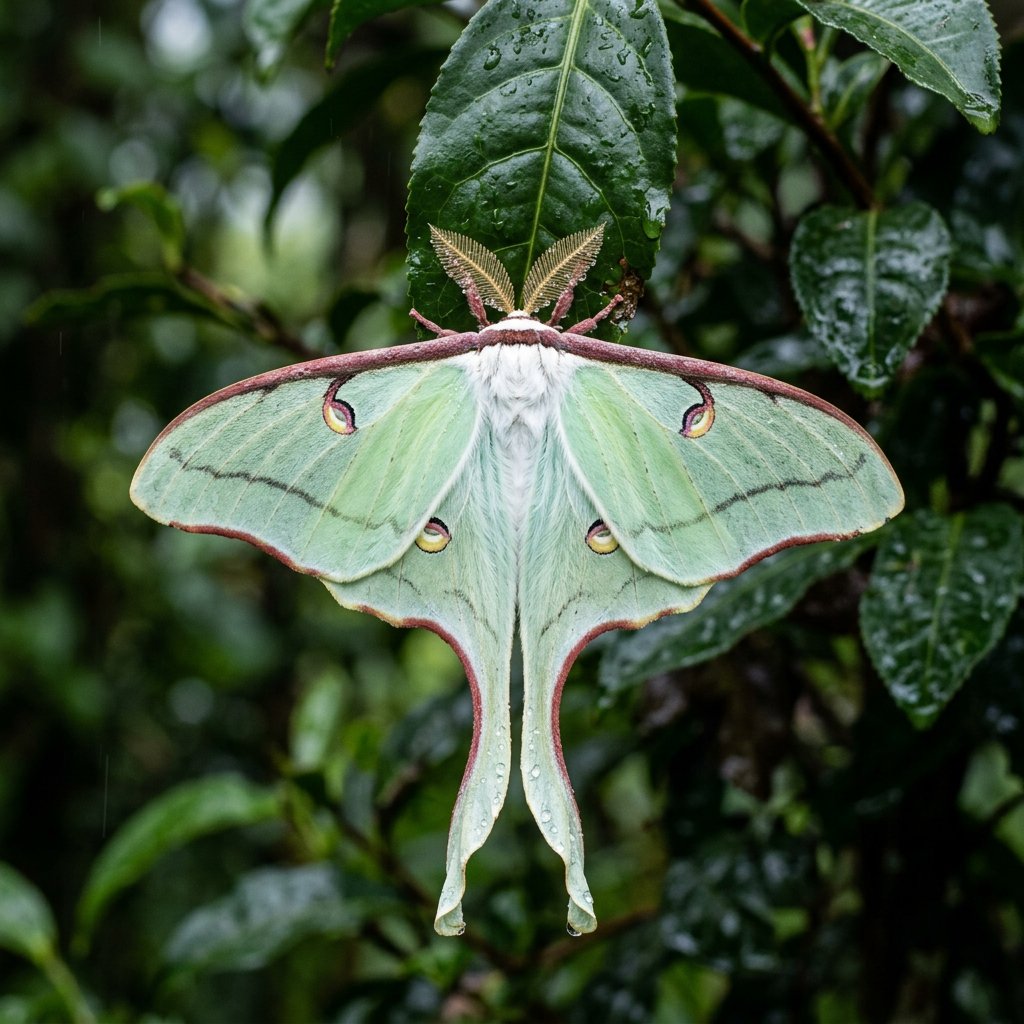
Known as the Indian Moon Moth, Actias selene looks like it fluttered straight out of a fairy tale. Often mistaken for a floating leaf or a ghostly spirit, its long, trailing tails and sea-foam green color make it one of the most stunning insects in the world. While its name might sound like a botanical species, this ethereal giant is actually one of the largest and most beautiful silk moths found across Asia.
🔍 How to Identify
- 🦋 The Wings: Massive, pale-green wings spanning up to 18cm, featuring distinct "eyespots" (ocelli) that look like tiny, pink-rimmed moons.
- 🎀 The Tails: The hindwings extend into elegant, long, twisted ribbons which are not just for show—they help confuse the sonar of predatory bats.
- ☁️ The Body: A thick, white, "furry" thorax contrasted by dark reddish-brown antennae that look like delicate, feathery fans.
🌲 Habitat & Ecology
- 🌙 Nighttime Navigator: As a strictly nocturnal creature, you are most likely to spot them resting on tree trunks during the day or fluttering near porch lights after dusk.
- 🌳 Host Plants: While the adult moth doesn't eat, its bright green, spiked caterpillars are common in gardens and forests, feeding on the leaves of Walnut, Hibiscus, and Apple trees.
- 🍃 Camouflage Master: When resting with its wings spread, its color and shape mimic a dappled leaf, allowing it to hide from birds in plain sight.
⚠️ Safety & Toxicity
- ✅ Status: Entirely harmless and non-aggressive.
- 👐 Details: This moth has no stinger and cannot bite. However, they are extremely fragile; the "dust" on their wings is actually tiny scales, and touching them can damage their ability to fly or regulate temperature.
✨ Fun Fact
The adult Indian Moon Moth lives its entire life without a mouth! It emerges from its cocoon without the ability to eat or drink, living only for 7 to 10 days on energy stored from its time as a caterpillar, with the sole purpose of finding a mate.
More Details








