Info
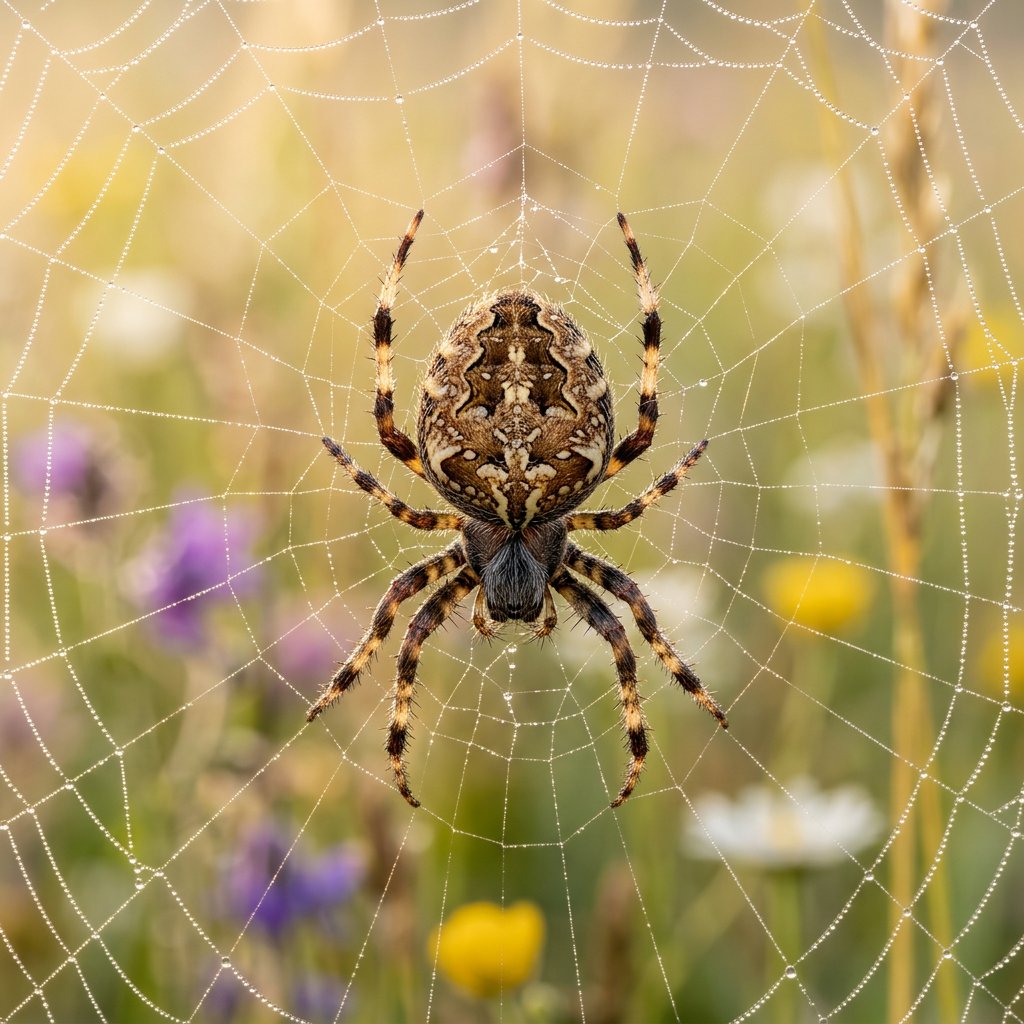
Often called the Oak Spider or Oak-leaf Orb-weaver, this master architect is one of the most recognizable spiders found in European meadows and sun-drenched bushes. Despite its slightly robust and "bristly" appearance, it is a peaceful garden resident that acts as a natural pest controller. It earns its name from the distinct, pale pattern on its back that looks remarkably like the silhouette of a jagged oak leaf.
🔍 How to Identify
- 🎨 The "Oak Leaf" Pattern: A creamy-white or yellowish marking on the top of the abdomen that tapers toward the rear, mimicking the shape of a leaf against a darker brown or olive background.
- 🧶 Oval Abdomen: Unlike many common garden spiders that have perfectly round bodies, this species has an elongated, oval-shaped abdomen that is slightly pointed at the tail end.
- 🦵 Banded Legs: The legs are sturdy and covered in stiff, protective hairs, usually featuring alternating bands of light and dark brown for camouflage.
🌲 Habitat & Ecology
- 🕸️ Vertical Architect: It constructs large, symmetrical vertical webs between tall grasses, heather, or low-hanging branches, typically positioned to catch low-flying insects like flies and moths.
- 🍃 The Hidden Retreat: It rarely sits in the center of the web during the heat of the day; instead, it builds a silken "bell" or retreat in a nearby curled leaf, keeping one leg on a "signal line" to feel for vibrations.
- 🦗 Natural Pesticide: These spiders are high-energy predators that help balance the local ecosystem by consuming large quantities of aphids and small flying pests.
⚠️ Safety & Toxicity
- 🛡️ Status: Harmless and non-aggressive. This spider is far more afraid of you than you are of it and will usually drop to the ground or hide if it senses a human.
- 🐝 Details: While it does have venom to subduing its insect prey, it is not medically significant to humans or pets. In the extremely rare event of a bite (usually only if squeezed), the sensation is milder than a common bee sting and results in minor localized itching.
✨ Fun Fact
Young Oak Spiders are world travelers; they engage in "ballooning," where they stand on their tiptoes and release a strand of silk into the wind, allowing the breeze to carry them for miles to find a new home!
More Details








