Info
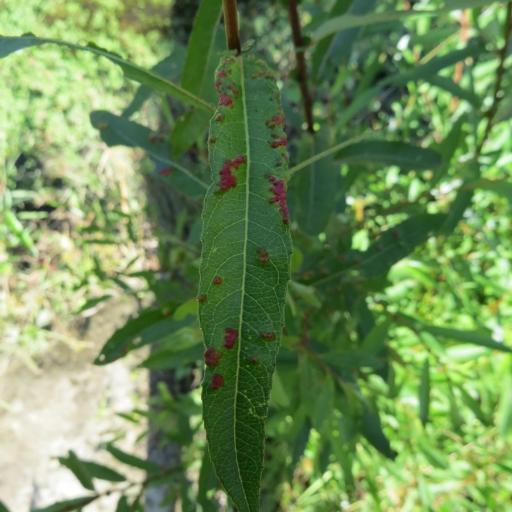
Often called the Willow Gall Mite, these tiny architects turn ordinary willow leaves into a sea of red or green bumps. While the mites themselves are far too small to see with the naked eye, their "handiwork" is a common sight in wetlands and gardens across the Northern Hemisphere. They are masterful shapeshifters of plant tissue, coaxing the tree into building them a custom home.
🔍 How to Identify
- 🔴 The Galls: Look for small, pimple-like bumps (galls) on the upper surface of willow leaves. These are the most obvious signs of the mite's presence.
- 🎨 Color Transitions: The galls usually start as a pale green or yellowish color, often maturing into a vibrant, eye-catching reddish-pink or deep purple as the season progresses.
- 🔍 Microscopic Form: If viewed under a powerful lens, the mite itself is a pale, creamy-white, cigar-shaped creature. Unlike most "bugs," it has a very elongated body.
🌲 Habitat & Ecology
- 🌳 Willow Loyalty: These mites are specialists that live almost exclusively on Salix (Willow) species. They are highly host-specific, meaning they won't jump from your willow tree to your rose bushes or vegetable garden.
- 🏠 Chemical Architects: The mite doesn't just eat the leaf; it injects specialized saliva into the plant tissue. This chemical cocktail "tricks" the willow into growing a protective chamber (the gall) around the mite, providing it with both food and shelter from predators.
- ❄️ Winter Survival: During the cold months, the adult females (called "deutogynes") hide in the crevices of bark or under bud scales, waiting for the first leaves of spring to emerge so they can begin the cycle again.
⚠️ Safety & Toxicity
- ✅ Harmless to Humans: Aculus tetanothrix is completely harmless to humans and pets. They do not bite, sting, or carry diseases that affect mammals.
- 🌿 Cosmetic Damage: While a heavily infested tree might look "sick" or strange, the damage is almost entirely cosmetic. Even a tree covered in galls will typically remain healthy and continue to grow vigorously.
✨ Fun Fact
Most arachnids, like spiders and ticks, are famous for having eight legs. However, Aculus tetanothrix is part of a unique group that has evolved to have only four legs, all located at the very front of their bodies!
More Details








