Info
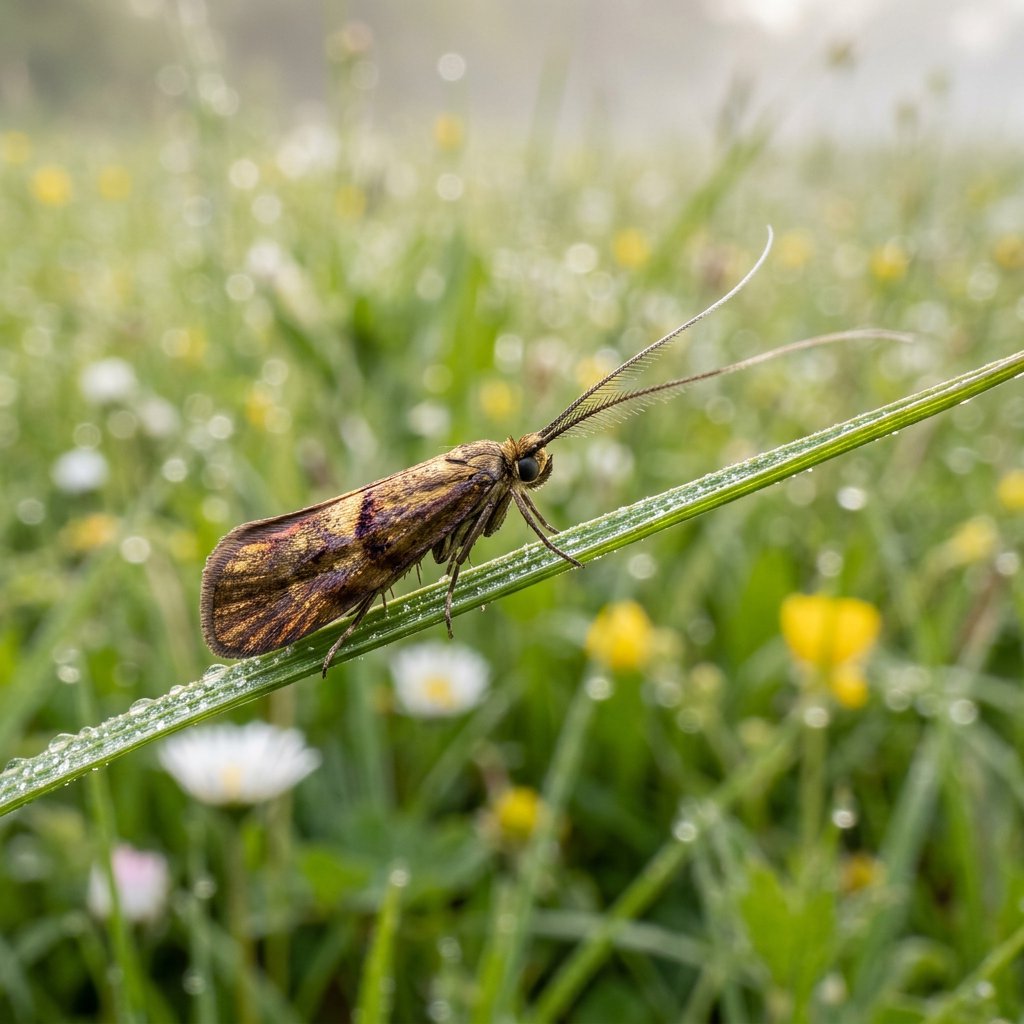
Often called the Bright-line Brown Long-horn, this tiny moth looks like a living piece of jewelry dancing in the sunlight. Known as a "Fairy Moth," it is famous for its shimmering metallic wings and impossibly long, thread-like antennae that trail behind it as it flies. In old European folklore, these moths were sometimes thought to be the inspiration for woodland spirits due to their ethereal, bobbing flight patterns in dappled forest light.
🔍 How to Identify
- 🦋 Metallic Wings: The forewings are a stunning mix of burnished bronze, copper, and purple, featuring a very distinct, bright yellow or orange band edged with dark lines across the middle.
- 📏 Extraordinary Antennae: True to the "Long-horn" name, the males possess silver-white antennae that are more than double their body length, while females have shorter, thickened dark antennae.
- ✨ Size and Shape: It is a "micro-moth" with a wingspan of only 11–14 mm. When resting, it holds its wings in a tent-like shape, making it look like a tiny, gilded wedge on a leaf.
🌲 Habitat & Ecology
- ☀️ Sun-Lovers: Unlike many moths that hide during the day, Adela croesella is diurnal. You will most likely spot them on sunny days in May and June, dancing in "swarms" near hedgerows and woodland edges.
- 🍃 The Leaf-Case Strategy: The larvae have a fascinating lifecycle. They start by feeding on the flowers of Privet (Ligustrum) or Sea Buckthorn, but as they grow, they drop to the leaf litter on the ground and build a tiny, portable "sleeping bag" out of silk and leaf fragments to protect themselves.
- 🐝 Pollination Role: As adults, they are gentle nectar-feeders, frequently visiting flowers like Hawthorn and Wild Rose, playing a small but helpful role in the local ecosystem's pollination.
⚠️ Safety & Toxicity
- ✅ Harmless Friend: This moth is completely safe. It does not bite, sting, or possess any chemical irritants.
- 🐱 Pet & Child Safe: They are non-toxic to cats, dogs, and curious children. Their only defense is their erratic flight and camouflage when the sun goes down.
✨ Fun Fact
The name Adela is derived from the Greek word adelos, meaning "unseen." This refers to the larvae, which spend the majority of their lives hidden away in their secret leaf-cases on the forest floor, completely invisible to predators!
More Details








