Info
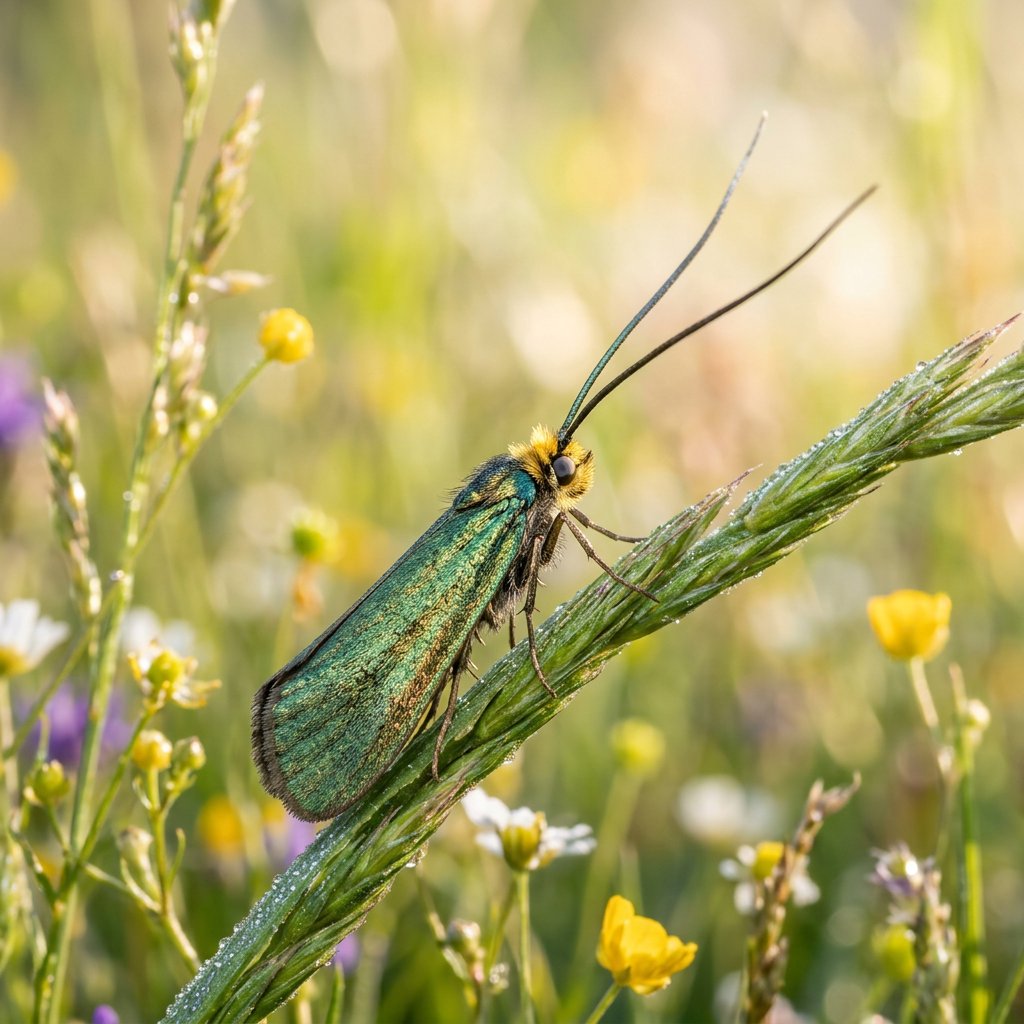
While its name might sound like a botanical species, Adela viridella is actually a shimmering jewel of the insect world known as the Green Longhorn Moth. Often seen dancing in spring sunlight, these tiny "fairies" of the forest are famous for antennae that can be several times longer than their entire bodies. They are a welcome sign that the woodland is waking up and are frequently mistaken for tiny metallic beetles at first glance.
🔍 How to Identify
- 📏 Extraordinary Antennae: The most striking feature is the antennae. In males, these thread-like feelers are incredibly long, reaching up to five times the length of the forewings.
- ✨ Metallic Sheen: The wings possess a brilliant, iridescent metallic green or bronze-gold luster that shifts color as the moth moves through patches of light.
- 👁️ Day-Flying Eyes: Unlike the stereotypical nocturnal moth, this species is strictly diurnal (active during the day) and features large eyes adapted for navigating bright woodland clearings.
🌲 Habitat & Ecology
- 🌳 Oak Forest Residents: You will most likely find them in or near Oak woodlands. While the adults flutter near the canopy, the larvae (caterpillars) live on the forest floor, building mobile "houses" out of silk and leaf fragments.
- 💃 The Aerial Dance: On sunny afternoons in May and June, males gather in large "leks" to perform a rhythmic, bobbing flight. They hover and bounce in the air collectively to attract females.
- 🌸 Floral Diet: While the larvae eat decaying leaf litter, the adults spend their short lives sipping nectar from spring flowers like Hawthorn, Wild Garlic, and Bluebells.
⚠️ Safety & Toxicity
- 🛡️ Completely Harmless: The Green Longhorn Moth is a "gentle" insect. It possesses no stinger, cannot bite humans, and does not produce any known toxins.
- 🐾 Safe for Pets: These moths are not known to be poisonous to cats or dogs. Their small size and erratic flight usually make them nothing more than a momentary distraction for curious pets.
✨ Fun Fact
In the world of the Green Longhorn, antennae are a major status symbol! The males use their massive, whip-like antennae as specialized sensors to "sniff out" the pheromones of females from great distances through the dense woodland air.
More Details








