Info
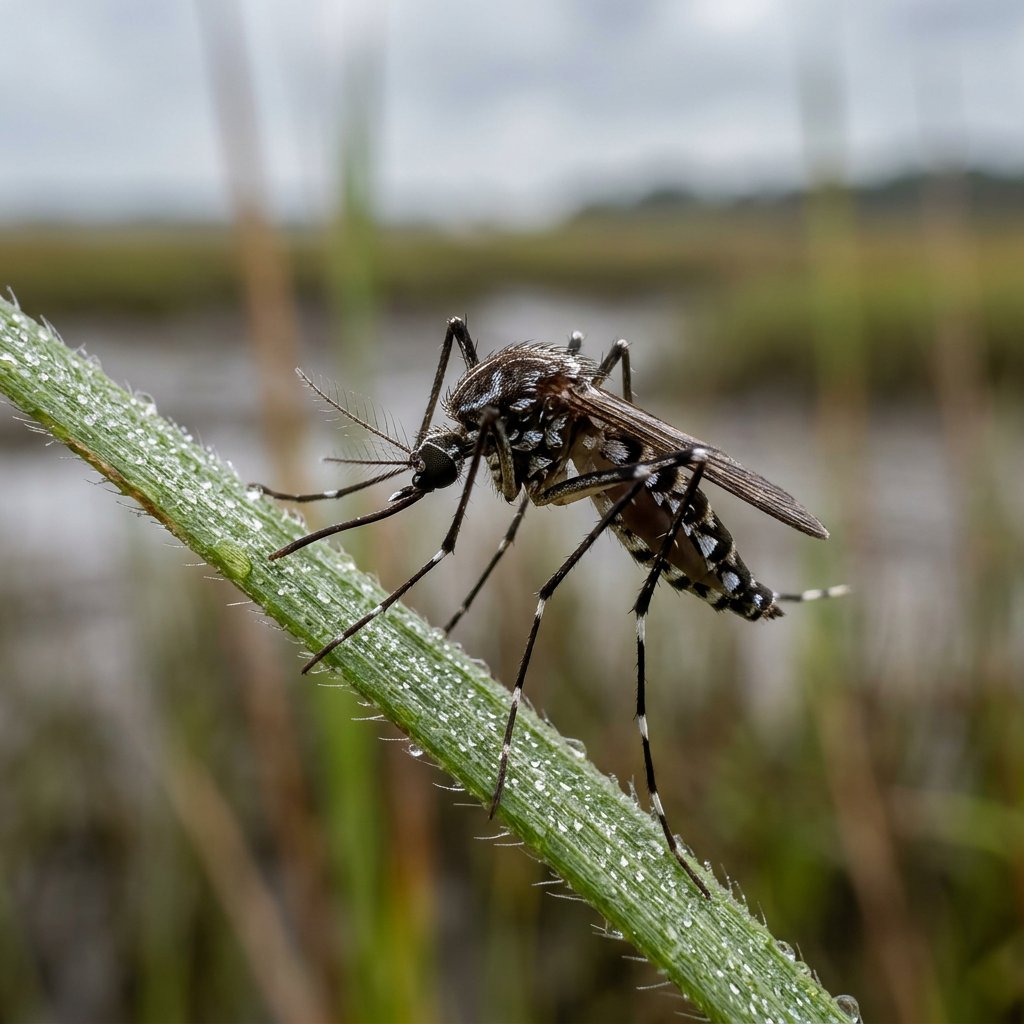
Often called the Atlantic Forest Mosquito, this species is a notorious "foe" to hikers and woodland explorers throughout the southeastern United States. Unlike many mosquitoes that wait for the cool of twilight, Aedes atlanticus is a bold daytime hunter that thrives in the humid shade of deep forests. If you’ve ever felt like you were being "followed" by a single, persistent mosquito in the woods, it was likely this silver-striped opportunist.
🔍 How to Identify
- 🧬 The Silver Stripe: The most distinctive feature is a single, brilliant silvery-white line running perfectly down the center of its dark thorax (the "back").
- 🦟 Dark Body: It has a predominantly dark brown to black body, which makes the white markings appear high-contrast and sharp.
- 📏 Pointed Abdomen: Typical of the Aedes genus, the tip of the female's abdomen is pointed, a subtle detail that distinguishes it from the blunt-ended Culex mosquitoes.
🌲 Habitat & Ecology
- 🌧️ Floodwater Strategy: This insect is a "floodwater mosquito." Instead of laying eggs directly in water, females lay them on damp soil in depressions. The eggs can survive dry spells for months, only hatching when a heavy rainstorm finally floods the forest floor.
- 🌳 Woodland Specialist: You won’t usually find these in city centers or dry plains. They congregate in low-lying woodland areas, swamps, and margins of forests where the air remains still and humid.
- 🩸 Aggressive Feeders: They are persistent biters. While males feed exclusively on flower nectar, the females require a blood meal to develop their eggs and are known to bite mammals, including humans and livestock, with great intensity.
⚠️ Safety & Toxicity
- 🩹 The Bite: The primary "danger" is the itchy, localized allergic reaction to their saliva. They are known to bite through thin leggings or t-shirts.
- 🛡️ Disease Vector: While they are a nuisance, they are also medically significant. This species is a known carrier of Eastern Equine Encephalitis (EEE) and Turlock virus. If you are trekking through swampy woodland during peak season, high-DEET repellents or permethrin-treated clothing are strongly recommended.
✨ Fun Fact
The eggs of Aedes atlanticus are like little time capsules. They have "staggered hatching," meaning even if a pool floods, only some eggs hatch. The rest wait for a second or third flood, ensuring the population survives even if the first pool dries up too quickly!
More Details








