Info
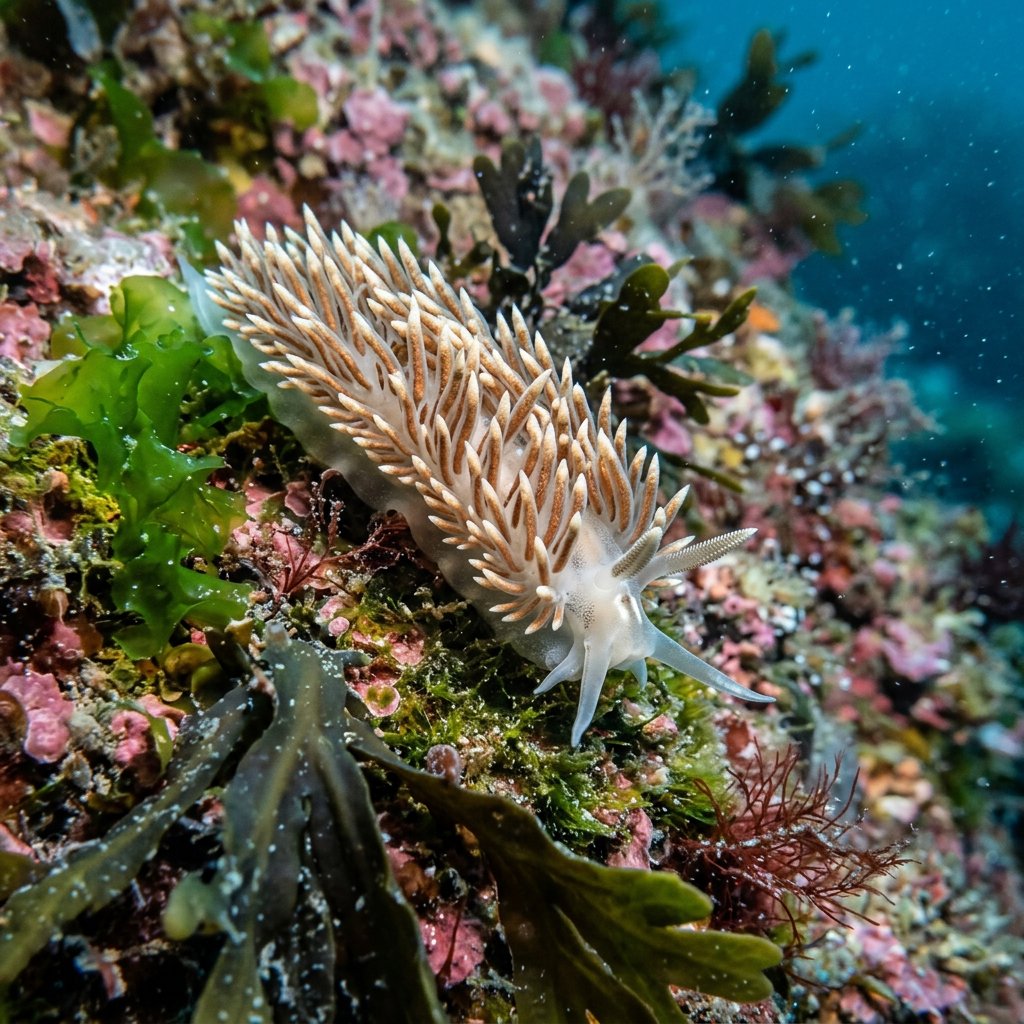
Often called the Shaggy Mouse Nudibranch, this fascinating creature is not actually an insect, but a marine gastropod (sea slug). It earned its nickname because, when out of the water, it looks like a limp, sodden clump of grey fur or a tiny wet mouse. In its natural underwater habitat, it is a graceful and formidable predator of the rocky intertidal zones.
🔍 How to Identify
- ☁️ The "Shag": Its back is covered in hundreds of soft, finger-like protrusions called cerata. These give it a fuzzy, ruffled appearance that breaks up its silhouette against the seabed.
- 🎨 Variable Color: Usually found in shades of grey, tan, or brownish-purple, often speckled with tiny white or silver dots that look like powdered sugar.
- 👃 Rhinophores: It features two smooth, horn-like sensory organs on its head used to "smell" chemicals in the water to track down its favorite meals.
🌊 Habitat & Ecology
- 🪨 Tide Pool Resident: You will most likely find them in cold coastal waters, tucked under rocks or hiding in kelp forests during low tide. They are masters of blending into the muddy or rocky seafloors of the North Atlantic and Pacific.
- ⚔️ Anemone Assassin: This slug is a specialized hunter. It feeds almost exclusively on sea anemones. While most creatures avoid anemone stings, the Shaggy Mouse has evolved a thick coating of mucus that makes it immune to the venom.
⚠️ Safety & Toxicity
- 🛡️ Stolen Weaponry: While it doesn't produce its own venom, it "steals" the stinging cells (nematocysts) from the anemones it eats. It moves these live stingers into its own body "hairs" to use against fish or crabs.
- 🚫 Human Risk: They are generally harmless to humans, though picking them up can cause a mild tingling sensation or skin irritation if you have sensitive skin. It is always best to leave these delicate mollusks in their tide pools.
✨ Fun Fact
The Shaggy Mouse Nudibranch is a master of "biological recycling." After eating an anemone, it sorts through the cells, digests the food, but keeps the stinging barbs alive and active, migrating them to the tips of its own "fur" for protection!
More Details








