Info
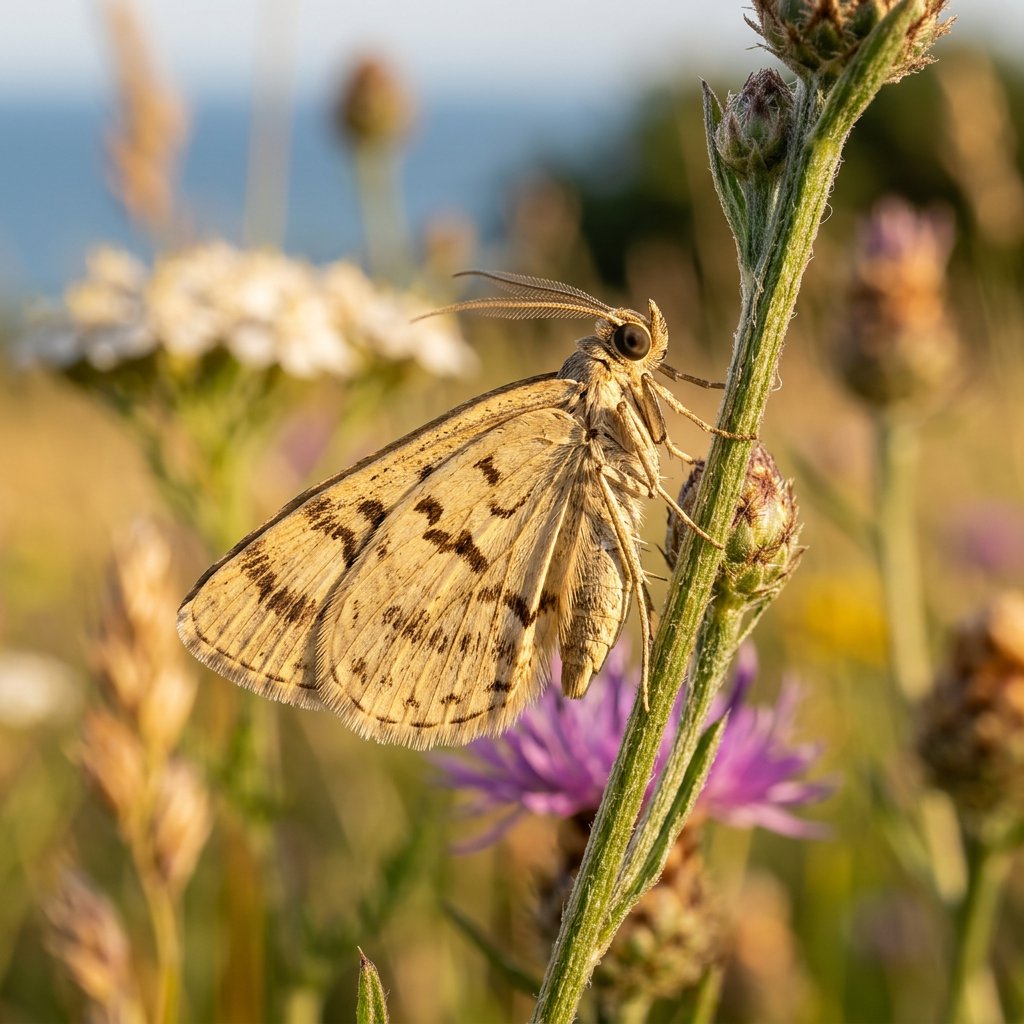
Meet Smeathman’s Aethes, a tiny moth that looks as though it was delicately painted with strokes of sunlight and rusty ink. Often mistaken for a speck of dried grass until it flutters, this "micro-moth" is a charming resident of wildflower meadows across the Northern Hemisphere. It belongs to the Tortricidae family, known for their unique wing-folding habits.
🔍 How to Identify
- 🦋 Wing Color: The forewings are a soft, creamy straw-yellow that provides perfect camouflage against dried summer stalks.
- 🎨 Distinct Bands: It features two prominent, slanted brownish-orange (ferruginous) bands that cross the wings, creating a subtle chevron pattern when the moth is at rest.
- 📏 Compact Profile: It is quite small, with a wingspan usually ranging between 12 and 19 millimeters, making it easy to miss without a keen eye.
🌲 Habitat & Ecology
- 🌼 The Meadow Life: This moth is a specialist of "rough" ground—think unmanaged meadows, roadsides, and chalk downlands where wildflowers grow undisturbed.
- 🍽️ Diet & Host Plants: The larvae are "flower-head feeders." They live and eat inside the seed heads of Yarrow (Achillea) and Knapweed (Centaurea), eventually spinning a cocoon to overwinter in the soil or plant debris.
- 🌙 Twilight Activity: While they are technically nocturnal and attracted to light, you can often flush them out of long grass during a sunny afternoon walk.
⚠️ Safety & Toxicity
- 🛡️ Completely Harmless: Smeathman’s Aethes is a "friend" in every sense. It lacks any sting, bite, or chemical defense that could harm humans or curious pets.
- 🌿 Plant Health: Unlike some of its moth cousins that are considered agricultural pests, this species rarely occurs in numbers large enough to damage garden displays; it is simply a sign of a healthy, biodiverse backyard.
✨ Fun Fact
This moth was named in honor of Henry Smeathman, an 18th-century "adventurer-naturalist" who lived a life worthy of a movie—he spent years collecting specimens in Sierra Leone and even helped design one of the world's first hydrogen balloons!
More Details








