Info
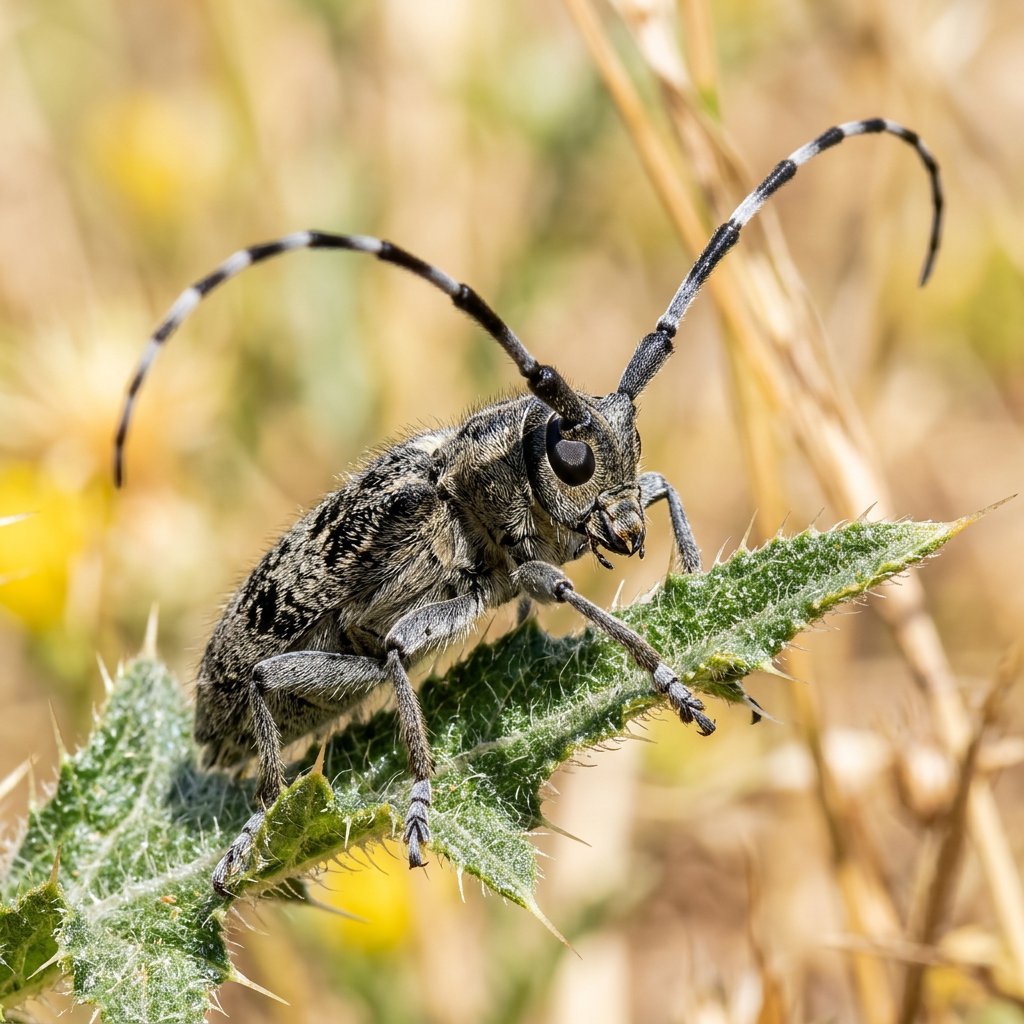
Often called the Thistle Longhorn Beetle, this slender, elegant insect is a master of camouflage among tall meadow weeds. With its exceptionally long, sweeping antennae, it looks like a miniature extraterrestrial explorer. While gardeners might worry about its presence, it is generally a neutral-to-beneficial resident that plays a role in the natural decomposition and pollination cycles of wild landscapes.
🔍 How to Identify
- 🪲 The Body: A very slender, elongated shape, typically measuring 7–15 mm. It often sports a subtle metallic sheen ranging from bronze to greenish-grey.
- 📡 The "Horns": Its most striking feature is its antennae, which are significantly longer than its body and feature alternating dark and light rings.
- 📏 The Racing Stripe: Look for a distinct, pale longitudinal stripe running right down the center of its back and often along the sides of its thorax.
🌲 Habitat & Ecology
- 🌾 Thistle Specialist: As its Latin name cardui suggests, this beetle is almost always found on thistles (Carduus), nettles, or artichokes. It relies on these sturdy stalks for its entire life cycle.
- 🐛 Stem Dwellers: While the adults enjoy basking in the sun and eating pollen, the larvae are "stem borers." They live entirely inside the stalks of herbaceous plants, munching on the inner pith before emerging as adults in the late spring.
- ☀️ Sun Seekers: On warm, sunny days, you’ll find them sitting motionless on the tops of leaves, perfectly aligned with the leaf veins to avoid being spotted by birds.
⚠️ Safety & Toxicity
- ✅ Harmless Friend: The Thistle Longhorn Beetle is completely non-toxic and lacks a stinger. It poses no threat to humans, pets, or structural timber.
- 🤏 The "Pinch": Like many beetles, it has small mandibles used for eating plants. If handled roughly, it might give a tiny, harmless pinch, but it prefers to drop to the ground or fly away when startled.
✨ Fun Fact
The Agapanthia cardui doesn't just look cool; it’s a "biological control" agent in some regions! Because it specifically targets thistles—which are considered invasive weeds in many parts of the world—this beetle is sometimes welcomed as a natural way to keep aggressive thistle populations from taking over pastures.
More Details








