Info
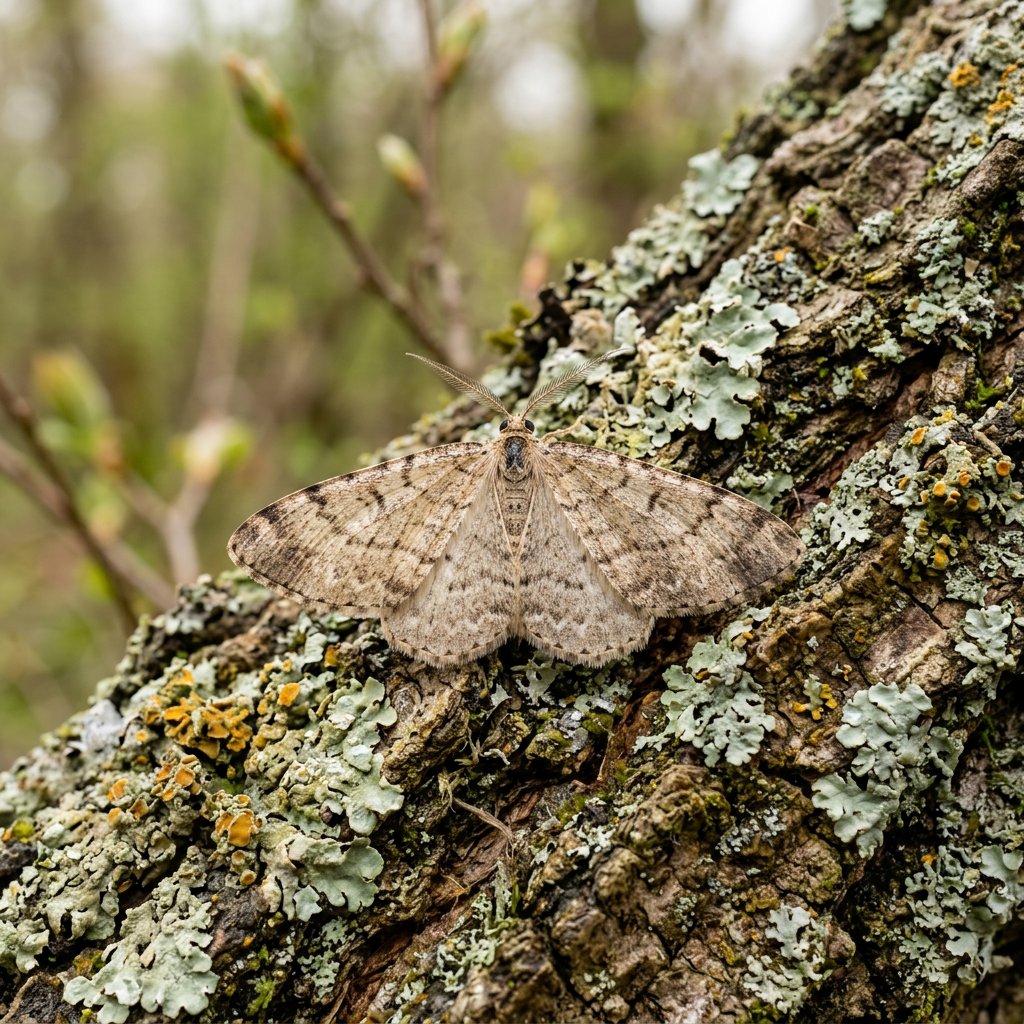
Known as the Dotted Border moth, this hardy insect is one of nature’s early risers, often appearing while there is still a chill in the late winter air. While the males look like traditional moths, the females are "brachypterous," meaning they have tiny, vestigial wings and cannot fly at all. They are gentle garden residents that signal the very first stirrings of spring.
🔍 How to Identify
- 🏁 The "Dotted" Border: Males feature a distinct row of small, dark spots along the outer edges of their yellowish-brown forewings.
- 🕷️ Wingless Females: Females look more like spiders or strange beetles than moths; they have plump bodies and only tiny, useless stumps where wings would usually be.
- 🎨 Camouflage: Their coloring mimics dead leaves and lichen, allowing them to blend perfectly against the bark of broadleaved trees during the day.
🌲 Habitat & Behavior
- 🌳 The Tree Climbers: Because the females cannot fly, they spend their lives crawling up the trunks of trees like Oak, Birch, and Hawthorn to pheromonally "call" to the flying males.
- 🍂 Early Emergence: You will likely spot them between February and April. They are mostly nocturnal, with males frequently seen fluttering toward porch lights or window reflections.
- 🍃 Generalist Larvae: The caterpillars are not picky eaters; they feed on the fresh spring buds of various deciduous trees, though they rarely occur in high enough numbers to harm your garden.
⚠️ Safety & Toxicity
- ✅ Completely Harmless: The Dotted Border moth does not bite, sting, or carry any toxins. It is a "friend" in the garden.
- 🐾 Pet & Child Safe: They are entirely safe for curious pets or children to observe. They lack the irritating hairs found on some other caterpillar species.
✨ Fun Fact
Because the females cannot fly, they are very slow to colonize new areas. If you find a Dotted Border in your garden, it’s a sign that your local environment has been stable for a long time—they are living indicators of established, healthy hedgerows and woodlands!
More Details








