Info
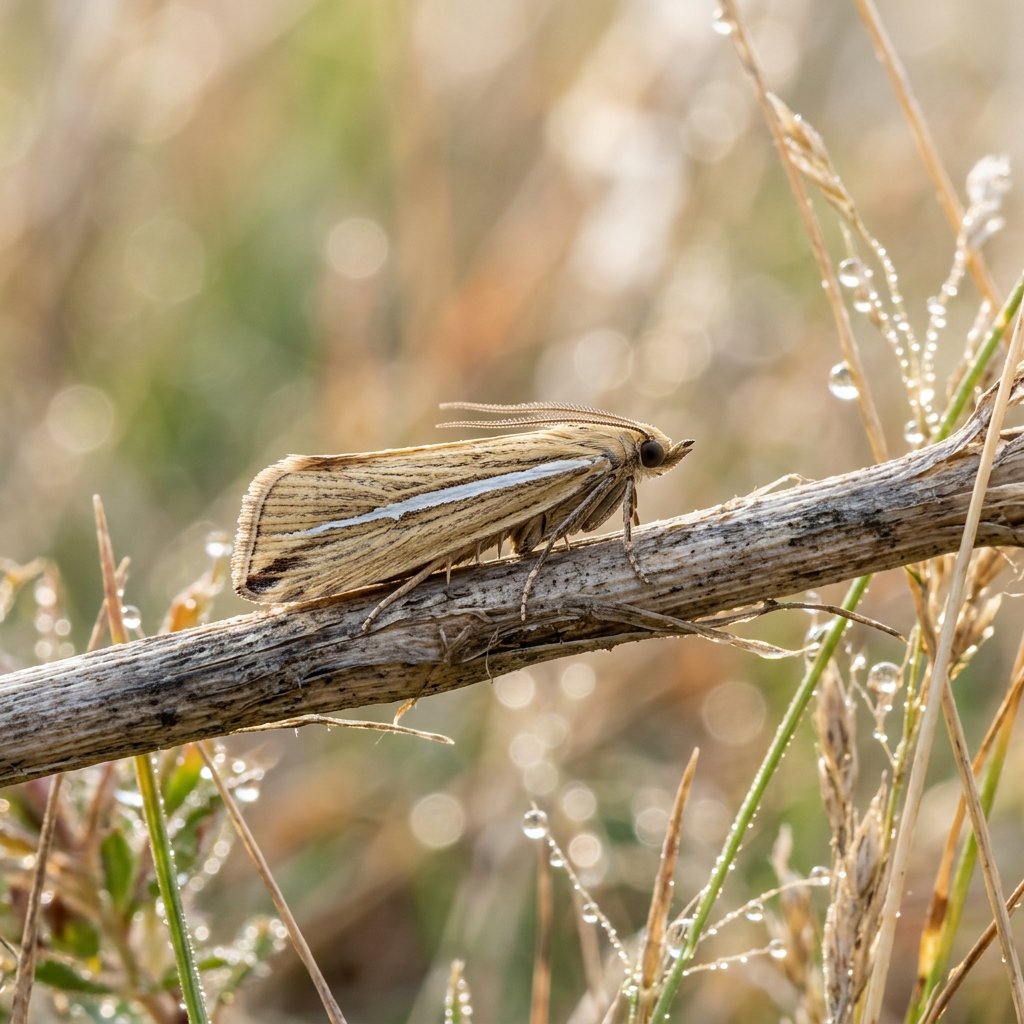
The Barred Grass-veneer (Agriphila inquinatella) is a tiny master of disguise often found darting through summer meadows and lawns. Known for its slender, cigar-shaped profile, this moth is a common sight for anyone strolling through tall grass during the warmer months. While it may look like a simple piece of dried hay at first glance, it is a fascinating example of how insects use mimicry to survive in the wild.
🔍 How to Identify
- 📏 The Tube Shape: When resting, this moth rolls its wings tightly around its body, creating a narrow, cylindrical silhouette that looks like a tiny stick.
- 👃 The "Snout": Like other members of its family, it features prominent, forward-pointing mouthparts (palps) that look like a miniature nose or beak.
- 🎨 Sandy Camouflage: Its wings are a pale, sandy yellow or ochre, marked with faint longitudinal brownish streaks and a distinct, slightly darker "barred" line near the wing tips.
🌲 Habitat & Ecology
- 🌾 Meadow Dwellers: They are most at home in dry grasslands, manicured lawns, and woodland clearings where they can blend in with parched vegetation.
- 🌙 Night Flyers: While they are easily "flushed" from the grass and will fly short distances during the day, they are primarily nocturnal and are frequently attracted to garden lights.
- 🐛 Larval Life: The caterpillars live in silken tubes hidden at the base of grass tufts or moss, where they feed quietly on the roots and stems.
⚠️ Safety & Toxicity
- ✅ Harmless: The Barred Grass-veneer is a "friend" to the gardener. It does not bite, sting, or carry diseases.
- 🐶 Pet Safe: They are non-toxic to cats and dogs. While a curious pet might try to catch one, they pose no chemical or physical threat to animals or children.
✨ Fun Fact
To perfect their camouflage, these moths almost always rest with their heads pointing downward on a blade of grass. This "head-stand" position helps them mimic the angle of a broken or withered grass stem, making them nearly invisible to hungry birds!
More Details








