Info
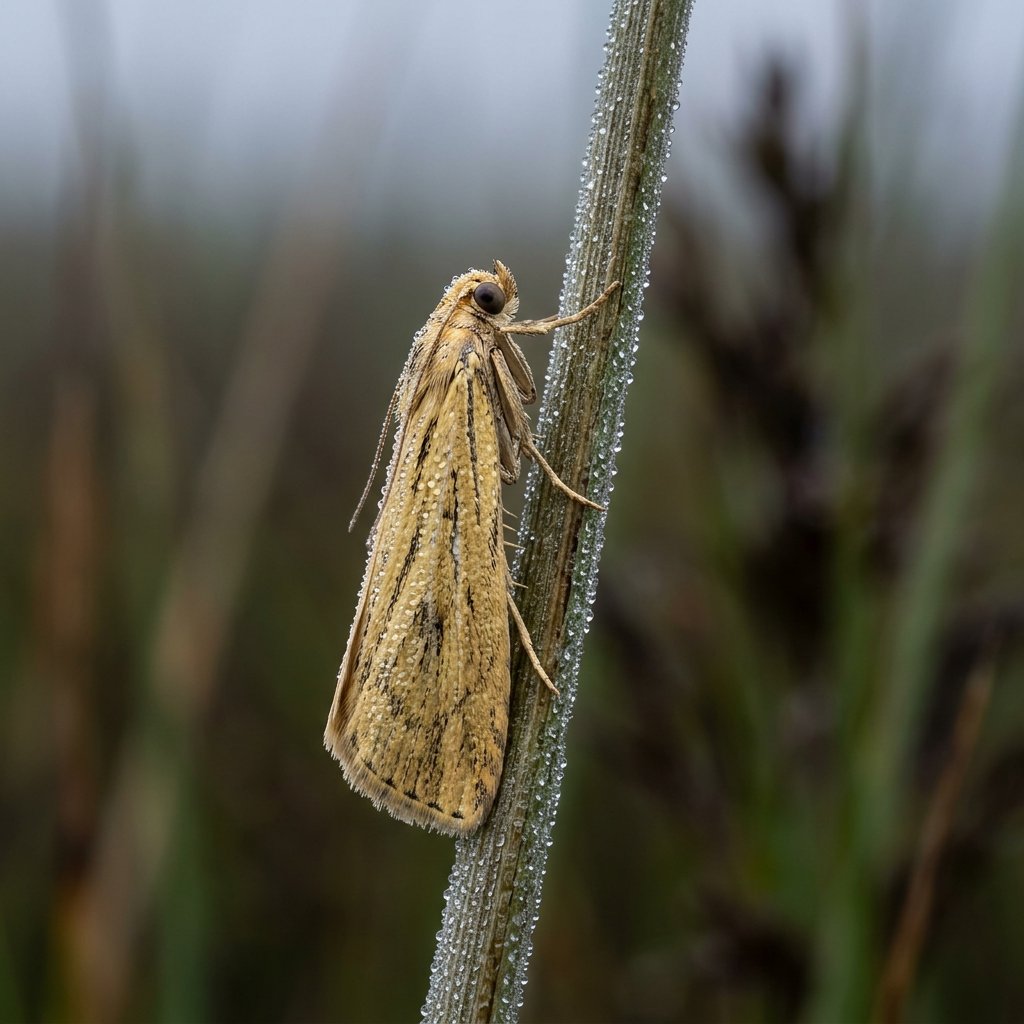
Often known as the Pale-streak Grass-veneer, this delicate moth is a master of disguise. If you’ve ever walked through a summer meadow and seen tiny, straw-colored slivers darting away from your feet, you’ve likely met a member of the Agriphila family. They are part of the "snout moth" group, named for the peculiar, elongated mouthparts that look like a tiny bird’s beak.
🔍 How to Identify
- 🌾 The "Cigar" Silhouette: When resting, this moth wraps its wings tightly around its body, creating a narrow, tube-like shape that mimics a dry blade of grass.
- ⚪ The Pale Streak: Its forewings are a soft ochre or straw color, featuring a single, prominent white longitudinal line running through the center. Unlike its cousins, this stripe is usually smooth and lacks dark borders.
- 👃 The Snout: Look closely at the head; the "labial palps" extend significantly forward, giving the moth a pointed, aerodynamic profile.
🌲 Habitat & Ecology
- 🏡 Lawn & Meadow Life: You will most often find them in damp grasslands, salt marshes, and even your backyard lawn. During the day, they cling vertically to grass stems, perfectly camouflaged.
- 🌙 Night Owls: While they are easily disturbed and fly during the day, they are technically nocturnal. They are frequently attracted to porch lights or glowing windows during mid-to-late summer.
- 🌱 Grass Dwellers: As larvae (caterpillars), they live in silken tunnels at the base of grass clumps, where they feed on the stems and roots. They are considered "neutral" neighbors, as they rarely cause noticeable damage to lawns.
⚠️ Safety & Toxicity
- ✅ Harmless: The Pale-streak Grass-veneer is completely safe for humans, children, and pets.
- 🚫 Non-Biting: They do not possess a stinger or biting mouthparts. Unlike some "pantry moths," this species does not infest your dry goods or eat your wool clothes; they are strictly outdoor grass-lovers.
✨ Fun Fact
When this moth lands on a blade of grass, it almost always aligns itself vertically and tucks its antennae flat against its body. This "vanishing act" is so effective that birds often overlook them entirely, mistaking the moth for a piece of withered hay!
More Details








